Which ticket to choose
Murano, Burano & Torcello Tour + Glass-Blowing Demonstration
from €20
Best for:Seeing three islands in one day for as little as possible
- Scenic boat tour
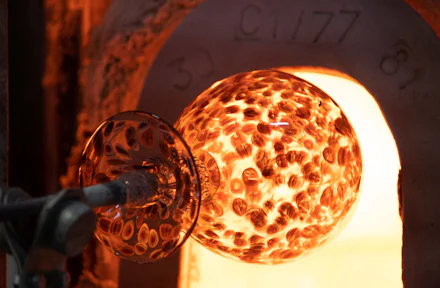
- Glass-blowing demonstration
- Free time on Murano, Burano and Torcello
Murano & Burano: Boat Tour + Glass-blowing Demonstration
from €25
Best for:Half a day and two islands at a gentler pace
- Scenic boat tour
- Visit to a Murano glassworks
- Free time on both islands
Venice Islands Tour From Train Station
from €30
Best for:Staying in Cannaregio or arriving by train for the day
- Boat tour to Murano and Burano
- Glass-blowing demonstration
Murano, Burano & Torcello: Traditional Boat Tour + Glass-blowing Demonstration
from €73.50
Best for:A traditional boat and a small group
- Wooden bragozzo with a local skipper
- Live guide
- Departure from St Mark's Square
- Murano, Burano and Torcello
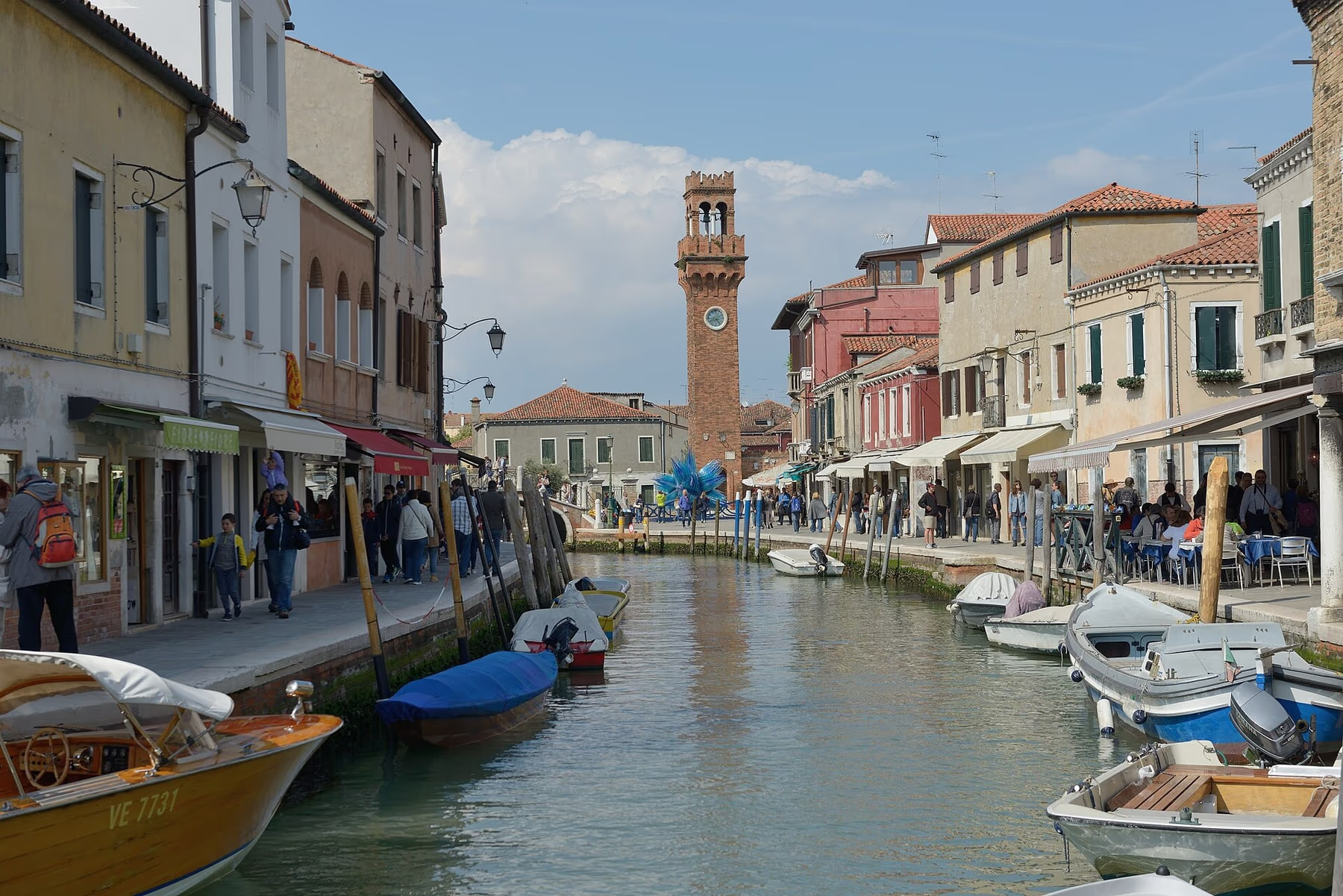
A Murano and Burano tour is the best-selling excursion in Venice, and also the one where people most often get their sums wrong. The two islands are not close to each other: Murano is ten minutes from Fondamente Nove, Burano forty-five. Set off without knowing that and you spend half the day on a boat and see Burano in a rush, with the sun already low.
This page compares the two ways of doing it — an organised boat trip or the ACTV vaporetto under your own steam — with real journey times, lines, prices and routes.
Organised tour or vaporetto: the choice that shapes your day
| Boat tour | ACTV vaporetto | |
|---|---|---|
| Cost | from €20 per person | €9.50 for 75 minutes, €25 for the 24-hour pass |
| Duration | 4–6 hours, fixed times | as long as you like |
| Crossings | direct, one boat throughout | changes at Murano Faro or Fondamente Nove |
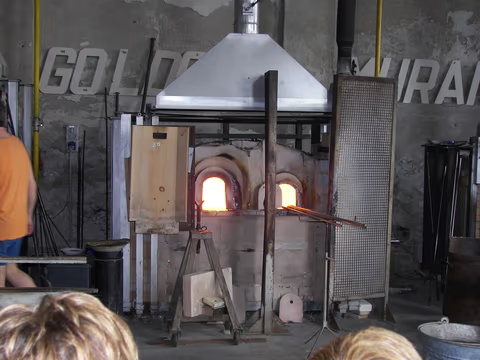
| Furnace | demonstration included | find one yourself or book separately |
| Free time | 40–60 minutes per island | as much as you want |
| Luggage | not allowed | allowed, for a supplement |
Take the tour if you have a single day for the lagoon, if you are travelling with small children or elderly parents, or if you would rather not study a timetable. The boat goes from island to island with no changes, and the glass-blowing demonstration is already arranged.
Take the vaporetto if you are in Venice for more than two days, if you want a long lunch on Burano, or if you are interested in the Museo del Vetro or the Museo del Merletto, which no tour ever includes. With a time pass, the cost per person drops below that of the cheapest tour only if you also use it for getting around the city.
Comparing the Murano and Burano tours
The differences between the tours sold online come down to three things: how many islands, where you start, and what kind of boat.
The Murano, Burano & Torcello Tour + Glass-Blowing Demonstration (from €20, rated 4.0 from 1,363 reviews) is by far the cheapest and the only one that takes in Torcello, which is worth the fare on its own. It is also the most rushed: with three stops, free time on each island comes down to about 40 minutes.
Murano & Burano: Boat Tour + Glass-blowing Demonstration (from €25, rated 3.9 from 1,220 reviews) drops Torcello and redistributes the time across the two most photographed islands. Choose it if you already know you want to walk around Burano without watching the clock.
Venice Islands Tour From Train Station (from €30) solves one specific logistical problem: if you are sleeping in Cannaregio or arriving by train, it saves you the crossing to St Mark's or Fondamente Nove first.
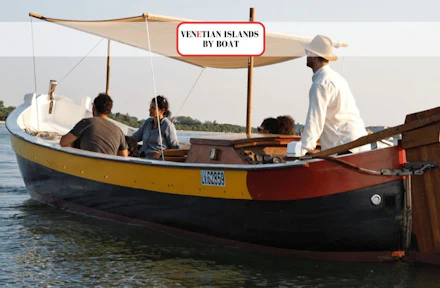
Murano, Burano & Torcello: Traditional Boat Tour + Glass-blowing Demonstration (from €73.50, rated 5.0 from 13 reviews) is a different proposition altogether: a traditional wooden fishing boat, a small group, a local skipper, five hours, leaving from St Mark's Square. It costs three times as much, and you feel the difference in the crossings rather than on the islands.
One detail worth the money: the cheap three-island tours and the ones leaving from the station are sold with no cancellation at all. The traditional boat and the version with prosecco accept cancellation up to 24 hours beforehand. If the forecast is uncertain, that alone justifies the price gap.
Book with instant confirmation


Getting there on the ACTV vaporetto
Start with the thing that surprises most visitors: the vaporetto is not a tourist boat. ACTV, the city's public transport operator, runs it as a bus service on water, with the same fares and the same rules whether you are crossing the Grand Canal or heading out to the far edge of the lagoon. Your ordinary ticket covers the islands.
Almost all the island lines leave from Fondamente Nove, on the northern side of Venice, not from St Mark's. That is the commonest mistake: setting off from St Mark's Square costs you twenty minutes just reaching the right landing stage.
For Murano
- Lines 4.1 and 4.2: circular routes serving Murano from Piazzale Roma, Ferrovia and Fondamente Nove. From Fondamente Nove to Murano Colonna takes about ten minutes.
- Line 3: a direct link from Piazzale Roma and Ferrovia, running at busier times of year ``.
- Murano has more than one stop: Colonna for the furnaces and shops, Museo for the Museo del Vetro, Faro to change for Burano.
For Burano
- Line 12 from Fondamente Nove, calling at Murano Faro and then Mazzorbo before Burano. The crossing takes about 45 minutes ``.
- If you are already on Murano, pick up the 12 at Murano Faro and save yourself the trip back to Venice.
For Torcello
- Line 9, the shuttle between Burano and Torcello: five minutes, running frequently in season.
Tickets. The standard 75-minute ticket costs €9.50 and is not enough to get to Burano and back. A day on the islands needs the 24-hour pass at €25 or the 48-hour one at €35 ``. Buy them at Venezia Unica ticket offices, from the machines on the landing stages, or through the AVM Venezia app. Always validate before you board: inspections on the lagoon lines are frequent. The page on the vaporetto covers lines, validity and the tricks in detail.
The itinerary that works
Going independently, the right order is Burano first, then Murano. It sounds wrong, because Murano is closer, but it works better:
- 8:30 — leave Fondamente Nove on line 12. The first hour is the emptiest and you will get a seat outside.
- 9:15–11:30 — Burano. Two hours covers the full circuit of the canals, the leaning bell tower of San Martino, the Museo del Merletto and a stop for bussolà, the local biscuits.
- 11:40 — line 9 to Torcello, if you have decided to add it: two hours, lunch included.
- 13:30 — line 12 towards Murano Faro.
- 14:00–17:00 — Murano: a furnace, the island's own Grand Canal, the basilica of Santi Maria e Donato, the Museo del Vetro.
- 17:15 — back to Fondamente Nove on the 4.1 or 4.2.
The advantage is that you see Burano in morning light, when the coloured façades on the eastern side are lit, and that when you are tired at the end of the day the crossing home is ten minutes rather than forty-five.
When to go
Time of day. The early sailings before 9:30 and the late afternoon after 16:00 are the least crowded. Between 10:30 and 14:00 the organised tours all arrive at once and Burano becomes a slow queue along the main fondamenta.
Light. On Burano the best photographs come when the sun is not overhead: early morning, or the last two hours before sunset. At midday the colours flatten and the contrast is too harsh.
Season. From November to March the islands are all but empty, many restaurants close one day a week and some furnaces cut their hours, but the winter light over the lagoon is the best of the year. From June to August bring water and a hat: there is little shade on Burano and the sun on the vaporetto decks is punishing.
Acqua alta. The tidal flooding that hits Venice in autumn and winter affects the islands far less than the historic centre, but at a very high or very low tide some sailings are rerouted or skip minor stops. Check the council's tide centre on the morning itself.
Days to avoid. Spring weekends and days with cruise ships in port put thousands of people on identical routes.
What to see on the three islands
Murano
The island's own Grand Canal links the Colonna and Museo stops, a quarter of an hour on foot. Along the bank stand the historic furnaces and the Museo del Vetro (the Glass Museum), inside Palazzo Giustinian, holding the largest collection of Murano glass in the world: €15 full price, €7.50 concession. The basilica dei Santi Maria e Donato has a twelfth-century mosaic floor and an apse best seen from the bridge, and it is free. Everything about furnaces, demonstrations and the museum is on the page about Murano glass.
Burano
A fishing island that became famous for two things: its painted houses, whose colours need council approval, and its needle lace. The Museo del Merletto (the Lace Museum) on Piazza Galuppi holds lace from the sixteenth to the twentieth century ``. The bell tower of San Martino leans visibly, because the ground beneath it has given way. Walk beyond the main fondamenta: the side lanes towards Tre Ponti are just as colourful and empty.
Torcello
The first island in the lagoon to be settled, now home to a few dozen people. The basilica di Santa Maria Assunta was founded in the seventh century and holds Byzantine mosaics: the Last Judgement on the west wall and the Virgin against gold in the apse ``. Next to it stand the Ponte del Diavolo, a bridge with no parapets, and the bell tower with a view over the whole northern lagoon.
How to pay less
- Do not buy two separate tickets. If you expect more than two crossings in a day, a time pass costs less than the singles added together.
- Children under six travel free on ACTV services ``.
- Buy glass on Murano, not in Venice. The same pieces cost more in the historic centre and many are not from Murano at all: look for the mark of origin.
- Skip the restaurants on Burano's main fondamenta. The trattorie in the back lanes cost a third less.
- The demonstration included in a tour does not commit you to buying. The showroom comes afterwards: you can walk out.
- You do not need a tour for Torcello. With an ACTV pass, the shuttle from Burano is already covered.
City passes such as Venezia Unica combine transport and museums. If the Museo del Vetro and the Museo del Merletto are on your list too, look at the page on passes and combos before buying tickets piecemeal.
What's nearby
- Mazzorbo — joined to Burano by a wooden footbridge: vineyards, silence and no visitors. Ten minutes on foot.
- San Francesco del Deserto — a monastery island reachable only by private boat from Burano.
- Sant'Erasmo — Venice's market garden, served by line 13 from Fondamente Nove.
- San Michele cemetery — an intermediate stop on lines 4.1 and 4.2 between Venice and Murano, free to visit.
- Lagoon catamaran trips — an alternative to the scheduled lines for anyone who wants to see the southern lagoon.
Book with instant confirmation


Before you set off
Boat tours do not take bulky luggage and offer nowhere to leave it, so if you have a train to catch later, drop your cases at a left-luggage office first. Departures run to time and the meeting point is almost always 15 minutes before, at various places between St Mark's, Fondamente Nove and the station: check your voucher, because the wrong landing stage means a missed boat.
The contributo di accesso (the Venice access fee) has nothing to do with the islands themselves. It applies to entering Venice on the days the council designates and is paid only at cda.ve.it: no Murano and Burano tour includes it, and none can sell it to you.