Which ticket to choose
Murano Glass Museums (Museo del Vetro): Entry ticket
from €15
Best for:Understanding a thousand years of Murano glass
- Entry to the Museo del Vetro
- Chronological route from Roman glass to the twentieth century
Museums of Islands (Museo delle Isole): Entry Ticket
from €20
Best for:Anyone visiting Burano on the same trip
- Museo del Vetro
- Museo del Merletto on Burano
Murano: Glass Blowing Demo + Tour
from €10
Best for:Little time and a wish to watch glass being worked
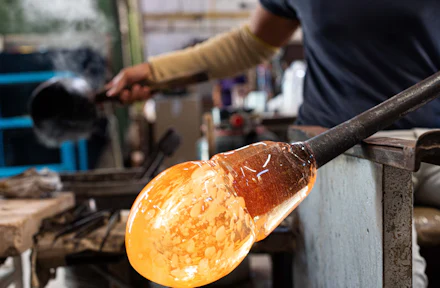
- Glass-blowing demonstration
- Guided tour
- Live guide
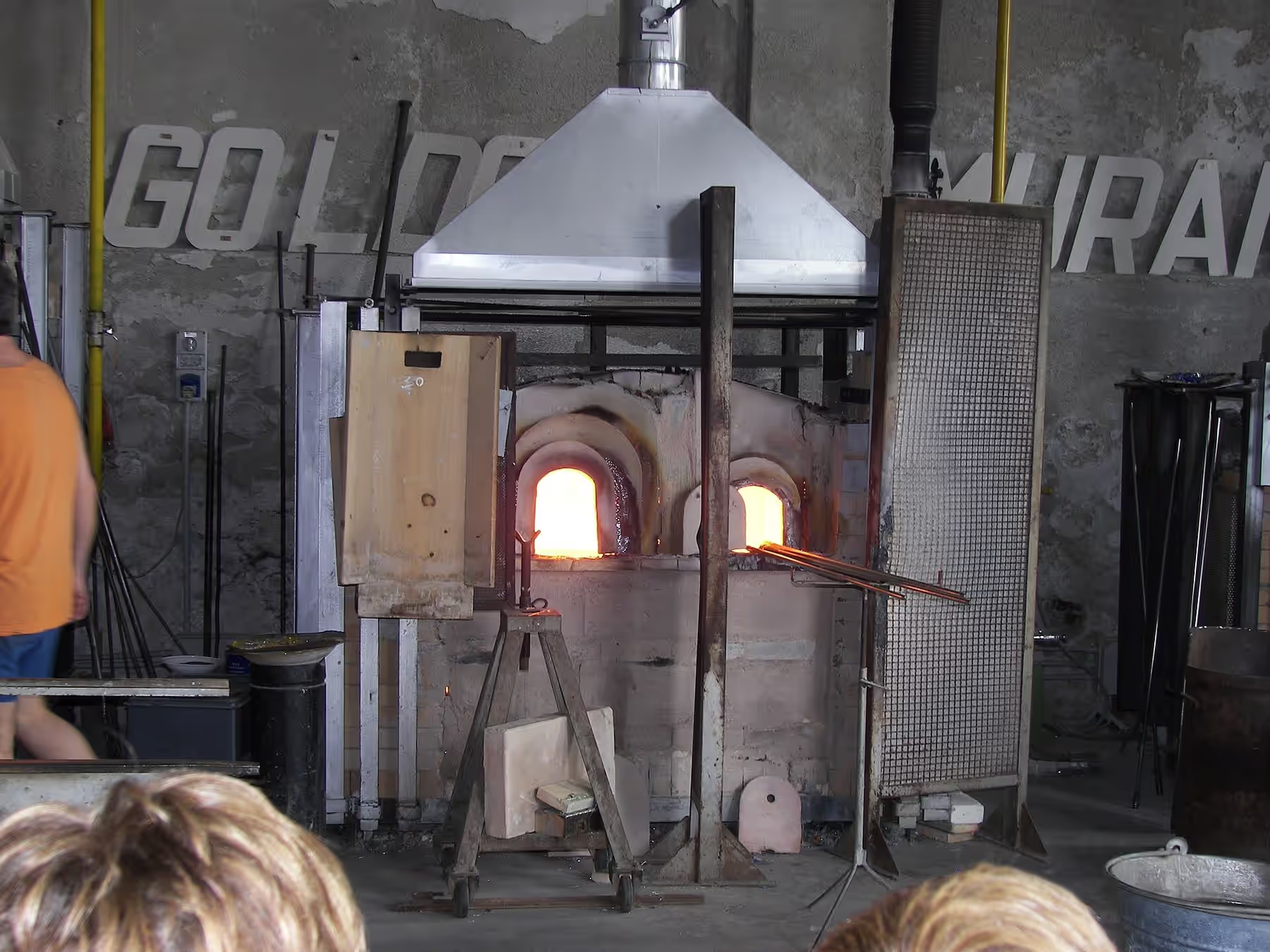
Murano: Glass Blowing Demo at the Glass Cathedral
from €14
Best for:The most striking setting for a demonstration
- Entry to the former church of Santa Chiara
- Glass-blowing demonstration
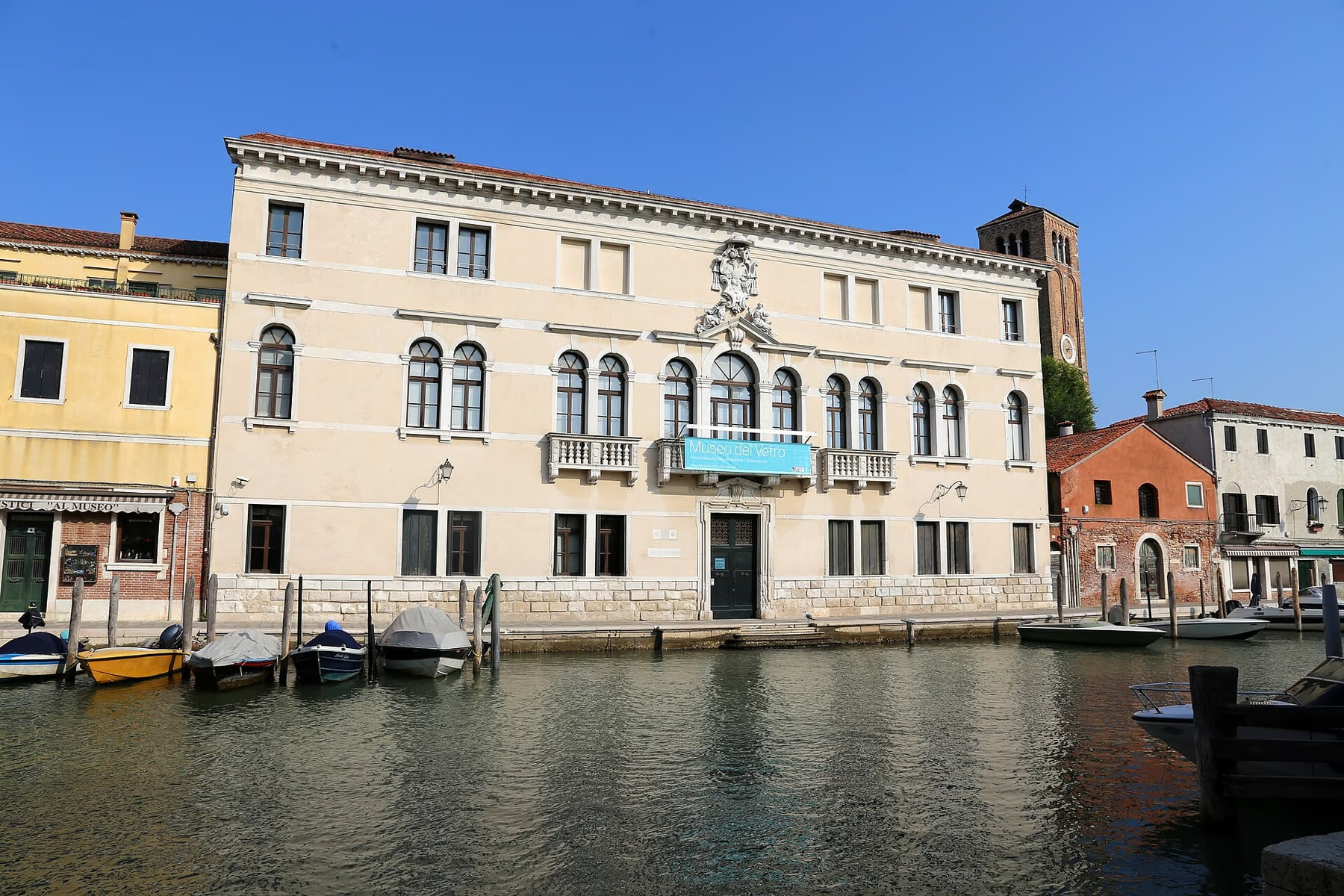
The Murano glass museum — the Museo del Vetro — is where you understand why this island held a European monopoly on a craft for centuries. It costs €15, it sits inside Palazzo Giustinian on Fondamenta Marco Giustinian, and it opens every day. One thing to be clear about straight away, because it is the commonest disappointment: no glass is blown inside the museum. Demonstrations happen at the furnaces around the island and are paid for separately, from €10 upwards.
Opening hours and prices, checked
| Period | Hours | Last entry | |
|---|---|---|---|
| Summer | 1 April to 31 October | 10:00–18:00 | 17:00 |
| Winter | 1 November to 31 March | 10:00–17:00 | 16:00 |
| Late opening | Fridays and Saturdays, 1 May to 26 September 2026 | 10:00–20:00 | 19:00 |
The museum opens seven days a week. Closing procedures begin twenty minutes before the stated time, so if you go in at the last possible moment you have under an hour inside.
| Ticket | Full | Concession | Validity |
|---|---|---|---|
| Museo del Vetro | €15 | €7.50 | single entry |
| Museums of Islands | €20 | €10 | 3 months, one entry per museum |
| Museum Pass (all civic museums) | €50 | €25 | 6 months, one entry per museum |
The concession applies to children aged 6 to 14, students aged 15 to 25, over-65s and holders of a Rolling Venice or ISIC card. Entry is free for residents of the comune of Venice, young children ``, disabled visitors and one companion, licensed tour guides, and teachers accompanying school groups, up to two per class. Online — on the museum's own site and through resellers — only the 6-to-14 reduction can be bought: all the others have to be proved with a document at the desk.
Temporary exhibitions may carry a supplement, and the audio guide is hired on site ``. Current hours and prices are on museovetro.visitmuve.it.
Comparing the tickets
Murano Glass Museums (Museo del Vetro): Entry ticket at €15 on Tiqets costs the same as at the box office: you pay no booking fee and you skip the queue at the desk, which is small on Murano and slows down badly at weekends.
The Museums of Islands (Museo delle Isole): Entry Ticket at €20 is worth it only if Burano is on the plan too: it adds the Museo del Merletto and is valid for three months, so you can spread it over two separate days. The official version also covers the Torcello museum ``.
Glass-blowing demonstrations are a different product and should be added to the museum, not substituted for it. The cheapest, Murano: Glass Blowing Demo + Tour (from €10, rated 4.5 from 101 reviews), combines a demonstration with a short guided tour but does not include transport from Venice. Murano: Glass Blowing Demo at the Glass Cathedral (from €14, rated 4.7 from 47 reviews) takes place in the former church of Santa Chiara, converted into a glass centre: it is the most striking setting and it lasts about half an hour. The same experience with a glass of prosecco, Murano: Glass Blowing Demo at the Glass Cathedral + Drink, costs €20.
If watching is not enough, there are two options. Venice: Murano Glass Factory Tour + Aperitivo (from €60, two hours, boat trip included) and the Venice: Private Glass Blowing Class (from €69, an hour and a quarter, rated 5.0 from 8 reviews), which ends with your own piece to take home. These are the only formats where you actually touch the glass.
Book with instant confirmation

What you see inside the Murano glass museum
The route is chronological and takes about ninety minutes without a guide.
Archaeological glass. The Roman section gathers finds from the first to the third century, unearthed in the lagoon and around the Veneto. The point it makes is that glass was not invented on Murano — but that Murano took it to an industrial level before anywhere else did.
The Middle Ages and the Renaissance. This is the heart of the collection, with the Renaissance pieces that made the island's glassworks famous. Venetian cristallo, a colourless, transparent glass perfected in the fifteenth century, is the invention that made Murano's fortune: before it, glass was cloudy and greenish.
The techniques. Filigrana, reticello, murrine, avventurina, calcedonio — the names you will meet again in the shops. The museum shows them side by side, which is the only way to learn to tell them apart in half an hour.
The nineteenth and twentieth centuries. The industrial revival after the Napoleonic collapse, and then the post-war design era, when Murano's glassworks worked with architects and designers from around the world.
The building is part of the visit. Palazzo Giustinian was the residence of the bishops of Torcello and has housed the museum since 1861, when Abbot Vincenzo Zanetti founded both a collection and a school for young glassmakers. The Scuola del Vetro Abate Zanetti still exists and runs courses with the museum.
Museum or furnace: how to combine them
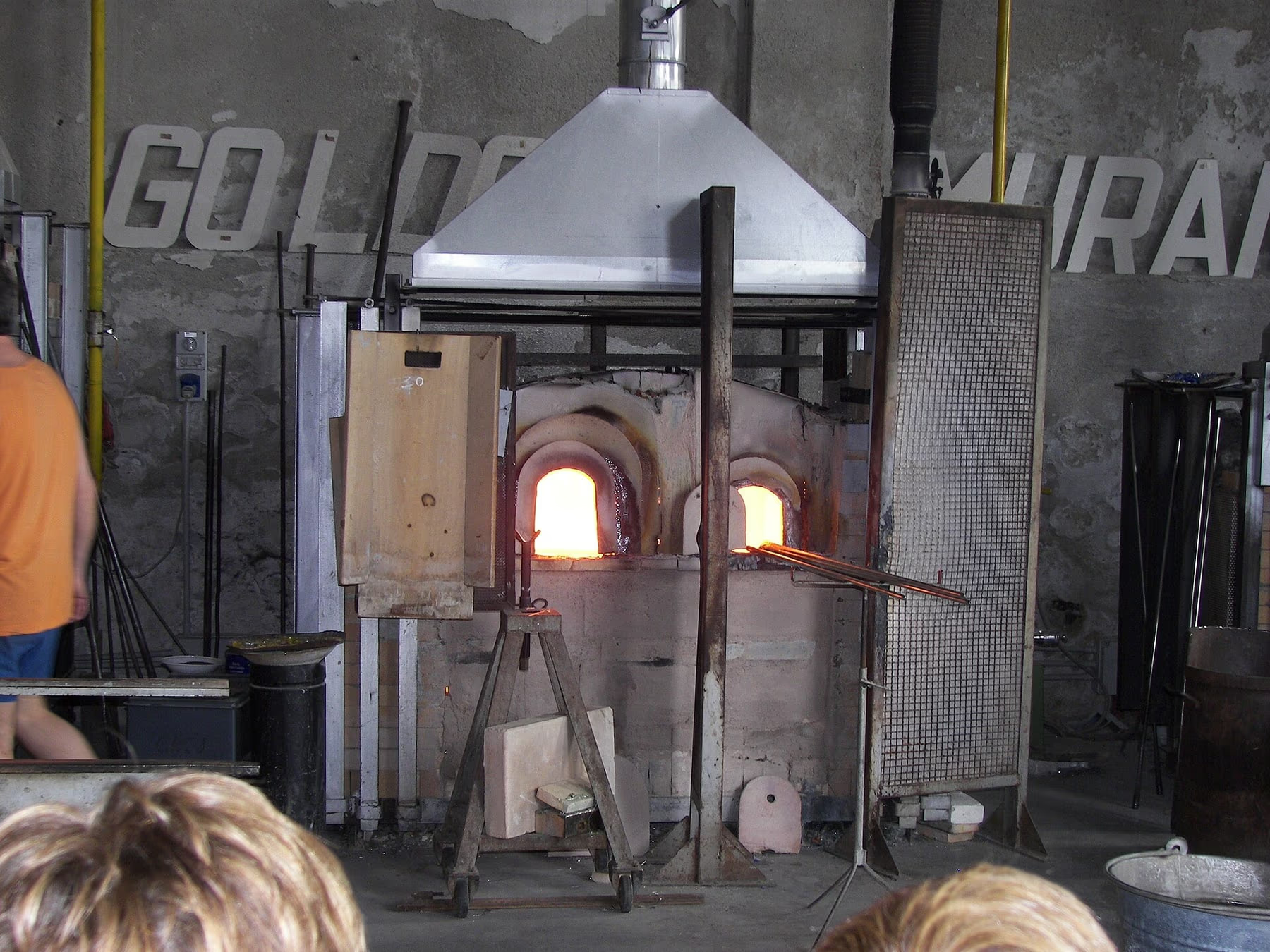
They are complementary and neither replaces the other. The museum explains a thousand years of history but is static; the furnace lasts ten minutes and is spectacular but tells you nothing about why.
The better order is furnace first, museum second. Once you have watched a master pull a little glass horse out of nothing in ninety seconds, the cases in the museum stop being objects and become technical solutions. The furnaces also work mainly in the morning and early afternoon, while the museum stays open into the evening.
Watch out for one recurring pattern: many of the free demonstrations offered to people stepping off the vaporetto end in a showroom with hard selling. The paid demonstrations on Tiqets work differently — a fixed time slot and no obligation to buy. Either way, you can leave whenever you like.
When to go
Time of day. Opening time at 10:00, and the last two hours before closing, are the quietest. Between 11:00 and 14:00 the groups from the organised Murano and Burano tours come ashore and both the museum and the furnaces fill up.
Days. The furnaces work Monday to Friday; at weekends many scale back and some demonstrations stop altogether. If watching glass being worked is the reason for the trip, go on a weekday.
Season. From November to March the island is empty and you can walk straight into the museum, but the day is an hour shorter and it closes at 17:00. From May to September the Friday and Saturday late openings until 20:00 are the best window of the year: long light, and the tour groups already back in Venice.
August. Many private furnaces close for the holidays. The museum does not.
How to pay less
- The Museums of Islands ticket at €20 instead of two separate tickets at €15 and €7 if you are also visiting the Museo del Merletto on Burano: you save about €2 and you have three months to use it.
- The Museum Pass at €50 if your trip also takes in the Doge's Palace, Ca' Rezzonico, the Museo Correr and Palazzo Mocenigo: it pays off from the fourth museum onwards. The full comparison is on the page about passes and combos.
- Rolling Venice gets you the concession from 6 to 29 years old and costs a few euros: if you are in that band, get it before buying any ticket at all.
- The basilica of Santi Maria e Donato is free and has one of the oldest mosaic floors in the lagoon: do not miss the apse seen from the bridge.
- Do not buy glass in front of the landing stage. The shops in the first fifty metres from the Colonna stop have the highest prices on the island.
- A timed ACTV pass costs less than four single fares if you are hopping between Murano, Burano and Venice on the same day.
Getting there
The museum is on Murano at Fondamenta Marco Giustinian 8, a short walk from the Murano Museo stop. The vaporetto is public transport rather than a sightseeing boat: ACTV, the city's transport operator, runs it as a bus service on water, and the same ticket that takes you along the Grand Canal takes you out to the islands.
- Lines 4.1 and 4.2 from Piazzale Roma, Ferrovia, Fondamente Nove and San Zaccaria: the circular routes that serve every stop on the island. About ten minutes from Fondamente Nove.
- Line 3, direct from Piazzale Roma and Ferrovia at busier times of year.
- Line 12 from Fondamente Nove if you are coming from or going on to Burano: it calls at Murano Faro, a quarter of an hour on foot from the museum along the island's Grand Canal.
The standard ACTV ticket costs €9.50 and lasts 75 minutes; timed passes start at €25 for 24 hours ``. Details and strategy are on the vaporetto page.
What's nearby
- Basilica dei Santi Maria e Donato — five minutes on foot from the museum, twelfth-century mosaic floor, free entry.
- Murano lighthouse — at the mouth of the canal, a landmark and the stop for Burano.
- Chiesa di Santa Maria degli Angeli — less visited, on the fondamenta of the same name.
- The former church of Santa Chiara, now the Glass Cathedral — where demonstrations are held, ten minutes away.
- Burano — 35 minutes on line 12, for the Museo del Merletto and the painted houses.
Book with instant confirmation


Entry rules and small print
Photography without flash is allowed; tripods are not. Large rucksacks and luggage go in the cloakroom, which is small — so island-hopping with a suitcase does not work here. The museum is wheelchair accessible. Tickets bought online are shown from your phone at the entrance.
The contributo di accesso (the Venice access fee) does not apply to the islands and has nothing to do with this ticket: it covers entry to the historic centre on the days set by the council and is paid only at cda.ve.it. No reseller, Tiqets included, can sell it alongside a ticket for the Murano glass museum.