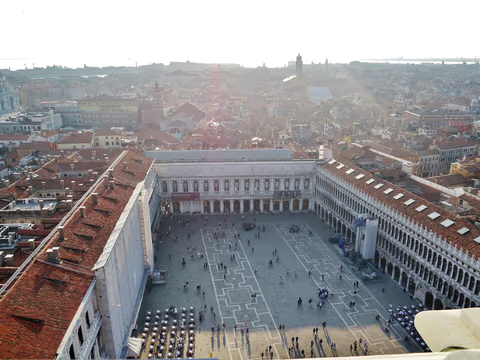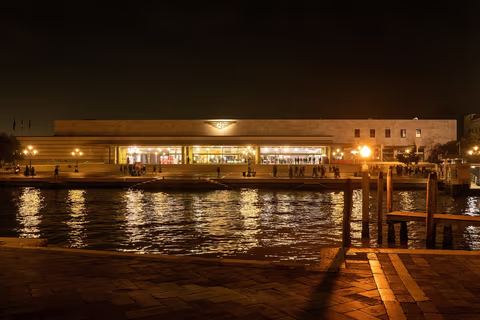
Which things to do in Venice you manage depends almost entirely on how much time you have, because the city is small but slow: distances are measured in bridges rather than kilometres, and half an hour between two points that look adjacent on the map is normal. The first mistake is planning five attractions a day. The second is never leaving a three-hundred-metre radius around St Mark's Square.
This page sorts the attractions by what they are genuinely worth, with real prices and real timings, and sets out three itineraries that have been tested.
The six everyone sees, and why they earn it
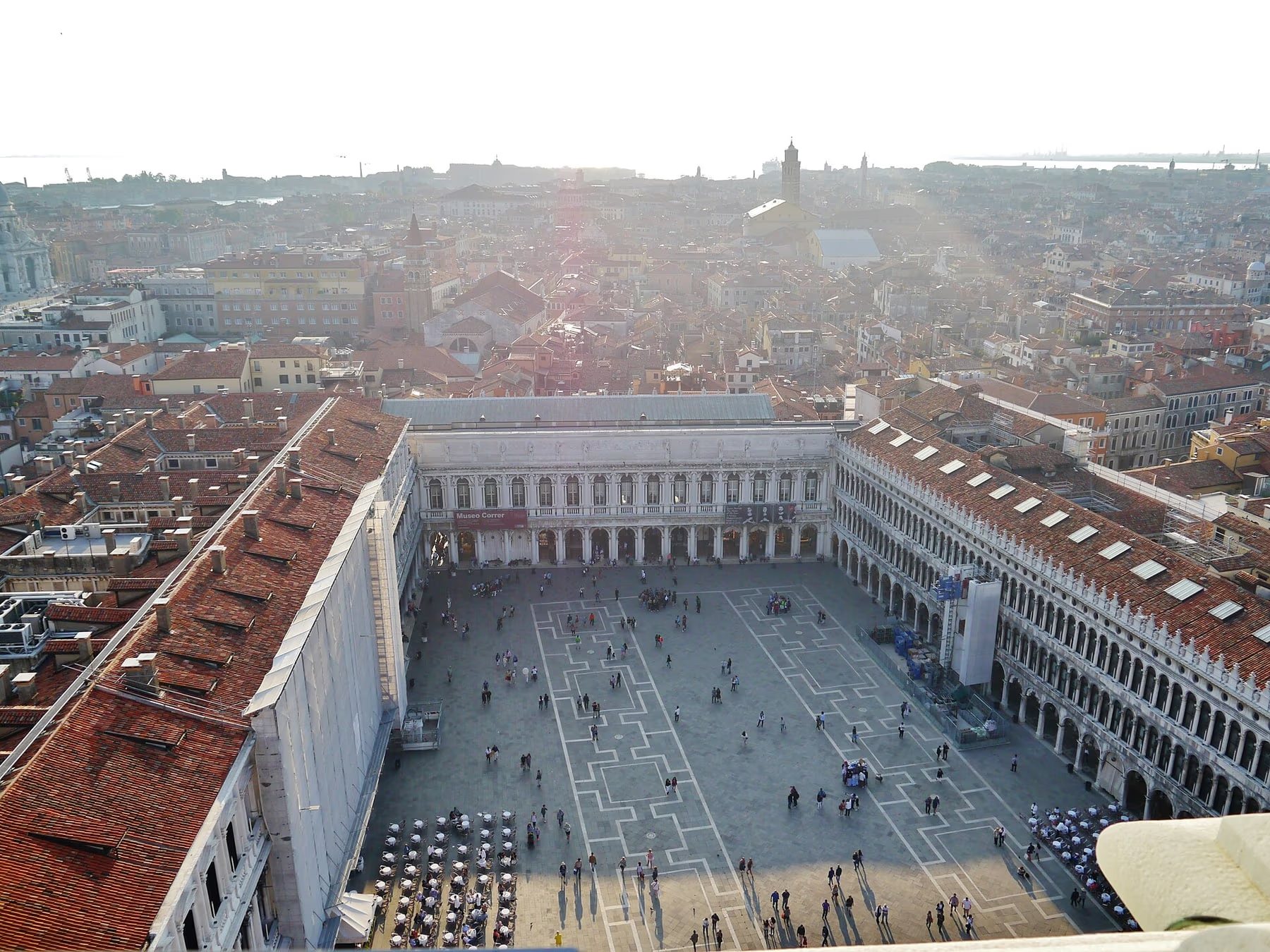
The Doge's Palace is the densest visit in the city: the seat of government of the Republic, the halls hung with Tintoretto and Veronese, the armoury, the Bridge of Sighs crossed from the inside and the New Prisons. Two to three hours, €35 with the Musei di Piazza San Marco (the St Mark's Square Museums ticket), which also covers the Museo Correr, the National Archaeological Museum and the Monumental Rooms of the Marciana library.
St Mark's Basilica: 8,000 square metres of gold-ground mosaic, the Pala d'Oro and the bronze horses. Entry to the cathedral is €10 at the official rate, with a compulsory timed slot; the museum and the Loggia dei Cavalli cost extra. Forty-five minutes is enough for the church, but not for the queue.
St Mark's Campanile: €10 and a lift to the highest view in the city. Forty minutes including the wait. If the queue is longer than twenty minutes, the alternative is the terrace of Palazzo Pisani, 31 metres up, by reservation only, from €20.
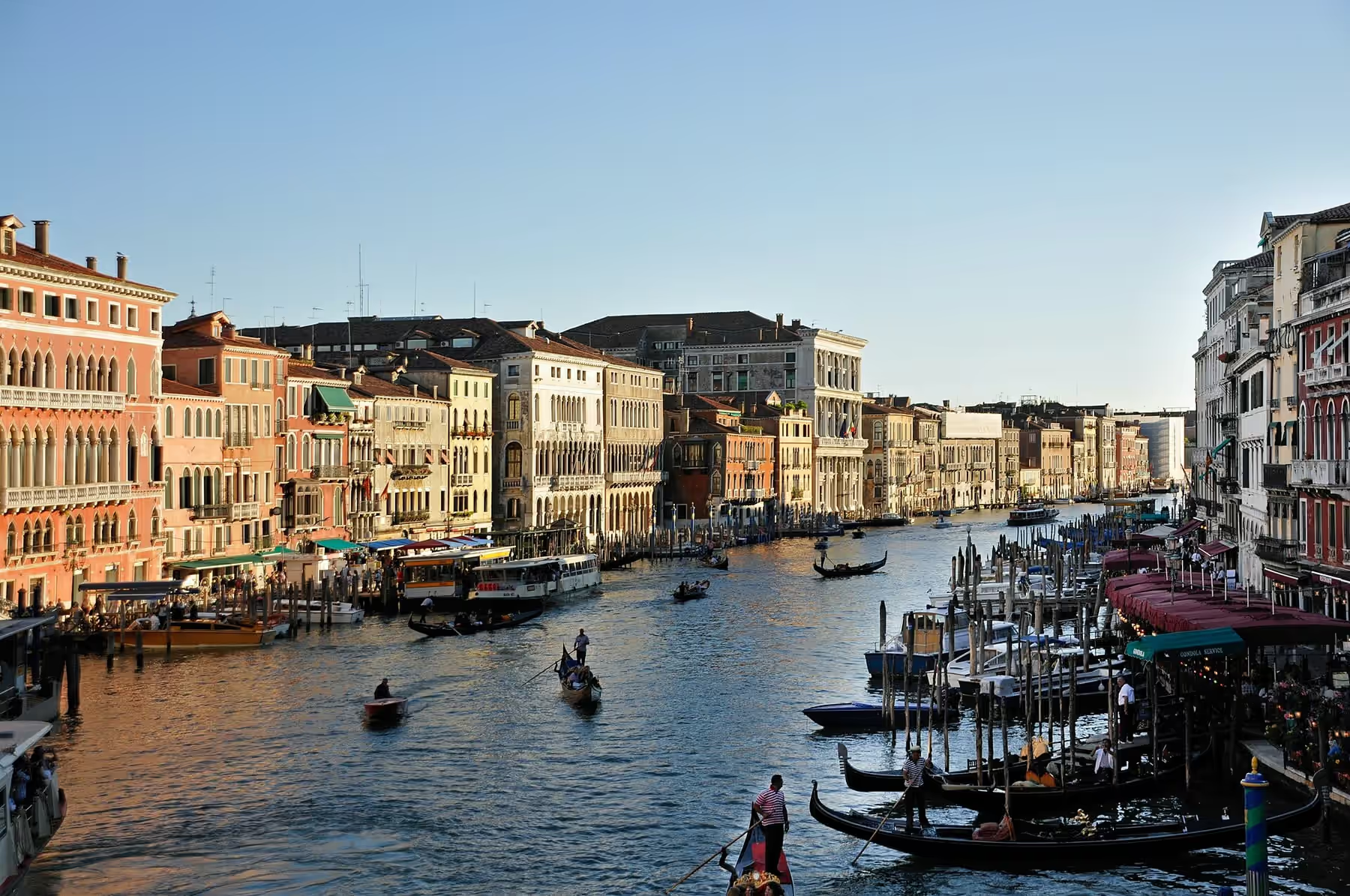
The Grand Canal by water bus: line 1 from Piazzale Roma to St Mark's costs €9.50 on the 75-minute ticket and is the best value for money in Venice. Sit at the stern, in the open air.
A gondola ride: the fare is set by the city council and is per boat, not per person — €90 for 30 minutes by day, €110 from 19:00, up to five passengers. Shared tours start at €35 a head and make sense if there are only two of you.
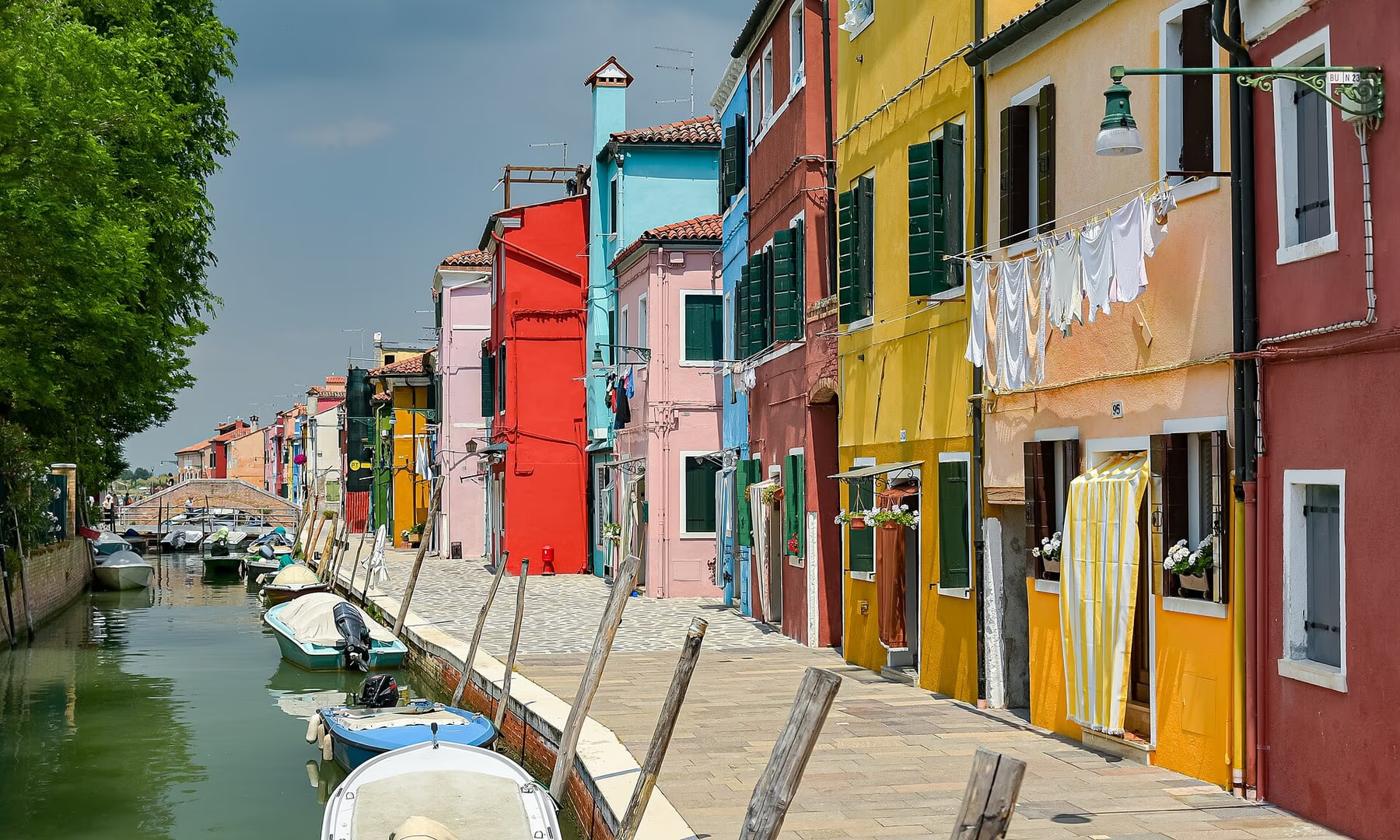
Murano and Burano: half a day, water bus line 12 from Fondamente Nove, or an organised tour from €20 taking in three islands and a glass-blowing demonstration.
Things to do in Venice once you have seen all that
Venice improves on a second visit, because you stop chasing the things you are supposed to see and start walking into the ones nobody mentioned. Almost all of them are cheap, almost all of them are empty, and almost all of them are less than ten minutes from somewhere you already know.
| Attraction | Why you go | Price from | Time |
|---|---|---|---|
| Scala Contarini del Bovolo | The most photographed spiral staircase in Venice, in a hidden courtyard a minute from Campo Manin | €10 | 30 min |
| Querini Stampalia | An intact Venetian house museum plus Carlo Scarpa's ground floor: two eras in one building | €15 | 1.5–2 hours |
| Olivetti Showroom | Twenty minutes in the most beautiful room on St Mark's Square, always empty | €10 | 20–40 min |
| Jewish Ghetto | The first ghetto in Europe, with its five synagogues and the quietest square in Cannaregio | €14 | 45–60 min |
| San Giorgio Maggiore | Palladio's church is free, the bell tower has a lift and no queue | Free | 40–60 min |
| Teatro La Fenice | You can visit by day with an audio guide, without going to the opera | €12 | 45–60 min |
| Music Museum | A collection of antique violins in a deconsecrated church, free entry | Free | 20–40 min |
| Natural History Museum | The right museum with children, inside a thirteenth-century palace on the Grand Canal | €15 | 1.5–2 hours |
| Murano glass | A thousand years of Venetian glass at the Glass Museum, not a shop window | €15 | 1.5 hours |
| Vivaldi concert | Baroque music in churches and confraternity halls, most evenings | €32 | 60–90 min |
Book with instant confirmation
 Doge's Palace & St. Mark's Basilica Combofrom€76.50Book
 BestsellerDoge's Palace: Fast Track Entryfrom€35Book
 BestsellerSt. Mark's Basilica: Hosted Entry Ticket (Only Cathedral)from€24Book
 BestsellerSt. Mark's Campanile: Entry Ticketfrom€25Book
 Venice: Gondola Ride with Live Commentaryfrom€39BookFree cancellation
 Murano & Burano: Boat Tour + Glass-blowing Demonstrationfrom€25Book
 La Fenice Opera House: Skip The Line + Audio Guidefrom€14Book
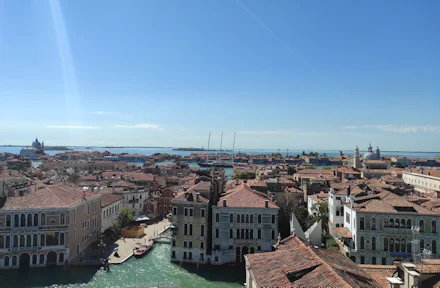 Palazzo Pisani: Venice's Highest Rooftop Terracefrom€20BookFree cancellation
 Palazzo Contarini del Bovolo: Entry Ticketfrom€10Book
 BestsellerVaporetto Pass: Venice Public Transport Ticket (ACTV)from€12Book
Three itineraries that work
One day
Arrive by 9:00. Doge's Palace as it opens, with entry already booked: two and a half hours. Eat standing up in a bacaro (a Venetian wine bar) between St Mark's and Rialto, not on the square. Water bus line 1 from San Zaccaria towards Rialto, sitting outside: twenty minutes that justify the whole ticket.
Afternoon in Dorsoduro: the Zattere, the Punta della Dogana, the Peggy Guggenheim Collection if twentieth-century art interests you. Sunset on the Zattere or in front of the Salute.
Two paid attractions, no more. People who squeeze in four remember all four badly.
Two days
Day 1: St Mark's Square in full — Doge's Palace, Basilica with a booked slot, Campanile — then an afternoon in Castello, where the crowds thin out beyond Riva degli Schiavoni. Evening: a concert, or a gondola after dark, which costs the same and changes the city.
Day 2: Cannaregio in the morning, with the Ghetto and the Madonna dell'Orto; Rialto and the fish market before 10:00, while it is still a working market rather than a backdrop; the afternoon in Dorsoduro between the Accademia and San Sebastiano.
Three days
The first two as above. The third on the lagoon: line 12 from Fondamente Nove to Burano (45 minutes), then Torcello, ten minutes away by ferry, for Santa Maria Assunta and its Byzantine mosaics, coming back with a stop at Murano. With a 24-hour ACTV pass the round trip costs €25 in transport; an organised tour starts at €20 and saves you the dead time, but decides for you how long you stay on each island.
How to choose: four practical tests
How much time you really have. Take two hours a day off the total for getting about and queueing. That leaves five or six useful hours, which is two attractions at a civilised pace.
Who you are travelling with. With children under ten, the mosaics in the Basilica last ten minutes and the Natural History Museum lasts two hours. With teenagers, the Campanile, the gondola and the islands work. As a couple, the value is in the evening: concerts, travelling opera, a gondola after sunset.
How much you care about art. If the answer is a lot, the Museum Pass at €50 pays for itself at the third civic museum. If it is not much, two single tickets are plenty.
The weather. Rain makes Venice slippery and fills the lanes with umbrellas: that is the day for indoor museums. In sunshine, prioritise the Grand Canal, the islands and the terraces.
A fifth test, less obvious: where you start from in the morning. Staying in Cannaregio puts the Ghetto and Rialto within reach and the northern lagoon fifteen minutes away at Fondamente Nove; staying in Dorsoduro gives you the Zattere, the Accademia and the Salute; staying on the mainland costs you an hour of travel every time you come and go. Build the day around your own starting point rather than around the map of monuments, and you claw back the time Venice takes most easily: the time spent walking back the way you came.
When to go, and what actually changes
The best window runs from mid-October to March, excluding the Christmas holidays and Carnival. Fewer people, low light that flatters photographs, almost no queues at the ticket desks.
Acqua alta — the tidal flooding that hits the city in autumn and winter — concentrates between October and January, lasts a few hours around high tide and is announced by the council the day before. The MOSE barriers have cut serious events sharply, but the raised walkways in St Mark's Square are still a possibility: bring waterproof shoes rather than buying rubber boots on the spot at a shameless price.
The dates when the Venice access fee applies fall between April and July: it does not change what you see, but it changes what a day trip costs and it flags the busiest days of the year. Easter weekend, the long stretch from late May to September and the Carnival crush are the periods when every queue doubles.
July and August are the worst season: humid heat, crowds and accommodation at its dearest. If you have no choice, move the outdoor sights to the first hours of the morning and keep the afternoon for air-conditioned museums.
What to skip without regret
Tours promising five attractions in three hours: you spend more time in the queue than inside. Two visits done properly beat them.
Glass shops in the San Marco district selling souvenirs that were never made on Murano: if you actually want the piece, buy it at a furnace on the island.
Restaurants with a laminated tourist menu on display within two hundred metres of St Mark's or Rialto. The Venetian rule is simple: if the menu is translated into six languages and someone outside is inviting you in, walk another five minutes.
Photographs from the Rialto Bridge at midday: backlit, with three hundred people in the frame. Go at dawn, or cross the canal on the traghetto gondola at Santa Sofia, which costs a couple of euros and puts you on the water.
Before you book anything
There are exactly four things to lock in ahead: St Mark's Basilica, the Itinerari Segreti (Secret Itineraries tour) at the Doge's Palace, the Palazzo Pisani terrace, and concerts and opera. Everything else can be bought on the day with no price penalty and no risk of finding it shut.
If you are still deciding which of the things to do in Venice are worth the money, the full table of prices, timings and booking rules is on the Venice tickets page. If you already have three or four attractions in mind, check the passes and combos page to see whether a package saves you anything: sometimes it does, often it does not, and it is worth knowing before you pay.