Which ticket to choose
Natural History Museum (Museo di Storia Naturale): Entry ticket
from €15
Best for:Anyone visiting this museum alone, adults and families
- Museum entry
- Audiopen audio guide included
- Temporary exhibitions
Concession
€7.50
Best for:Ages 6–14, students 15–25, over-65s, Rolling Venice and ISIC holders
- Museum entry
- Audio guide
Venice Museums Pass
from €50
Best for:Anyone staying 2–3 days who wants several civic museums
- Doge's Palace with fast entry
- Museo Correr
- Ca' Pesaro
- Natural History Museum
- Murano Glass Museum
Naval History Museum & Enrico Dandolo Submarine: Entry Ticket + Audio Guide
from €27
Best for:Children from 7: dinosaur in the morning, submarine in the afternoon
- Naval History Museum
- Enrico Dandolo submarine
- Audio guide
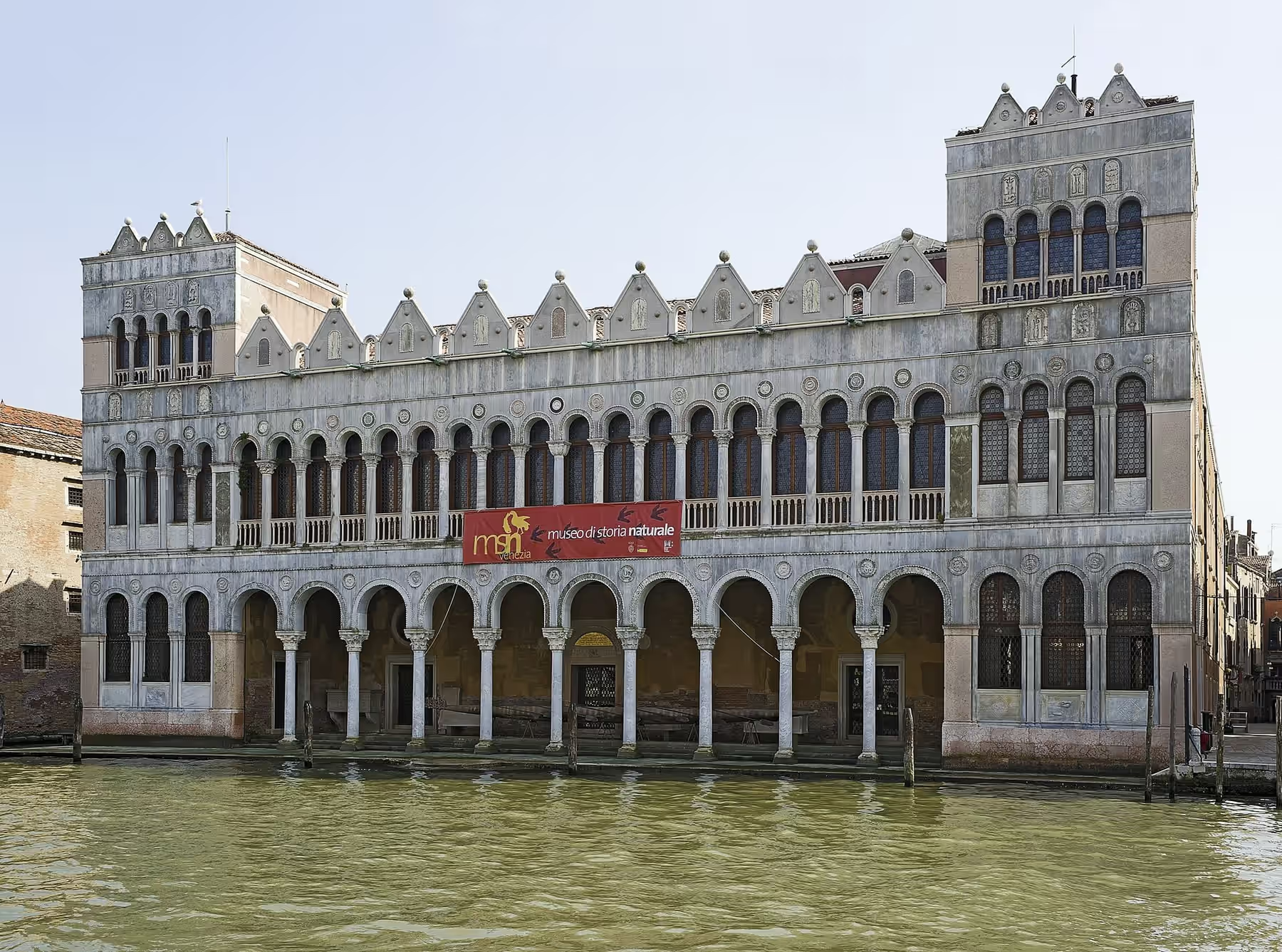
The Natural History Museum in Venice (Museo di Storia Naturale) occupies the Fondaco dei Turchi, a Veneto-Byzantine palace on the Grand Canal in the Santa Croce district. It belongs to the civic museums of Venice (MUVE, the civic museums foundation), costs €15 and has one quality no other museum in the city can claim: children are happy to stay. A whale skeleton on the ground floor, a dinosaur upstairs, an aquarium of Adriatic fish and no queue.
Ticket comparison: single, pass or combo
The choice here is simple, because the online price is identical to the box office: €15 full, €7.50 concession. You pay no premium to book, so the question is not how much you spend but how many museums you intend to see.
The single €15 ticket is right if the museum is a stand-alone stop, perhaps on a wet morning or on your arrival day, when the station is close and the bags are already at the hotel.
The €50 Museums Pass pays off from three civic museums upwards. It includes the Doge's Palace with fast entry, the Museo Correr, Ca' Pesaro, Palazzo Mocenigo, Ca' Rezzonico, the Murano Glass Museum, the Burano Lace Museum and the Natural History Museum itself, valid six months with one entry per site. The full comparison against Venezia Unica (the council's own booking portal) and the other formulas is on the passes and combos page.
The €27 combo with the Naval History Museum is not a pass but a separate ticket. It works as a second half-day for children of about eight and up, because you go aboard the submarine Enrico Dandolo, 46 metres of hull moored near the Arsenale.
If you are travelling with children under ten and have a single day, the most effective pairing is the Natural History Museum in the morning and the Leonardo da Vinci Museum in the afternoon: machines to touch after skeletons to look at.
Book with instant confirmation


What you see inside
The route runs over two floors and should be read in this order.
Ground floor: whales and the Adriatic
The Cetacean Gallery opens the visit with the complete skeleton of a whale and that of a young sperm whale suspended overhead. This is the room that convinces even the youngest children, because the scale needs no explaining: you look up and you understand how big it is.
Then comes the Tegnùe aquarium, a tank recreating the submerged rocky outcrops of the northern Adriatic off Chioggia: a real, protected habitat that almost no visitor knows exists half an hour from the lagoon.
Upper floor: fossils, collections, living forms
The floor above divides into three parts.
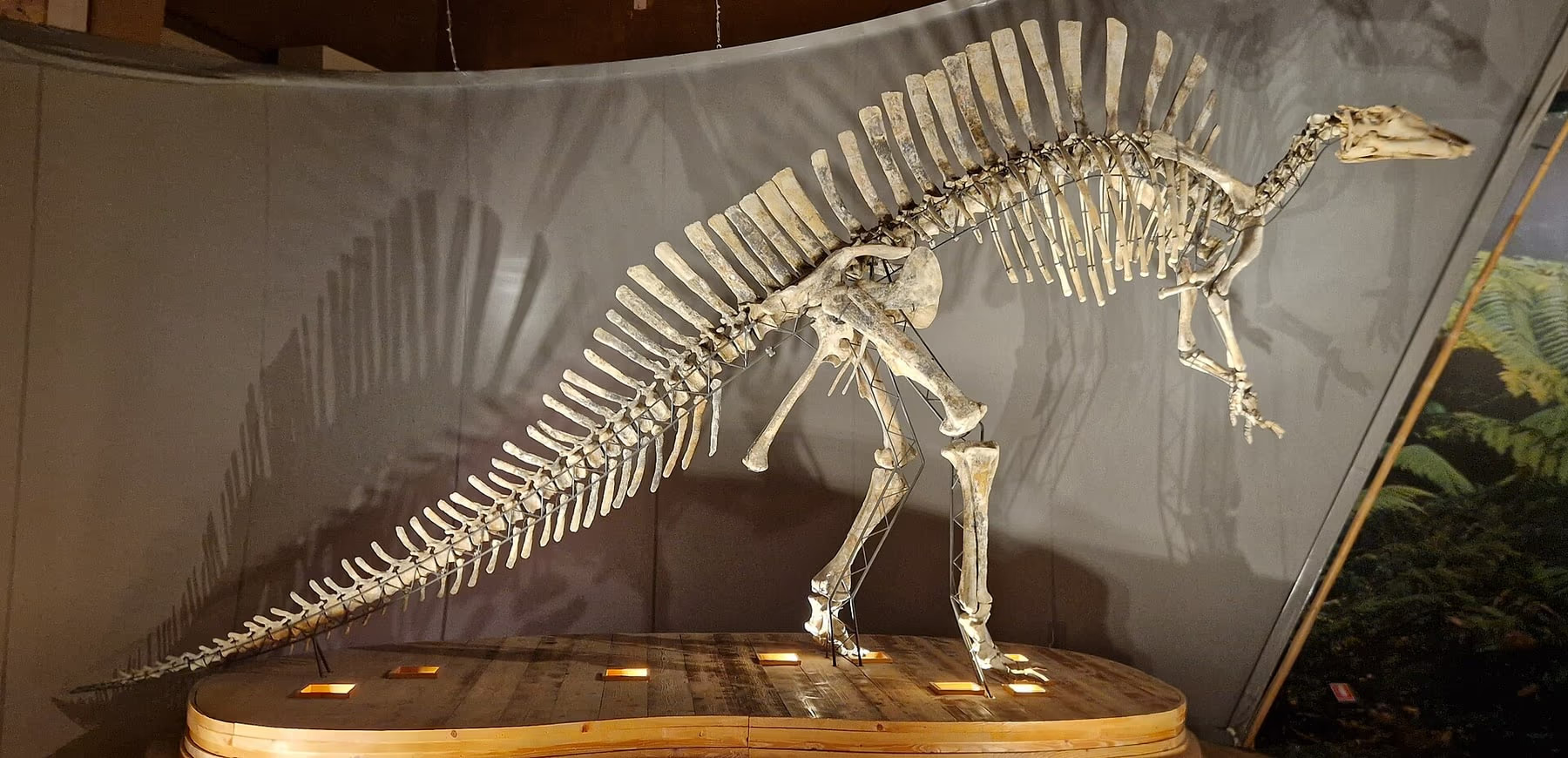
- The fossils. This is what brings people in: the skeleton of Ouranosaurus nigeriensis, a herbivorous dinosaur of the Cretaceous about seven metres long, next to the skull of the giant crocodile Sarcosuchus imperator. Both come from expeditions led in the Ténéré desert, in Niger, by the Venetian naturalist Giancarlo Ligabue, after whom the museum is now named.
- The birth of natural history collecting. Cabinets of curiosities, herbaria, nineteenth-century taxidermy: the section traces the move from private curiosity to scientific museum.
- Living forms. Thematic cases on adaptation and specialisation, from flight to camouflage.
The Fondaco dei Turchi: why the building matters as much as the collections
The Fondaco dei Turchi is thirteenth-century in origin, one of the oldest frontages on the Grand Canal, recognisable by its long portico of round arches and the two towers at either end. From 1621 to 1838 the Republic assigned it to Ottoman merchants as a warehouse, lodging and place of worship, which is where the name comes from.
What you see today, though, is largely a nineteenth-century rebuild. Between 1858 and 1869 the building, by then in very poor condition, was reconstructed according to what the nineteenth century believed thirteenth-century Venice had looked like: a restoration argued over then and argued over now, which leaves the facade more regular and more modern than it appears. It housed the Museo Correr first, and from 1923 the natural history collections.
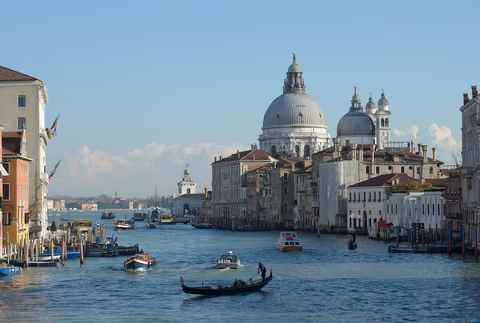
The practical consequence for you: look at the facade from the water, not from the street. Line 1 between Riva de Biasio and San Stae passes directly in front and gives you the only sensible view of it.
Visiting with children: the route that works
Ninety minutes is the real attention span of a child between five and ten. Build the visit around that, not around the two and a half hours the museum could fill.
- Go straight up to the fossils if the museum is full of school groups; otherwise stay on the ground floor. The dinosaur is the high point of the visit, and wasting it at the end, when everyone is tired, is the classic mistake.
- Stop at the Tegnùe aquarium for at least five minutes standing still in front of the glass. It is the one room where children concentrate on their own.
- Skip the collecting section if your children are under eight: those cases are there to be read, not looked at.
- Finish in Campo San Giacomo dell'Orio, five minutes away, with an ice cream and half an hour of running about.
On logistics: a pushchair fits almost everywhere on the ground floor, the first floor is reached by stairs, and whether a lift is available needs checking on the day. There is no restaurant inside, but the bars on Campo San Giacomo dell'Orio and along the Riva de Biasio are a few minutes away and cost far less than anywhere around St Mark's.
When to go
The first hour after opening is the best, as at any museum with school groups: classes generally arrive between 10:00 and 10:30 and cluster on the ground floor. Go in at opening and head straight up to the fossils, and you cross them going the other way.
On Fridays and Saturdays in summer the museum stays open until 20:00 (last entry 19:00): in 2026 that window ran from 1 May to 26 September. The evening visit is the quietest of the whole week.
Mondays are closed. Around public holidays and long weekends it is worth checking the official hours page at https://msn.visitmuve.it before crossing half the city.
In rain or acqua alta — the tidal flooding that hits the city in autumn and winter — this museum is one of the best choices going: it sits above the level of the square, the whole route is indoors and it needs no timed booking. It is also drier and less crowded than the museums on St Mark's Square, which fill up by 11:00 in bad weather.
How to save
- Concession at €7.50: ages 6–14, students 15–25, over-65s, staff of the Italian culture ministry, Rolling Venice and ISIC card holders. Bring ID.
- Free: children 0–5, residents and anyone born in the municipality of Venice, disabled visitors with a carer, ICOM members, licensed guides with a group, accompanying teachers (maximum two per class) and MUVE Friend Card holders.
- The Senior + Junior offer: in groups of at least two adults and one young person up to 16, everyone paying gets the concession rate. Two adults and one child drop from €37.50 to €22.50.
- Schools at €4 per person from 1 September to 15 March, by booking.
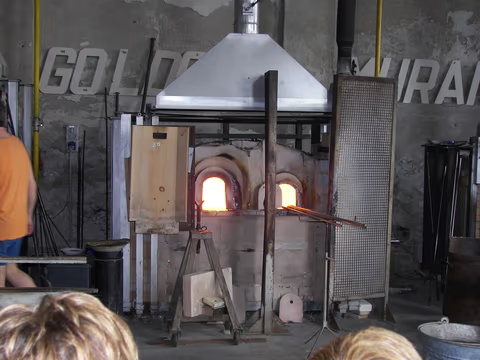
- Museums Pass at €50 (€25 concession): six months' validity, one entry per museum. The pass includes the Glass Museum, so if Murano and its furnaces are already on your list the sums change quickly.
The mistake that costs money: buying a single ticket here and then, two days later, a second single ticket for the Doge's Palace at €35. If you know in advance that you will do both plus a third museum, the pass pays for itself.
Bear in mind too that telephone bookings go through CoopCulture: 848 082 000 from Italy, +39 041 42730892 from abroad, or prenotazionivenezia@coopculture.it.
Getting there
Address: Fondaco dei Turchi, Santa Croce 1730, Salizada del Fontego dei Turchi, 30135 Venice.
By vaporetto: line 1, San Stae or Riva de Biasio stops, both three to five minutes' walk away. Line 1 is the slow one that stops everywhere along the Grand Canal, and that is exactly what makes it useful. The ACTV pass (ACTV is the city's public transport operator) starts at €12 on Tiqets, and the formulas are compared on the vaporetto and ACTV page.
On foot from Santa Lucia station: about 10 minutes. Come out, turn right along the fondamenta, and cross the Ponte degli Scalzi only if you are going somewhere else: for the museum you stay on the station side, carry on along the Riva de Biasio and follow the signs for San Giacomo dell'Orio.
From Piazzale Roma: 12–14 minutes on foot, or one vaporetto stop.
From St Mark's: about 30 minutes on foot or 35 on line 1. This is not a museum that fits neatly into the same half-day as St Mark's Square.
What else is nearby
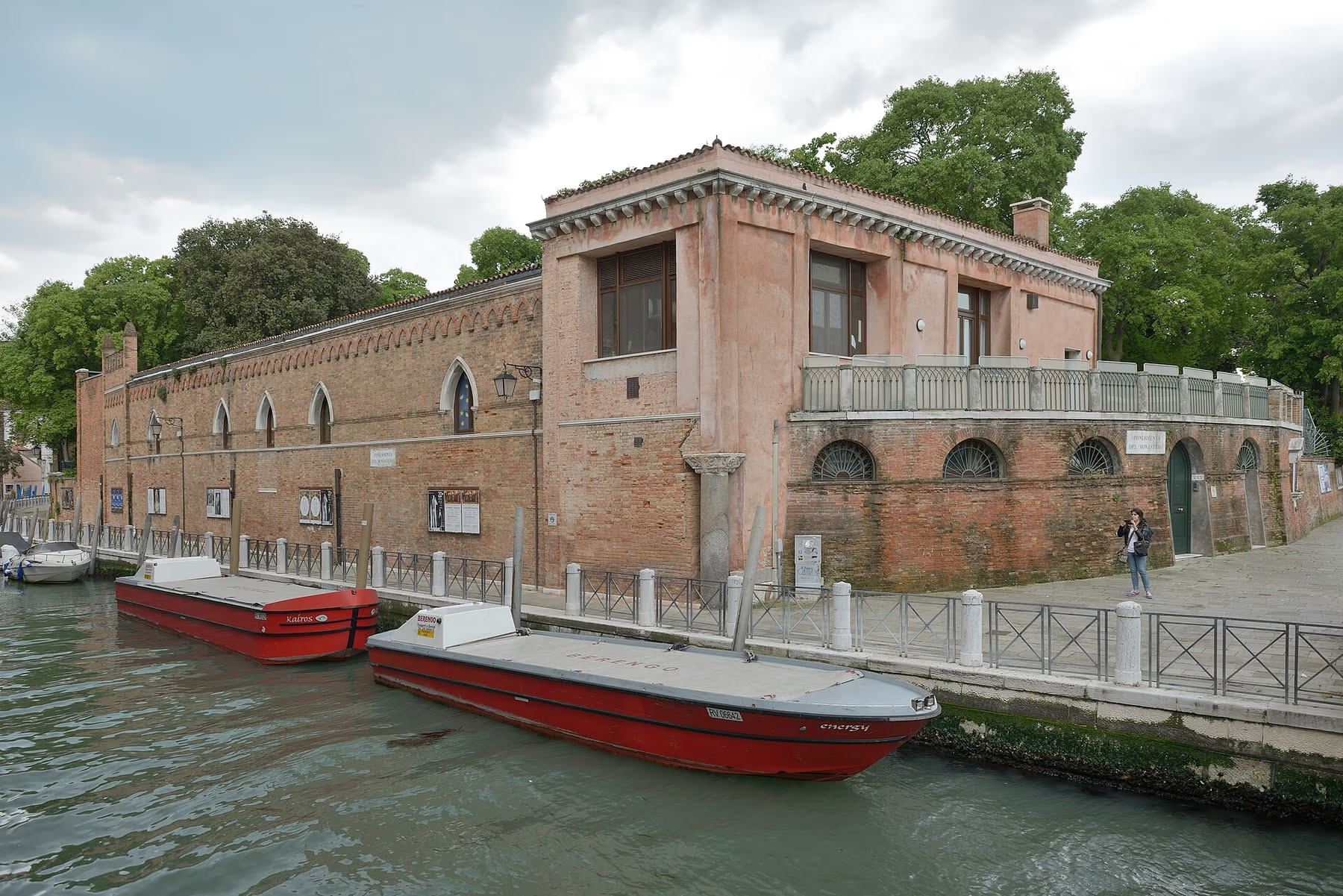
- Ca' Pesaro, six minutes on foot: the International Gallery of Modern Art and the Museum of Oriental Art in the same palace, tickets from €15 and entry included in the Museums Pass.
- Campo San Giacomo dell'Orio, five minutes: one of the few Venetian squares with trees, benches and children playing. The right pause between one museum and the next.
- Palazzo Mocenigo, eight minutes: textiles, costume and perfume, also on the civic circuit.
- Rialto market, 12 minutes: the fish market trades in the morning from Tuesday to Saturday, closed Sunday and Monday.
- Santa Lucia station, 10 minutes: handy if the museum is your first or last stop of the day.
The Natural History Museum in Venice is the ticket we recommend to anyone travelling with children under twelve who has already worked out that three hours of queuing at St Mark's is a bad idea: €15, a real dinosaur and a thirteenth-century palace on the Grand Canal.