Which ticket to choose
Palazzo Labia
free, by appointment
Best for:Anyone with time, flexible dates and weeks of notice
- The Tiepolo ballroom
- No ticket is sold online by anyone
Ca' Rezzonico Museum: Fast Track Ticket
from €15
Best for:Seeing frescoes by Giambattista and Giandomenico Tiepolo whenever you like
- Fast track entry to Ca' Rezzonico
Palazzo Fortuny: Entry Ticket
from €15
Best for:A Gothic palace turned studio, full of textiles and staged interiors
- Entry to Palazzo Fortuny
Musei del Settecento Veneziano: Ca'Rezzonico, Mocenigo Palace & Goldoni House
from €20
Best for:Longer stays and the full picture of the eighteenth century
- Ca' Rezzonico
- Palazzo Mocenigo
- Casa Goldoni
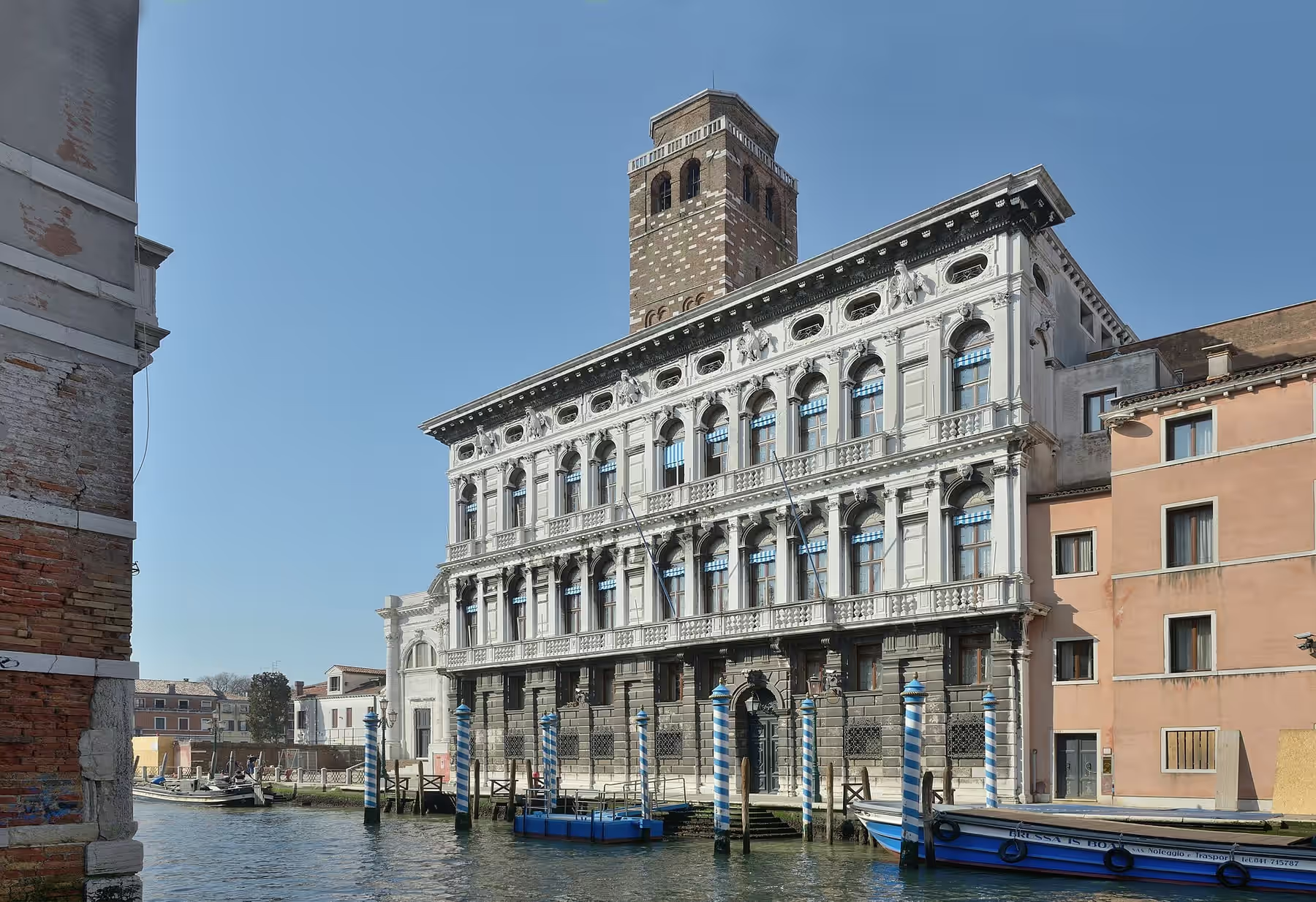
Palazzo Labia Venice holds one of the most important fresco cycles of eighteenth-century Europe and is, at the same time, a place you cannot buy your way into. Since 1964 the building has been the regional headquarters of RAI, the Italian state broadcaster, for the Veneto: offices fill most of the palace, the ballroom frescoed by Giambattista Tiepolo is used for concerts and recordings, and public visits are free but rare and by appointment.
Get the rule straight first, because it is the source of almost every disappointment here: there is no ticket office, there are no online tickets, there are no published opening hours. Anyone promising you guaranteed paid access is selling something they cannot deliver.
How people actually get in
Access to the Tiepolo ballroom is free and has to be agreed in advance by writing to the RAI Veneto office. Visits are generally held on certain weekdays, in small groups, in slots that fit around the work of the building. Three things to know before you write:
- Ask weeks ahead. Availability depends on meetings, recordings and company events. A request sent from your hotel in Venice for tomorrow morning almost never works.
- Give numbers and alternative dates. Proposing a single date is close to guaranteeing a no.
- Do not build your itinerary around this visit. Treat it as a bonus: if the confirmation comes, rearrange the day around it; if it does not, you have lost nothing.
The second route is the special openings: the FAI spring and autumn open days — FAI is the Italian national trust — plus musical events and initiatives run by the city and by RAI. Dates are announced at short notice and places go within hours. If you are in Venice on one of those weekends, check the FAI calendar at fondoambiente.it.
The third route is the private visits arranged by the city's cultural institutions, which occasionally put Palazzo Labia into their programmes for members and supporters. They are not on sale as tourist tickets.
What is inside the Tiepolo ballroom
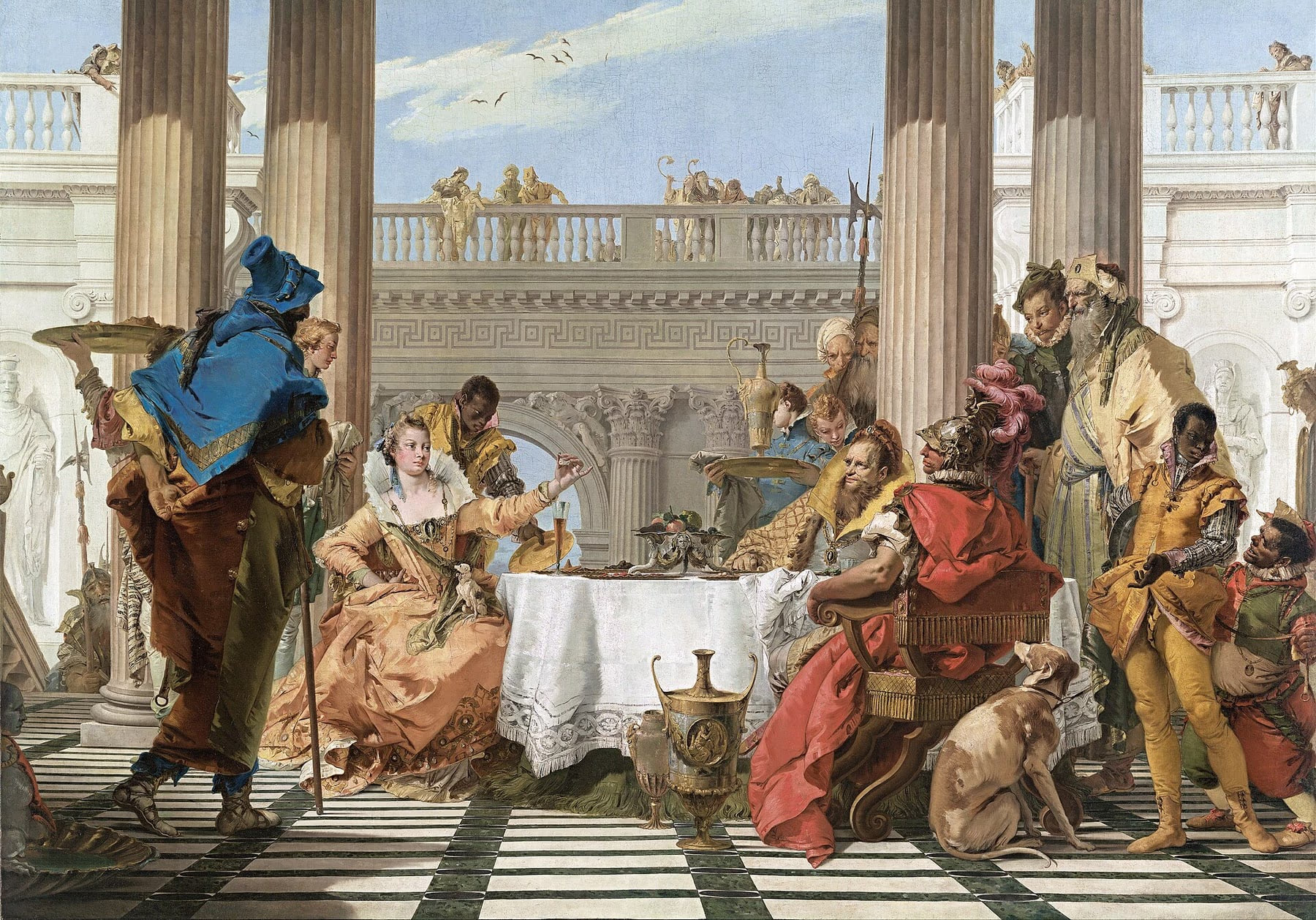
The ballroom was redesigned by Giorgio Massari around the middle of the eighteenth century and frescoed by Giambattista Tiepolo in about 1746-1747, working with the specialist in painted architecture Girolamo Mengozzi Colonna, who supplied the illusionistic setting the figures move through.
Two famous scenes fill the walls: the Meeting of Antony and Cleopatra and the Banquet of Cleopatra, the one in which the queen dissolves a pearl in vinegar to prove how rich Egypt is. On the ceiling, Bellerophon rides Pegasus.
The reason this cycle matters more than others is technical: walls and ceiling are conceived as one continuous space. The painted columns carry on from the real ones, the figures lean out over the balustrades, the painted light follows the light from the windows. This is the point at which Venetian painting stops decorating a room and starts building another one.
As for why the Labia family commissioned something on this scale, the answer is less noble than the art: they were merchants of Catalan origin who bought their way into the Venetian patriciate in the seventeenth century, when the Republic was selling titles to pay for its wars. The palace, with its three facades, was the public proof that they had made it.
In the twentieth century the building had a second, more social life: in 1951 its then owner, Charles de Beistegui, threw a masked ball there that is still a landmark in the history of European costume.
The alternatives: where to see Tiepolo with a ticket in your hand
If it is Tiepolo you care about rather than this particular palace, Venice has three alternatives open every day.
Ca' Rezzonico, on the Grand Canal in Dorsoduro, is the most direct: the Museum of Eighteenth-Century Venice fills Baldassare Longhena's palace and holds a ceiling frescoed by Giambattista Tiepolo and, on the floor above, the rooms of Giandomenico Tiepolo frescoes detached from the family villa at Zianigo. The Ca' Rezzonico Museum: Fast Track Ticket starts at €15 and has 4.5 stars from 121 reviews.
The Scuola Grande dei Carmini, a short walk from Campo Santa Margherita, has in its upper hall the nine canvases Giambattista Tiepolo painted between 1739 and 1749. You look at them with your neck bent back, and they cost a few euros.
The Gesuati church on the Zattere keeps the ceiling with the Scenes from the Life of St Dominic, again by Giambattista Tiepolo, and is visited through Chorus, the association that runs paid entry to sixteen Venetian churches.
If you want the whole century, the pass covering Ca' Rezzonico, Palazzo Mocenigo and Casa Goldoni costs from €20: less than two single tickets. The comparison with the other formulas is on our passes and combos page.
Book with instant confirmation


If you want a Venetian palace you can visit today
The Labia case is a useful reminder: many of Venice's historic palaces are offices, private homes or closed foundations. The ones you can genuinely visit, with a ticket and opening hours, are few, and worth knowing.
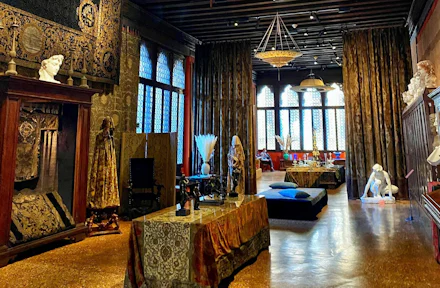
Palazzo Fortuny, in Campo San Beneto near Campo Sant'Angelo, is the closest in atmosphere: a Gothic building with seven bays across its front, bought by the designer and stage designer Mariano Fortuny, who turned it into a studio and workshop. Inside are the winter garden, the painting studio on the main floor, textiles, lamps and the family's collection of antiquities. Tickets start at €15 and it has 4.5 stars from 93 reviews. It is a palace deliberately kept in half-light: anyone expecting bright rooms and long labels will be thrown.
Palazzo Mocenigo, in Santa Croce, keeps its eighteenth-century interiors almost intact and houses the museum of textiles and costume, with a section on perfume: Venice was a European capital of the perfume trade, and the display reconstructs the stills and the formulas. It costs from €15 and is one of the least crowded civic museums in the city.
Book with instant confirmation

Palazzo Mocenigo is in the Museums of Eighteenth-Century Venice pass along with Ca' Rezzonico and Casa Goldoni: visit two of the three and the €20 pass is already ahead of single tickets. Palazzo Fortuny is paid for separately.
Seeing the palace from outside: what you get and what you miss
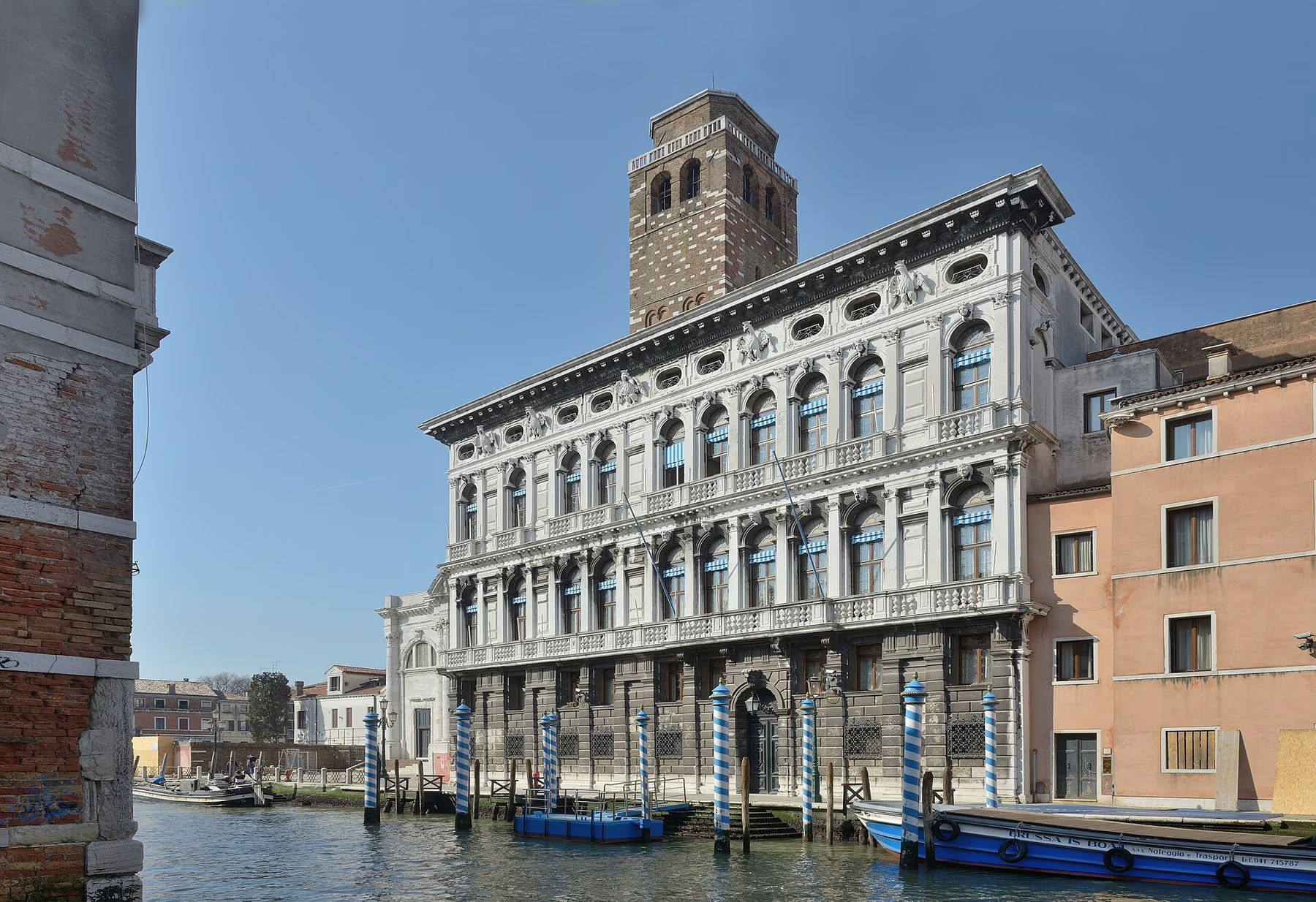
The exterior is public and costs nothing. Palazzo Labia is one of the few Venetian buildings with three fronts: one on Campo San Geremia, one on the Cannaregio canal and a later one facing the Grand Canal. It is the only way to grasp the scale of the thing.
The best vantage point is the Ponte delle Guglie: from there you take in the side facade, the mouth of the canal and the vaporetto traffic in one go. From the water, any line running along the Cannaregio canal passes beneath the facade, which is the cheapest way to get a decent photograph. How the ACTV lines work — ACTV runs the city's public transport — is explained in our guide to vaporetto tickets.
What you cannot get from outside is precisely the thing that matters: the frescoed ballroom is interior, with no view of it from the street. No window will give you a glimpse of Tiepolo.
When to go to this part of town
Time of day. Campo San Geremia is the compulsory route between the station and Rialto: from 09:00 to 11:00 and from 16:00 to 19:00 a continuous stream of wheeled suitcases crosses it. Before 09:00 the campo is empty and the facade takes the morning light.
The season. Cannaregio stays liveable even in high season, because the tourist traffic sticks to the Lista di Spagna–Strada Nova axis. Move fifty metres onto the side fondamente, the canal-side quays, and you are back in a normal city.
Acqua alta. Campo San Geremia and the Lista di Spagna are among the first areas to flood during high tides — acqua alta is the tidal flooding that hits the city in autumn and winter — because the canal is so close. With a tide above 110 cm, bring boots or change your route.
Getting there
Address: Campo San Geremia, Cannaregio 275, 30121 Venice.
Vaporetto. The Guglie stop (lines 4.1, 4.2, 5.1, 5.2) is 2 minutes' walk away. Otherwise Ferrovia (lines 1, 2, 4.1, 4.2, 5.1, 5.2), 6 minutes along the Lista di Spagna.
On foot. From Santa Lucia station it is 6 minutes in a straight line: come out, turn right, follow the Lista di Spagna to the campo with the church. From Piazzale Roma 12 minutes across the Ponte della Costituzione. From Rialto about 15 minutes along the Strada Nova.
If you arrive by train with a few hours to fill, this is one of the few areas where a forty-minute walk makes sense without risking your connection.
What else is nearby
- San Geremia church, on the same campo: it holds the body of St Lucy, moved here in the nineteenth century. Free to enter.
- Jewish Ghetto, 6 minutes: the first ghetto in Europe, with the Jewish Museum and synagogues you can see on a guided tour.
- Ponte delle Guglie, 2 minutes: one of the few Venetian bridges with obelisks, and a good spot for photographs along the canal.
- Fondamenta della Misericordia and degli Ormesini, 12 minutes: the row of bacari, the small wine bars where Venetians drink in the evening.
- Palazzo Vendramin Calergi, 12 minutes along the Strada Nova: the casino, and the house where Richard Wagner died, with rooms you can see by appointment.
In short: Palazzo Labia Venice is free to look at from outside, free to visit inside by appointment only, and has no commercial equivalent. Nobody can sell you a ticket for it, so if the trip is short and you want certainties, put your money on Ca' Rezzonico and keep Palazzo Labia as an attempt. The full picture of what needs booking and what does not is on our Venice tickets page, and the priorities for a first trip are in what to do in Venice.