Which ticket to choose
Querini Stampalia Foundation: Entry Ticket
from €17
Best for:Anyone who wants the ticket on their phone and no dependence on the ticket desk
- House museum
- Scarpa ground floor and garden
- Temporary exhibitions
Full-price ticket at the ticket office
€15
Best for:Anyone already standing in Campo Santa Maria Formosa with time to spare
- Exactly the same route as the online ticket
Negozio Olivetti: Entry Ticket
from €13
Best for:Anyone continuing the Carlo Scarpa trail on St Mark's Square
- Entry to the showroom
- Audio guide in Italian and English
Palazzo Fortuny: Entry Ticket
from €15
Best for:Anyone after another Venetian house museum without the crowds
- Entry to Palazzo Fortuny
The Fondazione Querini Stampalia is the museum Venetians point you towards when they can see you have had enough of queuing: a sixteenth-century palace on Campo Santa Maria Formosa, six minutes' walk from Rialto, where a single ticket buys you an eighteenth-century house museum, a ground floor designed by Carlo Scarpa and a garden you would never guess at from the street. Full price at the desk is €15; online the Querini Stampalia Foundation: Entry Ticket starts at €17 and lands on your phone straight away.
Tickets: which one is worth it
There is no skip-the-line ticket here, for the simple reason that there is hardly ever a line. The choice is between buying online and buying at the ticket office.
The online ticket costs a few euros more than the list price. What you pay for is the QR code on your phone, freedom from the ticket office hours (it shuts half an hour before the museum) and the ability to change your plans without having queued in person first. The foundation's ticket on Tiqets holds 4.2 stars from 20 reviews: modest numbers, typical of a museum mass tourism has not found, not a warning sign.
Buying at the desk makes sense if you are already on the campo, it is eleven in the morning and nothing else is booked. You pay €15 and can claim the reductions on the spot: €12 for over-70s and groups of ten or more, €10 for university students under 26 with a valid card, €24 for a family (two adults with children and teenagers under 18).
One detail worth the price of the ticket on its own: whichever version you buy, it is valid for the whole day. See the house museum in the morning, go out for lunch, come back in the afternoon for the temporary exhibition, and you pay once.
Book with instant confirmation


What to see inside
The visit reads as three buildings stacked on top of each other, put up in three different centuries.
Carlo Scarpa's ground floor and garden
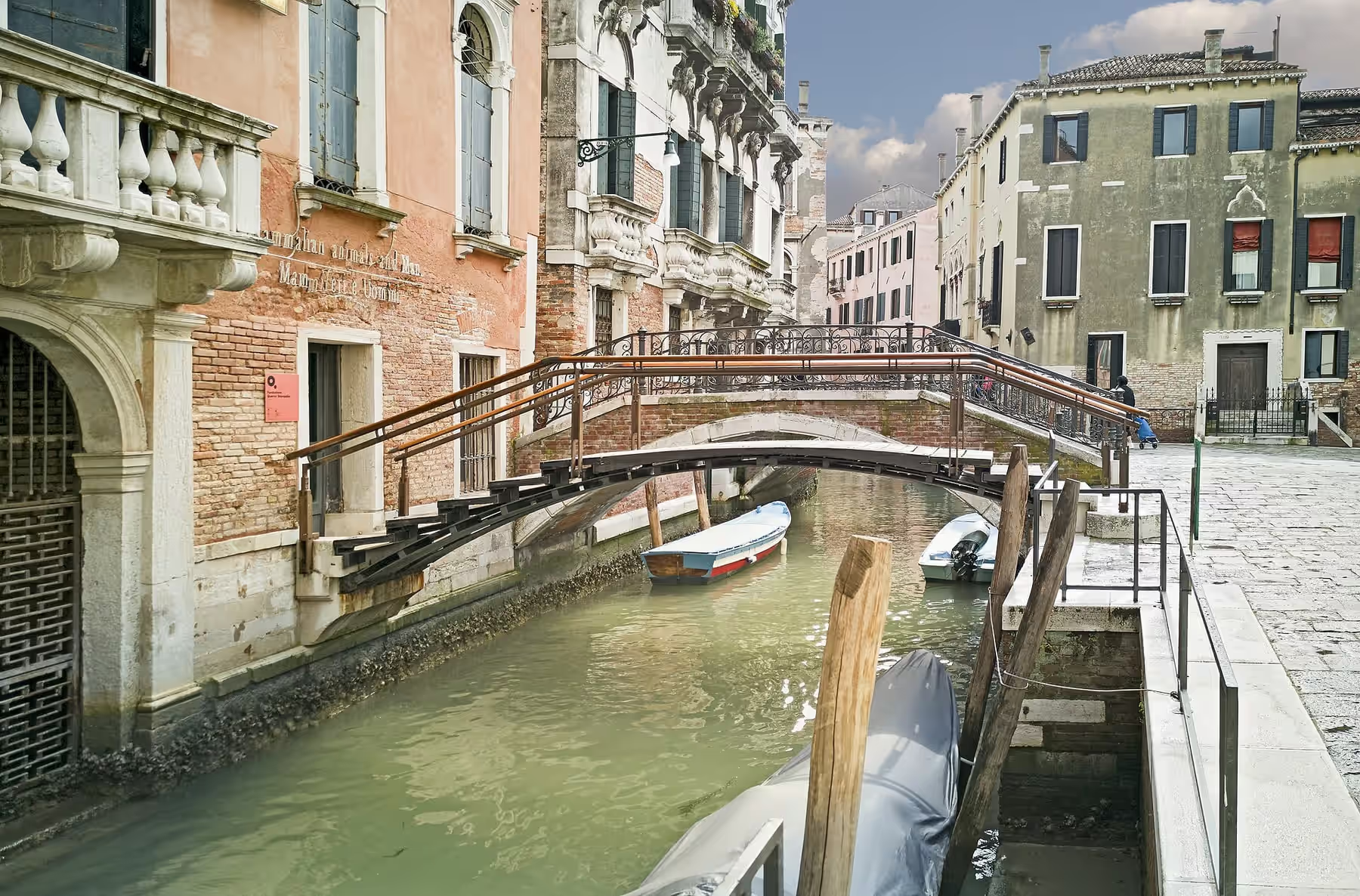
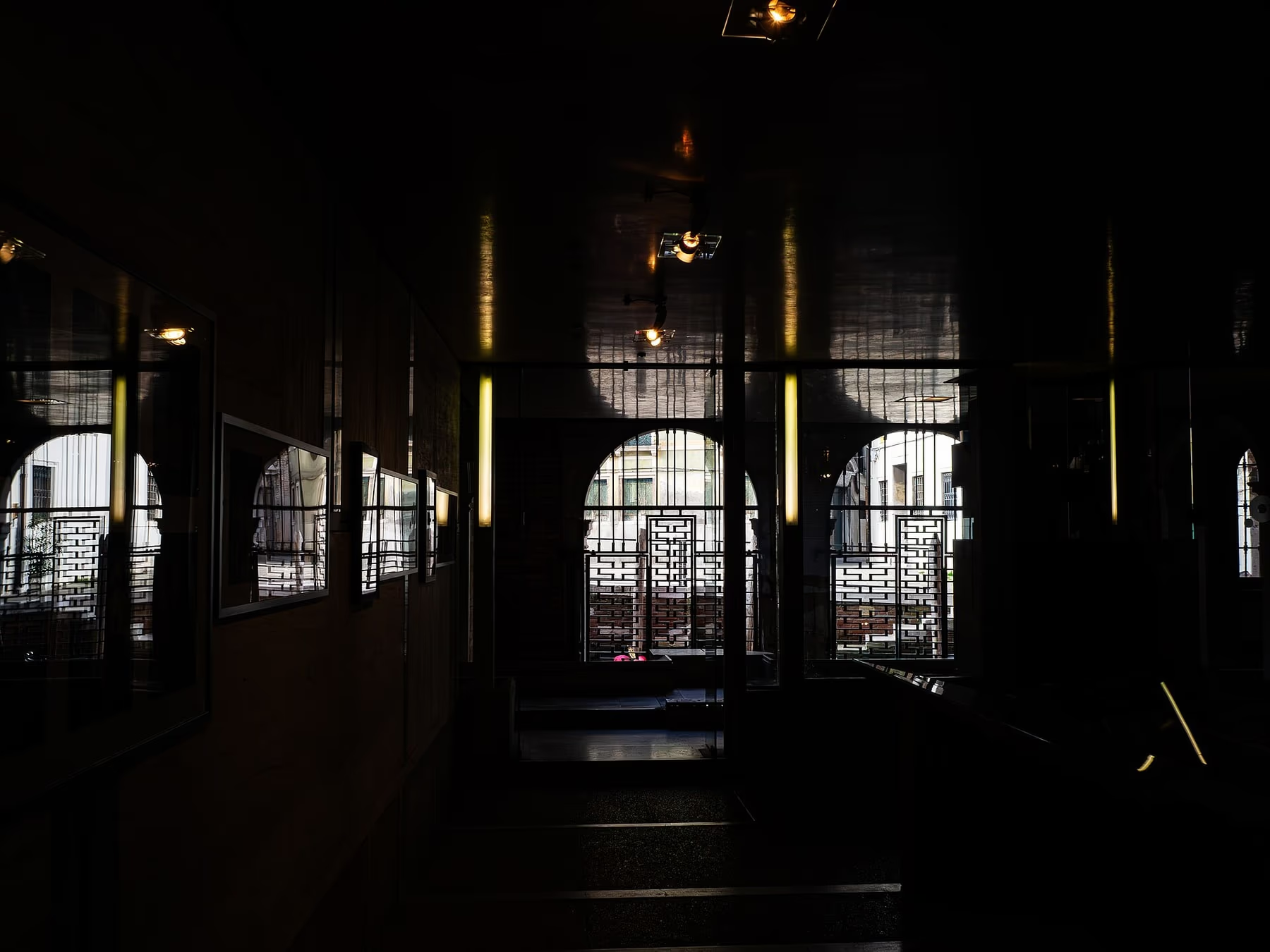
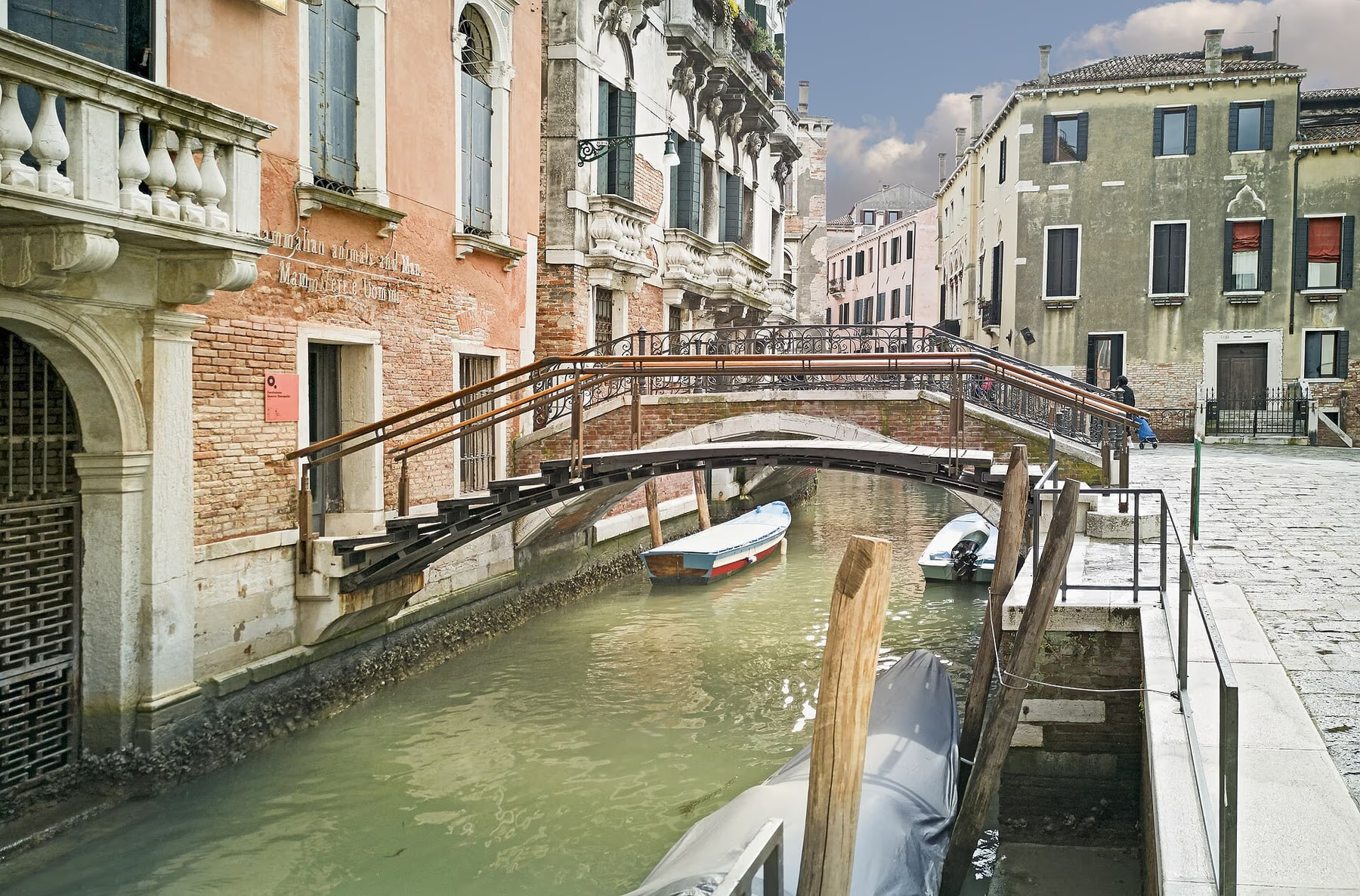
This is why architects from all over the world put the Querini at the top of their list. Between 1959 and 1963 Carlo Scarpa, the Venetian architect who reworked the ground floor in the 1960s, redesigned the entrance, the ground-floor rooms and the garden at the back. Rather than fight the acqua alta, the tidal flooding that hits the city in autumn and winter, he let it in: the canal reaches the building through channels cut in Istrian stone, and the route through the rooms runs on raised walkways. The iron and timber footbridge to the door is his as well.
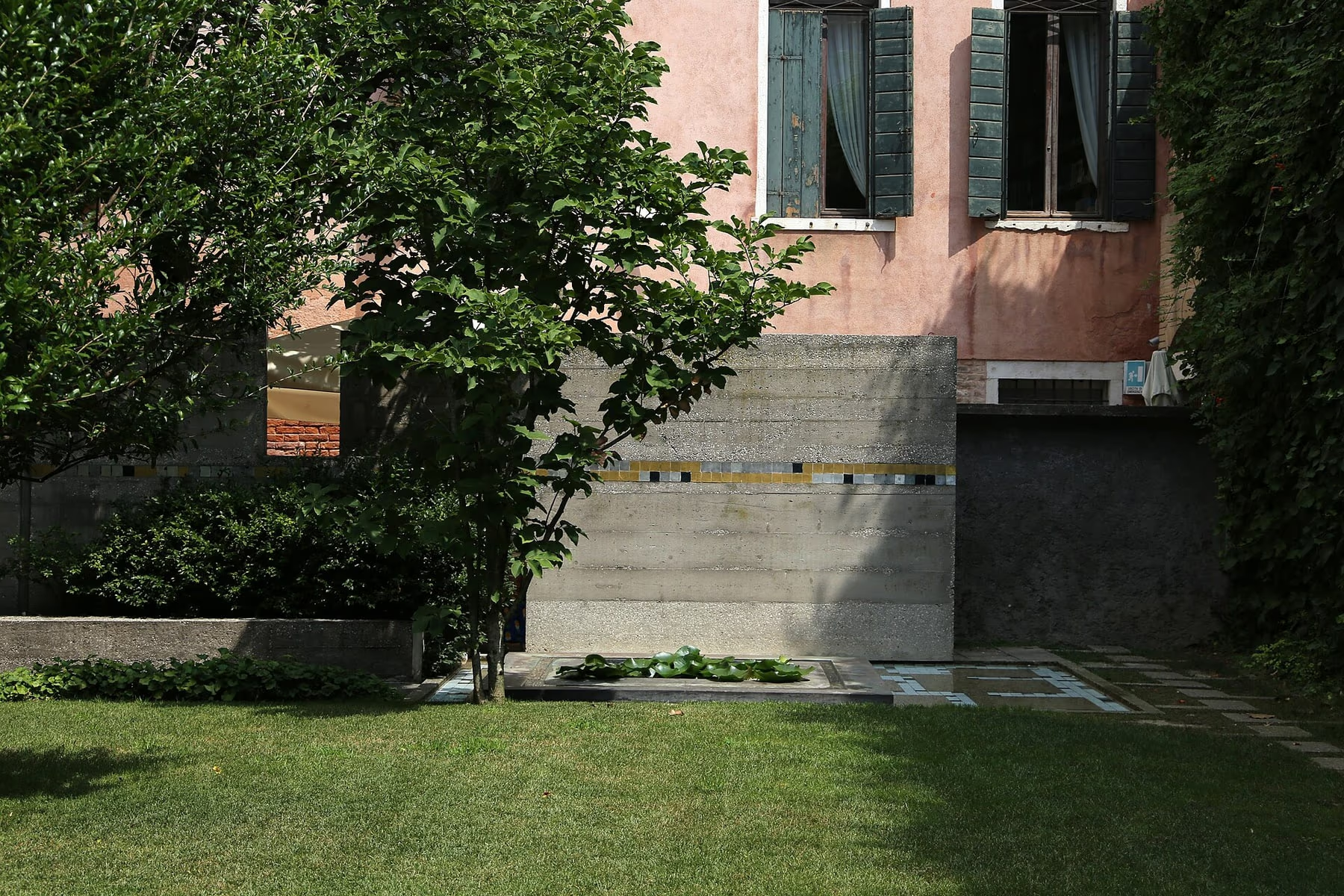
Look at the details, because that is where the work is: the brass joints, the corners never quite closed, the bare concrete set against old marble. In the garden, which you cannot see from the street, a long water channel carries the canal to a small alabaster fountain.
The house museum on the second floor
The second piano nobile — the main reception floor of a Venetian palace — is still the Querini Stampalia family's apartment, with its furniture, plasterwork, porcelain and more than four hundred paintings and frescoes from the eighteenth and nineteenth centuries. The rooms were never stripped out to make a museum: you walk through them as a house.
Three things not to miss:
- Giovanni Bellini's Presentation of Jesus at the Temple, one of the most argued-over versions of the subject.
- The Pietro Longhi cycle, with its scenes of Venetian domestic life and the Seven Sacraments: eighteenth-century Venice told without flattery.
- The paintings of Gabriel Bella, a visual record of the Republic's festivals, regattas, trials and ceremonies. They are the closest thing we have to photographs of Venice in the eighteenth century.
The foundation was created in 1869 by the bequest of Giovanni Querini Stampalia, the last of the family, who left the palace, the collections and the library to the city to encourage serious study. The library has opened in the evenings ever since: it is one of the few places where Venetian students and visitors share a building for entirely different reasons.
The temporary exhibitions
The exhibition programme is contemporary and changes several times a year; during the Art Biennale and the Architecture Biennale the foundation often hosts pavilions and collateral events. That is when the building genuinely fills up. If you want quiet, avoid the opening days of the Biennale.
Access rules, facilities and timings
The route runs over several levels and this is not a museum to rush: allow an hour and a half, two if a significant exhibition is on. Large rucksacks and umbrellas go in the cloakroom by the entrance. Photographs without flash or tripod are generally allowed in the rooms; in the temporary exhibitions it depends on the loan agreements in force.
The library, the bookshop and the café are free to enter and keep their own hours: the reading room stays open until 20:00 from Tuesday to Friday and until 19:00 at weekends and on public holidays. It is the only library in the historic centre where you can sit and work in the evening without ordering anything, which explains why the palace is full of students long after the museum has shut.
The Tiqets ticket is delivered instantly and valid for the date you choose, with one clause worth reading: it cannot be cancelled. If your plans are still moving, buy on the spot instead.
The museum is listed as wheelchair accessible. Scarpa's ground floor, though, is built around changes of level and walkways: if you have specific requirements, email the foundation before you travel.
When to go
The day. Closed on Mondays. This is the most common mistake, because Venice's civic museums run on a different calendar. Tuesday and Wednesday are the quietest days.
The hour. It opens at 10:00 and the first two hours are close to empty. Late afternoon picks up as the library empties. Remember that the ticket office closes at 17:30: turning up at 17:45 means staying outside.
The light. Scarpa's garden works best in the middle of the morning or late in the afternoon, when raking light separates the materials. The house museum rooms have filtered daylight only: on a grey November day some paintings are hard to read.
Acqua alta. From October to January the tides can come over the threshold. The ground floor is designed to flood in a controlled way, but when the tide is exceptional access to some areas is suspended. Check the forecast from the city's tide centre at www.comune.venezia.it/it/content/centro-previsioni-e-segnalazioni-maree before you leave your hotel.
How to save
- Under-18s go free. Always, not only on special days. With a teenager in tow you do not need the family ticket.
- University students under 26 pay €10 with a card. Bring the document; saying so is not enough.
- Residents of the Venice council area go free on Sundays. If you are staying with Venetian friends, that is their moment.
- Visitors with disabilities go free, with one companion.
- The library, café and bookshop cost nothing. You can walk into the courtyard, have a coffee over the canal and see Scarpa's bridge without paying. It is not the visit, but it is an honest taste of it.
- The mistake that costs money: buying online when you are already at the door. If you are on the campo and the ticket office is open, the €15 list price beats any ticket with a booking fee on top.
The Querini is a private foundation, so it is not in the civic Museum Pass and not in the St Mark's Square combined ticket. If you are working out which entry formula suits the trip as a whole, the full comparison is in our guide to Venice passes and combos.
A half-day Carlo Scarpa itinerary
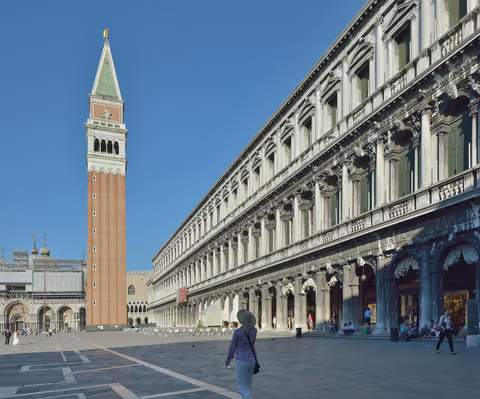
If the ground floor wins you over, there are two more stops within walking distance. The Negozio Olivetti under the Procuratie Vecchie on St Mark's Square is Scarpa's manifesto room: a few square metres, a suspended Aurisina stone staircase and a floor of glass tesserae. It costs from €13 and takes twenty minutes. The third stop, more demanding, is the Gallerie dell'Accademia, where Scarpa designed the display.
In half a day: Querini at 10:00, lunch at Santa Maria Formosa, Olivetti at 15:00. About €30 in total and not one queue.
Getting there
Address: Campo Santa Maria Formosa, Castello 5252, 30122 Venice. The entrance is not on the campo but on the canal, over Scarpa's bridge.
Vaporetto (the city's water bus). The handiest stop is Rialto (lines 1 and 2), about 8 minutes on foot: cross Campo San Bartolomeo, carry on towards Campo Santa Marina and then Santa Maria Formosa. Otherwise San Zaccaria (lines 1, 2, 4.1, 5.1), about 10 minutes by way of Campo San Provolo. To work out which ACTV ticket — ACTV runs the city's public transport — makes sense, see our page on vaporetto tickets.
On foot. From St Mark's Square 10–12 minutes, following the signs for Rialto and turning off towards Santa Maria Formosa. From Santa Lucia station about 30 minutes. From Rialto 6–8 minutes. Wheeled suitcases and Venetian bridges do not mix, so drop your luggage before you come.
What else is nearby
- Santa Maria Formosa church, on the same campo: rebuilt by Mauro Codussi at the end of the fifteenth century, and home to Palma il Vecchio's St Barbara polyptych.
- Campo Santi Giovanni e Paolo (San Zanipolo), 5 minutes: the doges' burial church and Verrocchio's equestrian monument to Colleoni.
- Palazzo Grimani, 3 minutes: a Roman courtyard and frescoed ceilings, in one of the least visited state museums in the city.
- Libreria Acqua Alta, 4 minutes: books stacked in gondolas and bathtubs. Touristy, but the staircase built of books earns its reputation.
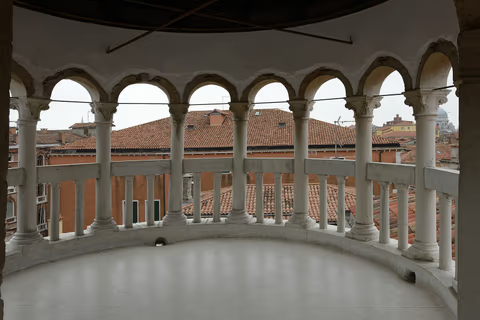
- Scala Contarini del Bovolo, 12 minutes towards St Mark's: from €10, with a rooftop view from the top of the spiral.
Ending the day at the Querini Stampalia works for another reason: you are at the balance point between Rialto and St Mark's, with three or four alternatives less than ten minutes away if the museum turns out to be shut. If you are still building the itinerary, the overview of prices and booking rules for every attraction is on our Venice tickets page.