Which ticket to choose
Standard entry (FAI)
€10 full, €6 concession
Best for:Anyone crossing St Mark's Square with half an hour to spare
- Entry to the showroom
- Downloadable audio guide in Italian and English
Negozio Olivetti: Entry Ticket
from €13
Best for:Anyone who wants a fixed date and time plus free cancellation
- Entry to the showroom
- Audio guide in Italian and English
Negozio Olivetti Guided Tour
from €15
Best for:Anyone who wants Scarpa's design explained, not just looked at
- Reserved entry
- Guide in Italian or English
- Current exhibition
Family ticket (on site)
€27
Best for:Two adults with two or more children aged 6 to 18
- Entry for the whole family group
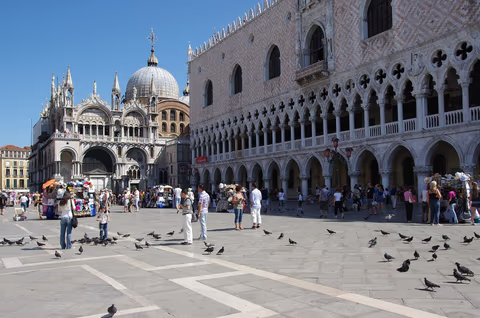
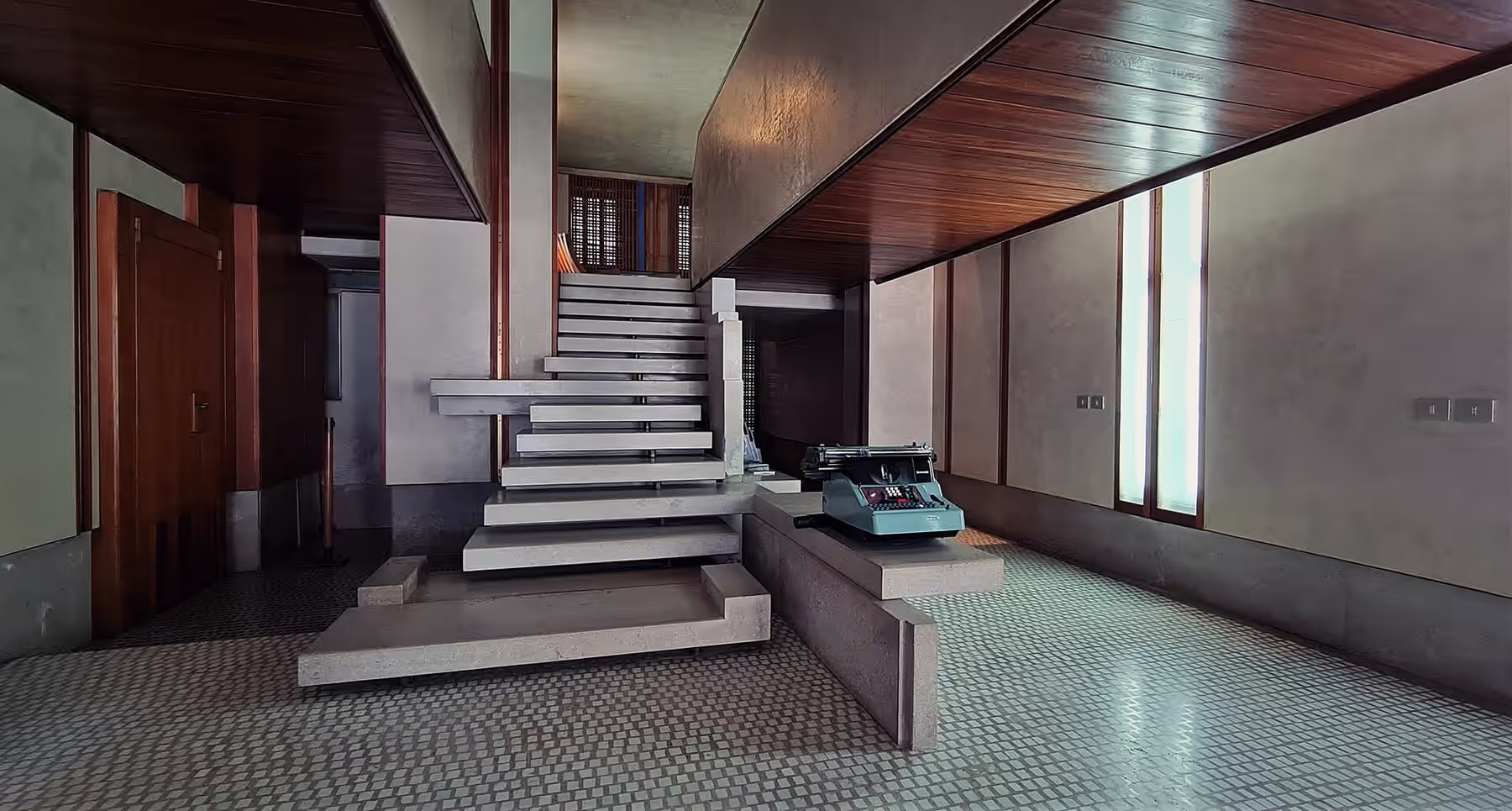
The Negozio Olivetti, the Olivetti Showroom Venice put in the hands of FAI, the Italian national trust, is the shop Carlo Scarpa designed between 1957 and 1958 for Adriano Olivetti, at number 101 on St Mark's Square, under the arcade of the Procuratie Vecchie. It is open to the public today: a long, narrow room that earns its ticket precisely because it contradicts everything you have just seen outside. Ten euros, twenty minutes, and nothing remotely like the queues at the Doge's Palace.
Comparing tickets: desk, online or guided tour
There are three options and the price gap is small, so what matters is the kind of visit you want.
The €10 ticket on the door is the default. You buy it at the desk on the way in, walk straight through and download the audio guide (Italian and English) to your phone. Bring your own headphones: none are provided.
The Negozio Olivetti: Entry Ticket, from €13 online, costs a few euros more and gives you a fixed date and time, cancellation up to 24 hours ahead and instant confirmation on your phone. It makes sense if you are slotting the visit between St Mark's Campanile and the Doge's Palace and would rather not risk finding the room full on an August afternoon.
The Negozio Olivetti Guided Tour, from €15, is the only option that explains why the floor is made the way it is. FAI staff lead it, and the Italian-language tour runs every Sunday at 14:30, by prior booking, with limited places. It is the right ticket if twentieth-century architecture interests you more than the photograph.
If you are already planning a full round of museums, look at the Museum Pass and combo tickets: the Negozio Olivetti is not part of the civic circuits, but the arithmetic changes if you add Ca' Pesaro or Palazzo Mocenigo on the same day.
Book with instant confirmation


What you see inside
There is a single space, about five metres wide and twenty deep, on two levels linked by a staircase. Scarpa worked by subtraction: no applied decoration, everything left to the materials and to the light coming in from the windows on the square.
Four things repay close attention.
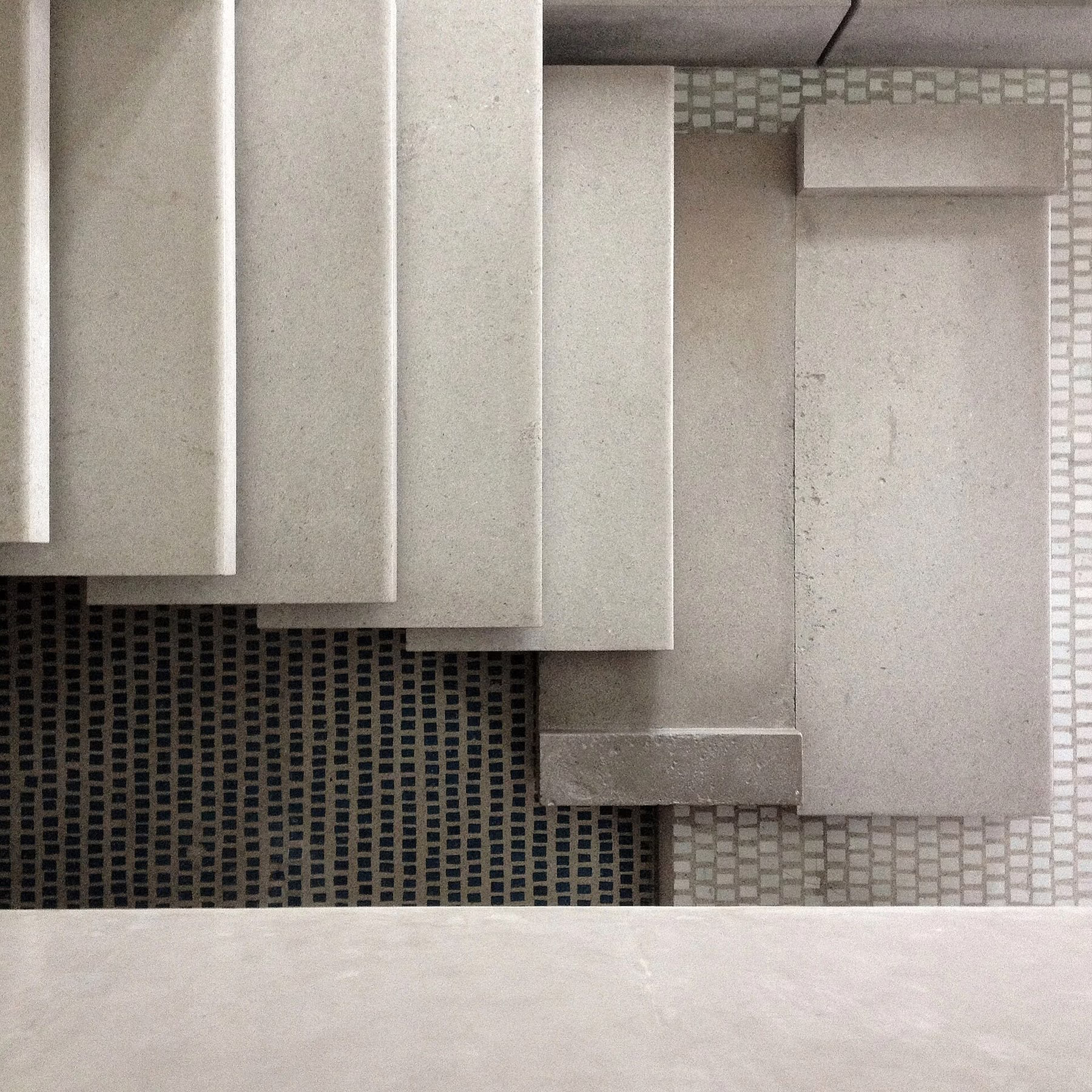
- The Murano glass tile floor: irregular tesserae in four colours, laid without regular joints. The tone shifts depending on where you stand in relation to the window.
- The central Aurisina stone staircase: cantilevered steps, offset, with no handrail. It looks suspended because each block is anchored into the wall on one side only.
- The black marble basin with Alberto Viani's Nudo: the bronze sits on a sheet of water that reflects the timber ceiling.
- The Olivetti machines on display: the brand's historic typewriters and calculators, the object the showroom existed to sell and now the museum piece.
The one thing no photograph conveys is the acoustic contrast: the square is two metres away, behind the glass, and you cannot hear it.
How a showroom became a museum
Adriano Olivetti wanted a Venetian shop window that did more than sell typewriters: it had to prove that an industrial company could produce visual culture on a par with a publishing house. In 1957 he gave the job to Carlo Scarpa (Venice, 1906-1978), the architect who in those same years was rewriting the way Italian museums were laid out, from the Castelvecchio museum in Verona to the Fondazione Querini Stampalia a few minutes from here, where he reworked the ground floor in the 1960s.
What Scarpa was handed was a dark shop squashed under the arcade. His answer was to move the staircase to the middle, open a mezzanine on two sides and treat the floor as a light-reflecting surface, so that daylight off the square bounced up to the ceiling. The result is closer to a museum installation than to a retail unit, which is why it survived the change of use.
After the shop closed, the space had various uses and a long period of neglect. FAI restored it and reopened it to the public in 2011, putting the original fittings and machines back in place. The building still belongs to Assicurazioni Generali, who granted the foundation the use of it.
Access rules: bags, photographs, headphones
The space is small and numbers are limited in practice rather than by a booking system. A few practical rules:
- Rucksacks and bulky bags have to be carried in front of you or left outside: there is no cloakroom and the gaps between the displays are narrow.
- Headphones are not provided: the audio guide is a file you download to your phone, so bring your own earphones or go without the commentary.
- Toilets: there are none for visitors. The nearest public toilets are at the Giardinetti Reali, behind the Piazzetta.
- Dogs: small dogs are allowed in a bag or carrier; guide dogs are always welcome.
- Accessibility: two steps at the ground-floor entrance, and the upper level reachable only by the stone staircase. A wheelchair user sees about half the space.
The Sunday guided tours
FAI runs a guided tour in Italian every Sunday at 14:30. It lasts about an hour, places are counted and it has to be booked ahead. On-site rates are €15 full price, €11 for young people aged 6-18 and students up to 25, €10 for Venice residents, €42 for a family and €5 for FAI members.
On the third Sunday of each month, also at 14:30, the tour is given in Italian Sign Language (LIS) for €5. Groups of 10 to 25 people are quoted individually by writing directly to the property: fainegoziolivetti@fondoambiente.it, telephone 041 5228387. Official information is at https://fondoambiente.it/luoghi/negozio-olivetti/visita.
If you need an English-language tour on a particular date, check first: the calendar changes from month to month.
When to go
The best moment is the 10:00 opening on a weekday, when there are three or four people inside and you can stand still in the middle of the room without getting in anyone's way. The second good moment is after 17:30: the day groups have left St Mark's and low western light crosses the window.
Avoid the 12:00–15:00 stretch from June to September, when the showroom doubles as shelter from the heat, and Sunday afternoons, when the guided tour takes over the room.
It is closed on Mondays, which is the most frequent planning mistake, because Monday is exactly the day many visitors set aside for smaller museums.
On acqua alta, the tidal flooding that hits the city in autumn and winter, there is a specific rule: with a tide forecast above 90 cm above mean sea level, opening hours can change or opening can be delayed. St Mark's Square is the lowest point in the city and the Negozio Olivetti sits at arcade level. Between October and January, check the city tide centre forecast (https://www.comune.venezia.it/it/content/centro-previsioni-e-segnalazioni-maree) the evening before.
How to save
The €6 concession covers young people aged 6 to 18 and students up to 25 with ID. It is not automatic: show your student card at the desk.
Under-6s go free. So do FAI members, INTO and ICOM members, visitors with disabilities and one companion, and accredited journalists.
Residents of the Venice council area pay €5, half price.
The €27 family ticket covers two adults and two children aged 6 to 18, and the price does not rise with a third child: from three children up it stays €27. With four people you save €5 against single tickets; with five you save €11.
FAI membership pays for itself quickly if you are touring Italy: it gives free entry to every FAI property, not just this one.
The mistake that costs money: buying a standard entry online when you are already standing on St Mark's Square. If you have time in hand, the desk is cheaper. The reverse is true in high season, when a guaranteed time slot removes a problem.
One last thing to remember: on the days the council designates, day visitors who are not staying overnight owe the contributo di accesso, the Venice access fee. It is a council tax separate from any museum ticket, it is paid only at https://cda.ve.it, and no ticketing platform can pay it for you. Who pays, who is exempt and how the checks work are all in our guide to the Venice access fee.
Getting there
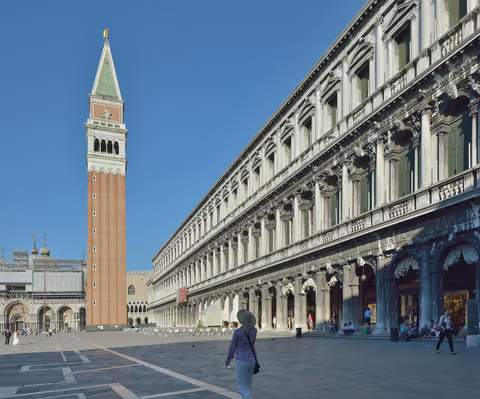
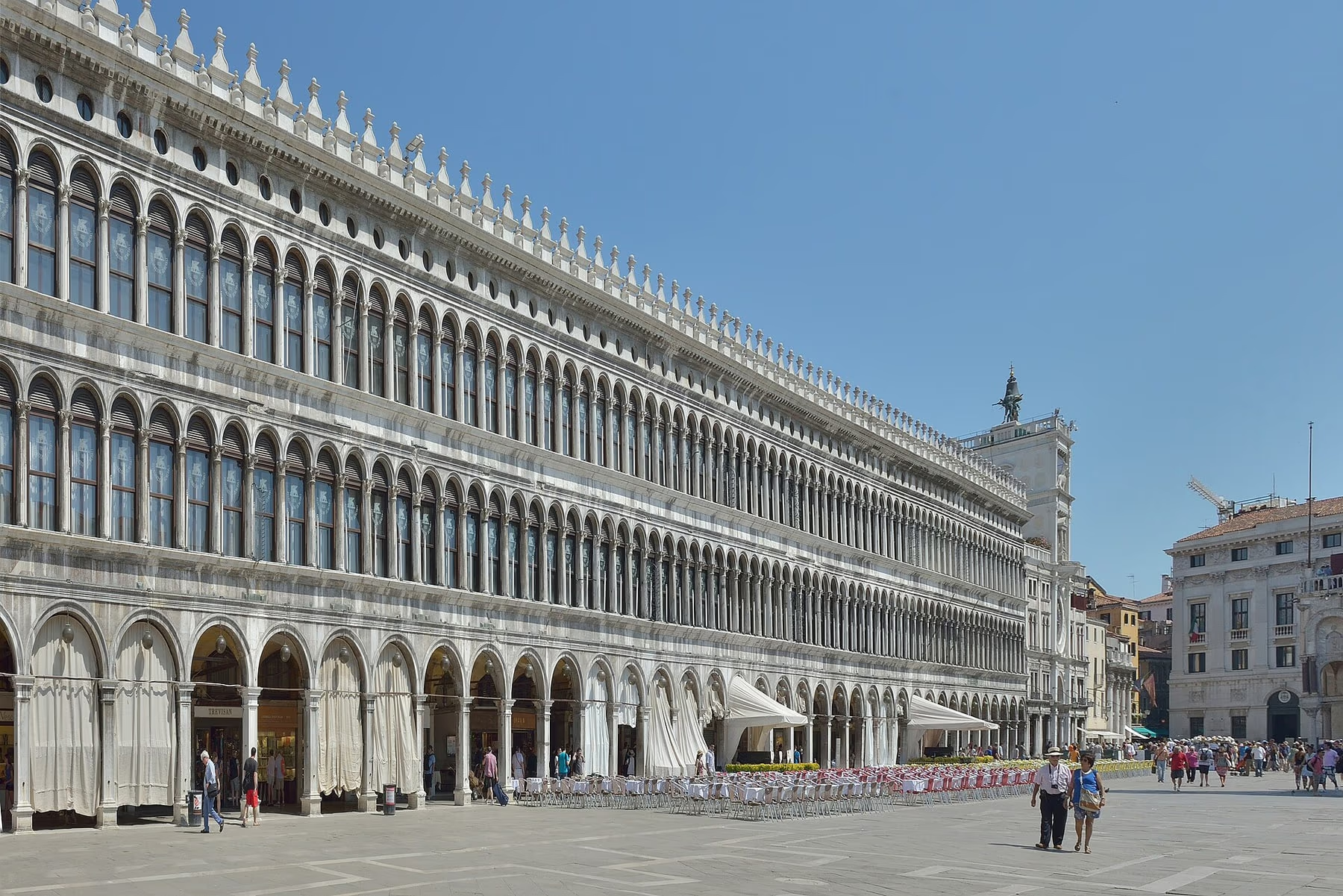
Address: Piazza San Marco 101, 30124 Venice, under the arcade of the Procuratie Vecchie, at the end towards the clock tower.
By vaporetto (the water bus): the San Marco Vallaresso stop (lines 1 and 2) or San Zaccaria (lines 1, 2, 4.1, 4.2, 5.1, 5.2). Both are five minutes' walk away. Coming from Santa Lucia station, line 1 takes about 45 minutes and line 2 about 35: ACTV tickets — ACTV runs the city's public transport — start at €12 on Tiqets for the day pass, and the full comparison is on our vaporetto page.
On foot: ten minutes from Rialto following the signs for San Marco; about 35–40 minutes from the railway station, which is a long way to drag a wheeled case over bridges.
Once you are on the square, stand with your back to the basilica: the Procuratie Vecchie are the long side on your left, the one with the arcade and Caffè Quadri. The Negozio Olivetti is a discreet window with the Olivetti name in the original lettering, and it is easy to walk straight past.
What else is nearby
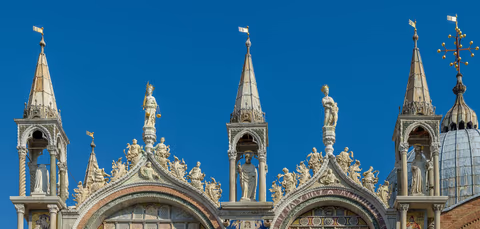
- St Mark's Basilica and the Doge's Palace, two minutes away: the two main tickets on the square, with queues of an entirely different order.
- The Procuratie Vecchie, over your head: since 2022 the main floor has held an exhibition route open to the public, restored by David Chipperfield.
- Fondazione Querini Stampalia, eight minutes on foot towards Santa Maria Formosa: Scarpa's second Venetian project, with the garden and the entrance bridge. If you liked the Negozio Olivetti, this is the logical next stop.
- Museo Correr, under the Procuratie Nuove: included in the Musei di Piazza San Marco (the St Mark's Square Museums ticket).
- St Mark's Campanile, in the middle of the square, for the view out over the lagoon.
A well-built afternoon in the San Marco sestiere holds together the Olivetti Showroom Venice, the Querini Stampalia and a coffee in Campo Santa Maria Formosa: two works by Scarpa and not one queue.