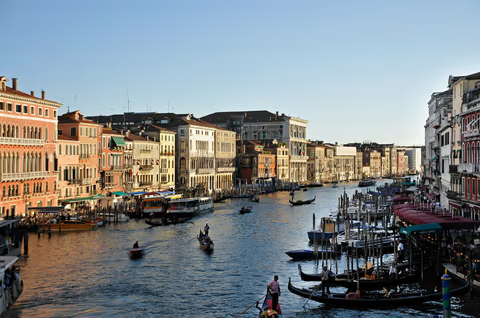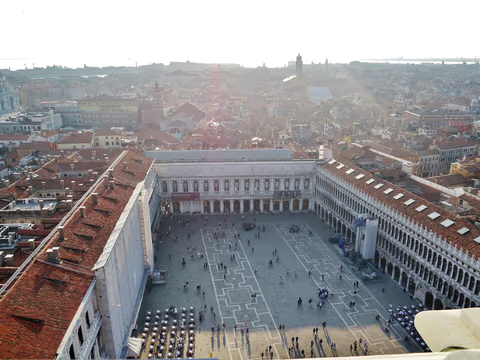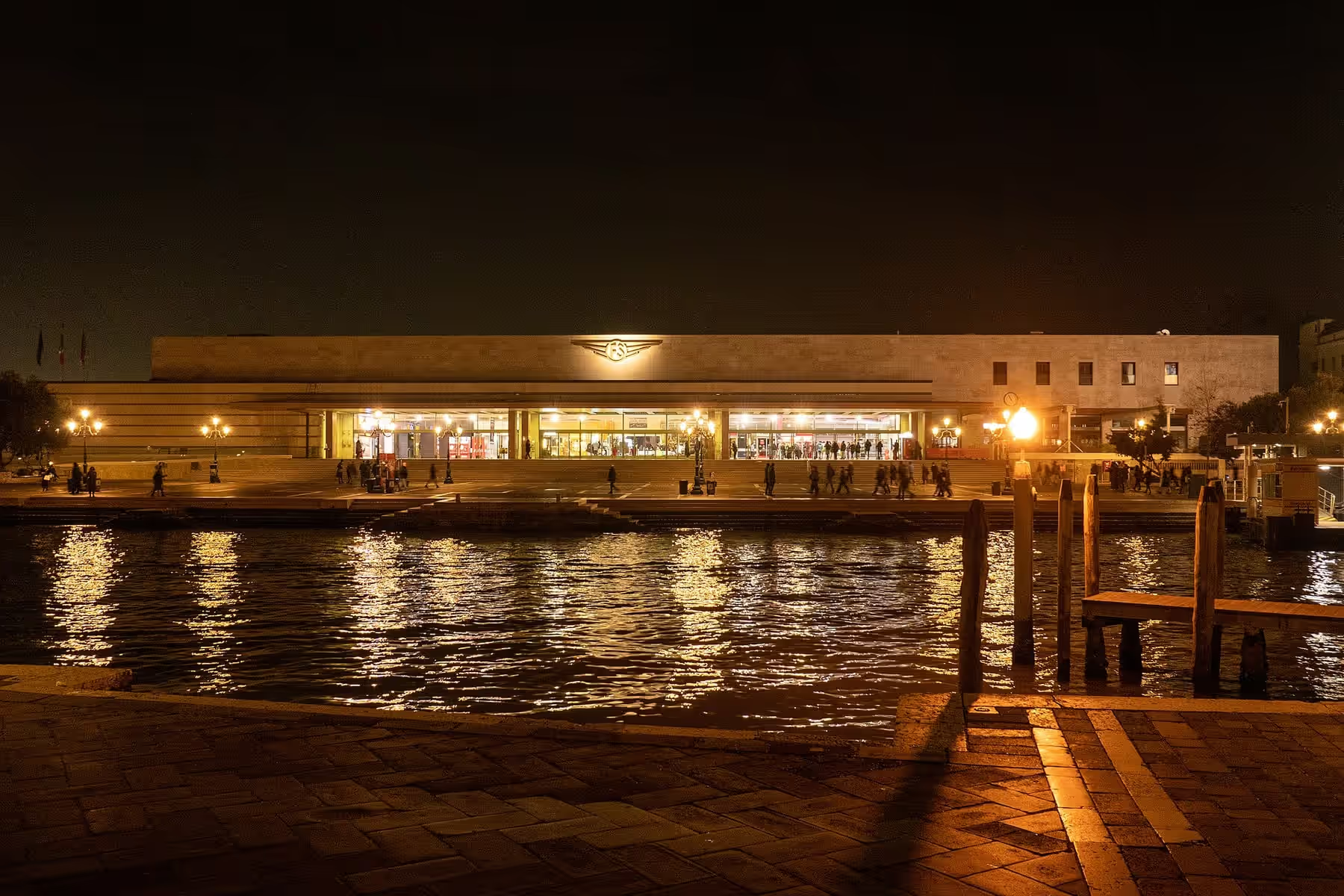
The Venice access fee, officially the contributo di accesso, is a daily charge the city council applies to anyone entering the Città antica — the historic island city — without sleeping there, and only on a fixed list of dates set each year. It is not a general tourism tax, it is not a ticket for any museum, and it has nothing to do with the overnight tourist tax: if you are sleeping in Venice, you are already paying that one.
2026 was the third trial year, with 60 charged days against 54 in 2025 and a new pricing rule that rewards people who book early. The 2026 calendar is finished — the last day was 26 July — but the rules stand and will most likely return in the same form in 2027.
Who pays and who does not
You pay if you are 14 or over, you enter the historic city of Venice on one of the calendar days, between 8:30 and 16:00, and you do not fall into one of the excluded categories.
In practice this is the day-tripper's charge: people arriving by train for the day, coach passengers dropped at Tronchetto, cruise passengers walking in from the Stazione Marittima terminal, and anyone based in Mestre, Jesolo or Padua who comes into Venice for a few hours.
You do not pay, and you do not even have to register on the portal, if you are:
- resident in, or born in, the Venice council area;
- resident in the Veneto region;
- under 14.
Those three groups only need an identity document if they are stopped. No QR code, no online procedure.
The following are also exempt but must register on the portal to get a code to show:
- anyone staying overnight in accommodation inside the council area — hotel, B&B, apartment, campsite: you pay the overnight tourist tax to the property instead, which is an alternative to the access fee, and the property issues the code;
- anyone working in Venice, employed or self-employed, commuters included;
- students at schools and universities based in the historic city or on the lagoon islands;
- property owners in the city and anyone paying council property tax there;
- disabled visitors and the person accompanying them;
- anyone entering for medical, sporting or voluntary reasons, or to attend an administrative or court procedure.
Students who live outside the Veneto but attend an institution in the city can usually get through a check with a student card or a letter from the school.
What it costs, and how the two-tier price works
From 2026 there is no longer a single rate. The mechanism is simple, and it reads backwards from the day of your visit:
| When you pay | Rate |
|---|---|
| By the fourth day before entry | €5 |
| In the three days before, and on the day itself | €10 |
If you are entering Venice on a Saturday, you have to have paid by the Tuesday to get the €5 rate. From Wednesday onwards the price doubles. It is a deliberate incentive to plan: the council wants to know in advance how many people are coming.
The charge is per person, per day: two consecutive charged days means two payments. There are no season tickets, weekly deals or family discounts beyond the under-14 exemption.
The 2026 calendar, day by day
The 60 days in 2026 followed a recognisable pattern: Friday to Sunday through spring and early summer, with unbroken runs across the April bank holidays and the long weekend around 2 June.
| Month | Charged days |
|---|---|
| April 2026 | 3, 4, 5, 6, 10, 11, 12, 17, 18, 19, 24, 25, 26, 27, 28, 29, 30 |
| May 2026 | 1, 2, 3, 8, 9, 10, 15, 16, 17, 22, 23, 24, 29, 30, 31 |
| June 2026 | 1, 2, 3, 4, 5, 6, 7, 12, 13, 14, 19, 20, 21, 26, 27, 28 |
| July 2026 | 3, 4, 5, 10, 11, 12, 17, 18, 19, 24, 25, 26 |
Outside those dates entry to the city is free and unrestricted, as it always has been. From August to March in 2026, nothing was due. The 2027 calendar had still not been approved as of September 2026: check the council portal before you fix your travel dates, because the April-to-July pattern could change.
Where the charged zone ends
The boundary matters more than you would think. The fee covers only the Città antica, the historic island centre. Outside it are:
- the Lido di Venezia, including Alberoni and Malamocco;
- Pellestrina;
- Murano, Burano, Torcello, Sant'Erasmo, Mazzorbo, Mazzorbetto, Vignole, Sant'Andrea, La Certosa, San Servolo, San Clemente and Poveglia;
- the whole mainland: Mestre, Marghera, Favaro.
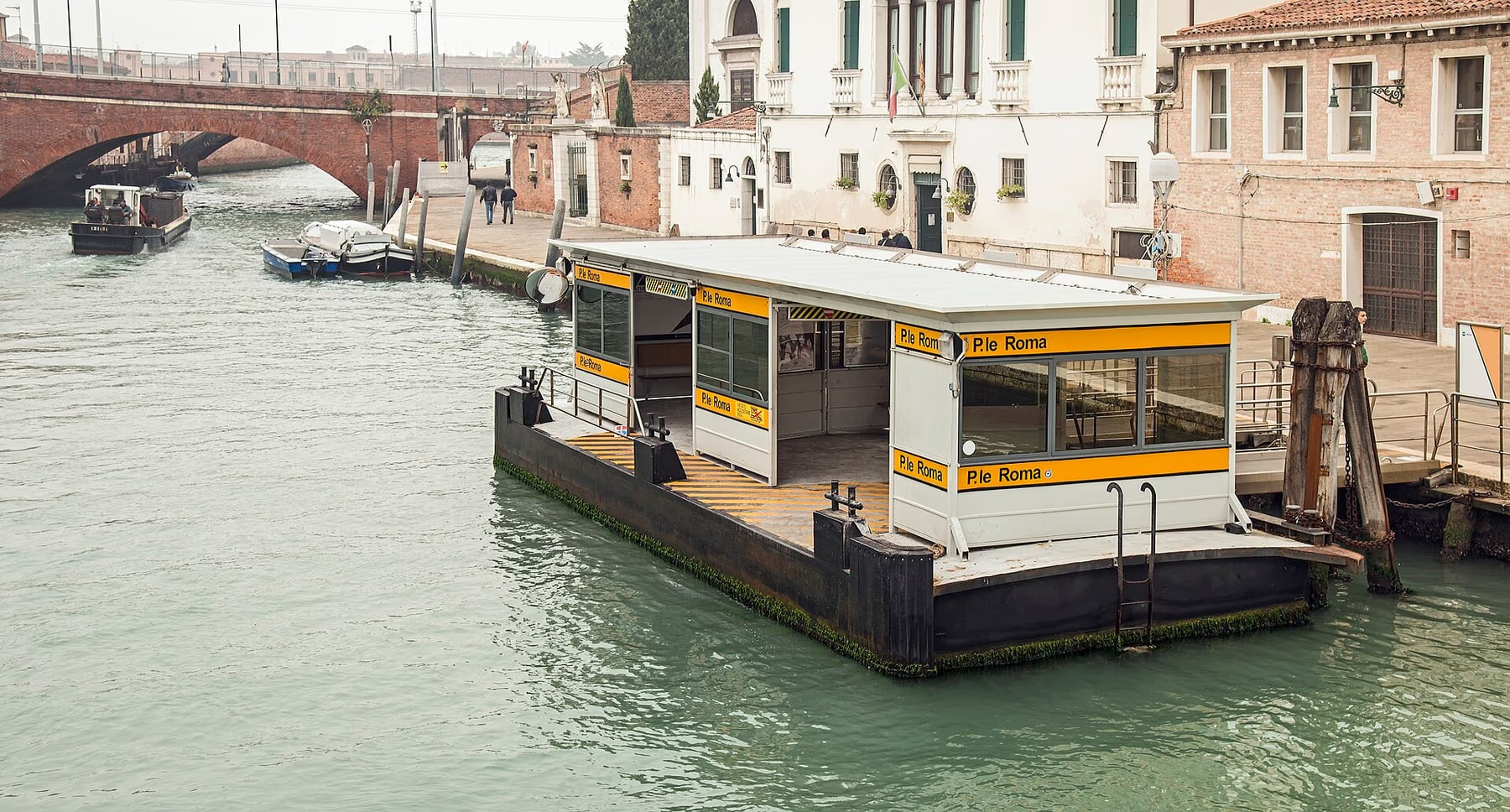
Nothing is due from anyone simply passing through Piazzale Roma, Tronchetto or the Stazione Marittima cruise terminal without entering the historic city. Arrive at Tronchetto by car and get straight on a vaporetto to Murano and you pay nothing. Get off at Piazzale Roma and walk towards Rialto and you pay.
That opens up a real option: on charged days a trip to Murano and Burano still costs nothing to enter, and it changes the arithmetic of the whole day.
How to pay, and what you need with you
There is one official channel: the portal cda.ve.it, run for the council by Vela SpA. It works in several languages and asks for very little: the date of your visit, the number of people, your name, and a card payment. At the end you get a QR code — the titolo, in administrative language — which counts as proof of payment or of exemption.
Keep the QR code on your phone or print it, and show it if you are stopped. It is issued in your name and valid for the stated day: change the date and you have to go through the whole thing again.
There are channels other than the website, including purchase by WhatsApp and tobacconists on the Punto Lis network, but they all feed into the same system.
One point worth stating plainly, because it causes confusion every season: no ticketing platform sells the access fee. Tiqets, GetYourGuide, Viator and everyone else cannot collect it on the council's behalf and do not include it in their packages. If someone offers you a product that claims to cover it, they are selling you something else. Attraction tickets are a separate matter: you can have every one of them and still be uncovered on the fee.
Checks and fines
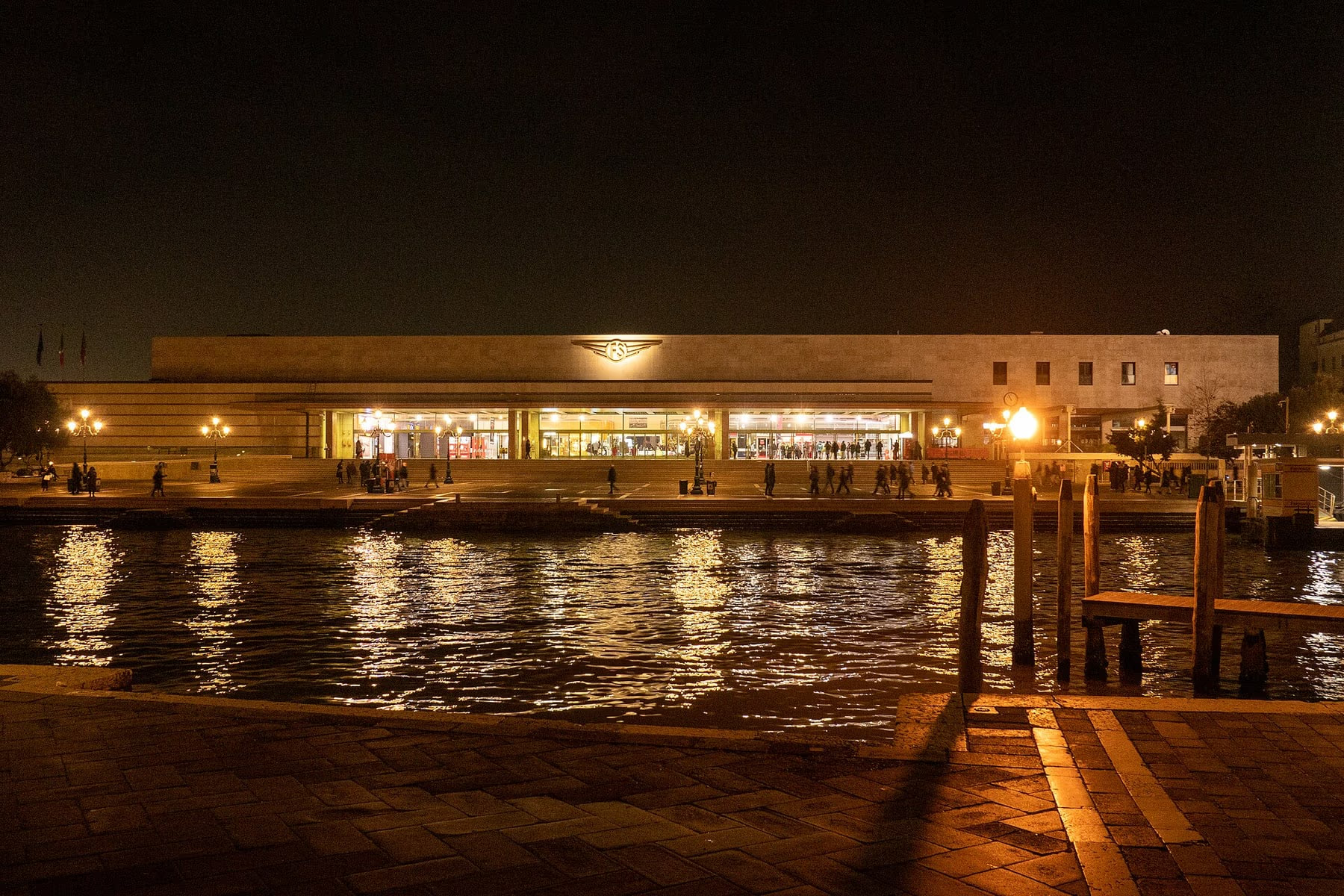
Checks are made on a sample basis and concentrate on the main entry points: the forecourt of Santa Lucia station, Piazzale Roma, the vaporetto stops at Piazzale Roma and Fondamente Nove, and the Tronchetto area. Inspectors can ask for your QR code and an identity document.
The fine runs from €50 to €300, with the unpaid €10 fee added on top. Anyone producing false declarations or false documents risks criminal charges.
The financial risk, in other words, is wildly out of proportion to the five euros you saved. Pay it and forget about it.
Book with instant confirmation


Common mistakes that cost time or money
Thinking the fee entitles you to something. It covers no museums and no transport, and it is not a pass. It is permission to enter the city, and that is all. You still need an ACTV ticket for the vaporetti, and separate tickets for the Doge's Palace and the Basilica.
Leaving payment to the last minute for no reason. If you already know the date, paying four days ahead halves the cost. For a family of four adults that is a €20 difference.
Not registering the overnight exemption. If you sleep in the city you are exempt, but without the code your accommodation issues you have no way of proving it in a check. Ask for it when you book, not on the day.
Confusing the historic city with the council area. A hotel in Mestre is inside the Venice council area, so you pay the overnight tourist tax there anyway; and the exemption from the access fee applies to anyone sleeping inside the council area, islands included. Sleep outside it — Jesolo, Cavallino, Padua, Treviso — and you are a day visitor and you pay.
Counting on there being no checks. Charged days are the busiest days of the year, and they are also the days the inspectors are on duty. The odds are not on your side.
Is it still worth coming on a charged day?
It depends what you are optimising for. Five euros will not change the budget of a trip; the foot traffic in Venice on a Saturday in May certainly will. The dates on the calendar were chosen precisely because they are the most congested: if your plans are flexible, moving the visit to a Tuesday in October saves you the fee and gives you back a city you can actually walk through.
If the date is fixed, the fee is the least of your variables. Pay it early, put it on your phone next to your tickets, and concentrate on the things that really cost you hours: the queues on St Mark's Square and the opening times of whatever you have come to see.
In short
The Venice access fee applies on a minority of days and to a minority of visitors, but on the days it applies it is compulsory and it is enforced. Three things to remember: it is sold only on cda.ve.it, it costs €5 with four days' notice and €10 at the last minute, and it covers nothing else. Anyone sleeping in the city, anyone under 14 and anyone resident in the Veneto does not pay it at all.
Everything else — museums, bell towers, gondolas, vaporetti — is budgeted and booked separately: the comparisons are on the Venice tickets page and on the passes and combos page.