Which ticket to choose
Entry to the basilica
free
Best for:Everyone: the rotunda is open with no ticket and no compulsory donation
- Main rotunda
- High altar with the Mesopanditissa icon
Monumental Sacristy (Le Opere)
from €6
Best for:Anyone who wants to see Titian and Tintoretto: this is the real reason to pay here
- Great Sacristy
- Titian canvases
- Tintoretto's Marriage at Cana
Sacristy plus dome
€13 full price, €10 concession
Best for:Anyone who also wants the climb and the view over the St Mark's basin
- Sacristy
- Dome walkway
- View over the lagoon
Peggy Guggenheim Collection: Fast Track Ticket
from €20
Best for:Pairing the Salute with a museum five minutes away
- Fast track entry to the Peggy Guggenheim Collection
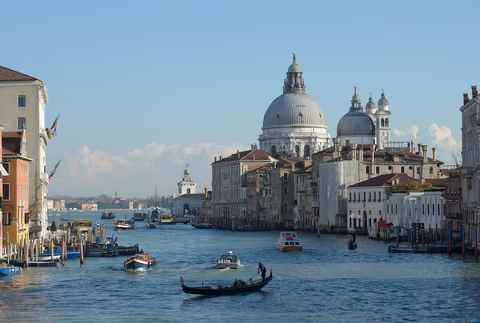
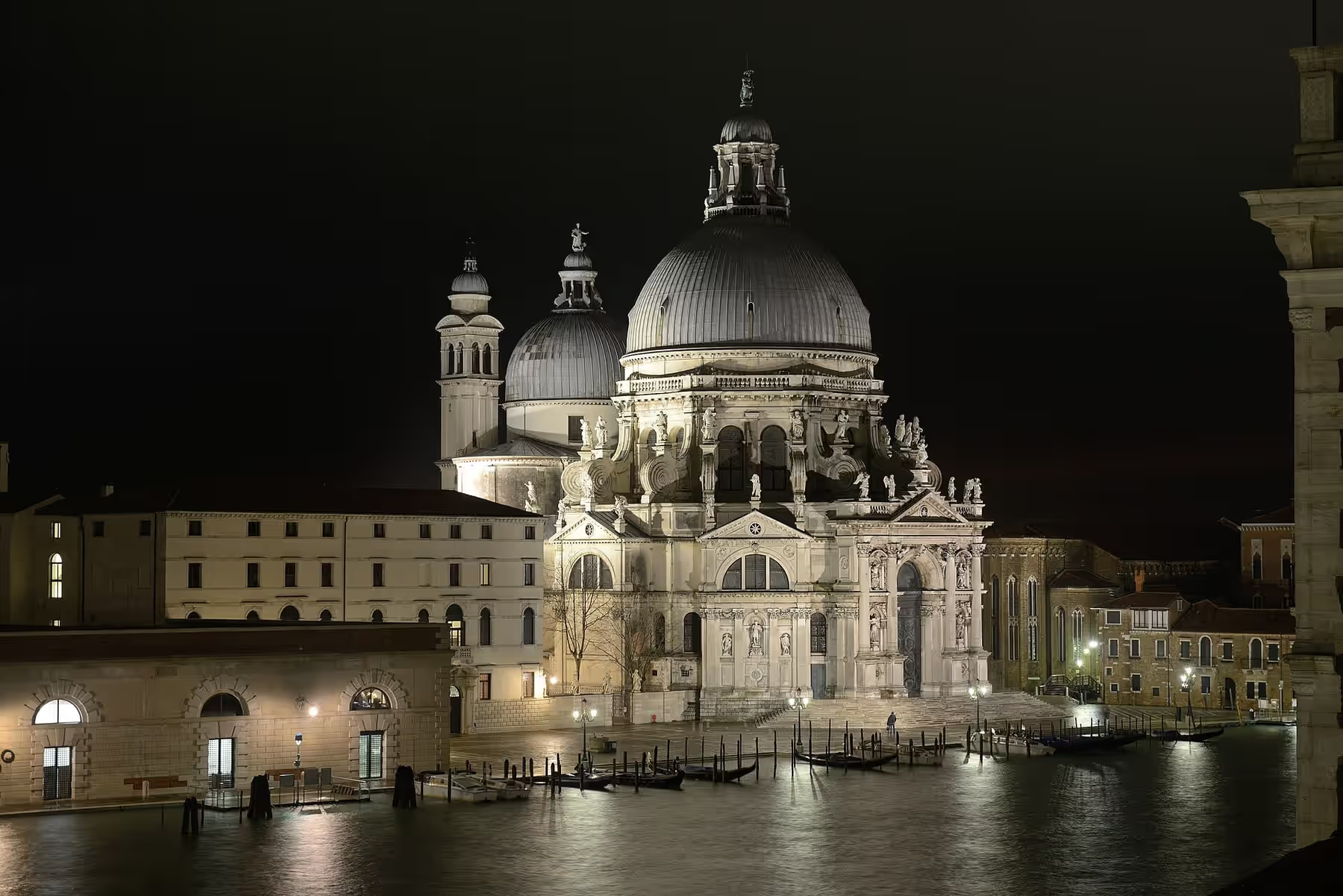
Santa Maria della Salute is the church with the white dome at the mouth of the Grand Canal, the one in every photograph taken from the Accademia bridge. The practical rule is simple: going into the church costs nothing, while the Monumental Sacristy, where the paintings by Titian and Tintoretto hang, is paid and starts at €6.
What is free and what you pay for
Access to the main rotunda is open, with no ticket and no compulsory donation. From there you see Baldassare Longhena's architecture, the floor of concentric circles, the high altar and the side chapels. For many visitors that is enough, and it takes twenty minutes.
The paid part is the Great Sacristy, which needs a separate €6 ticket and takes about twenty minutes. There is also a dome walkway and a combined Sacristy plus dome ticket at €13 full price and €10 concession. Tickets are sold on the official site, basilicasalutevenezia.it, which states that they are issued in the buyer's name and are non-refundable.
Two practical warnings. First: the Sacristy runs on fixed time slots and closes on Mondays, so it is not a decision to make on the doorstep. Second: the route involves stairs, with no lift and no stairlift.
If you are building half a day in Dorsoduro, the most efficient pairing is the Salute plus the Peggy Guggenheim Collection: six minutes' walk apart, and the museum, from €20 with the Peggy Guggenheim Collection: Fast Track Ticket, is the city's main collection of twentieth-century art.
Book with instant confirmation

What to see inside
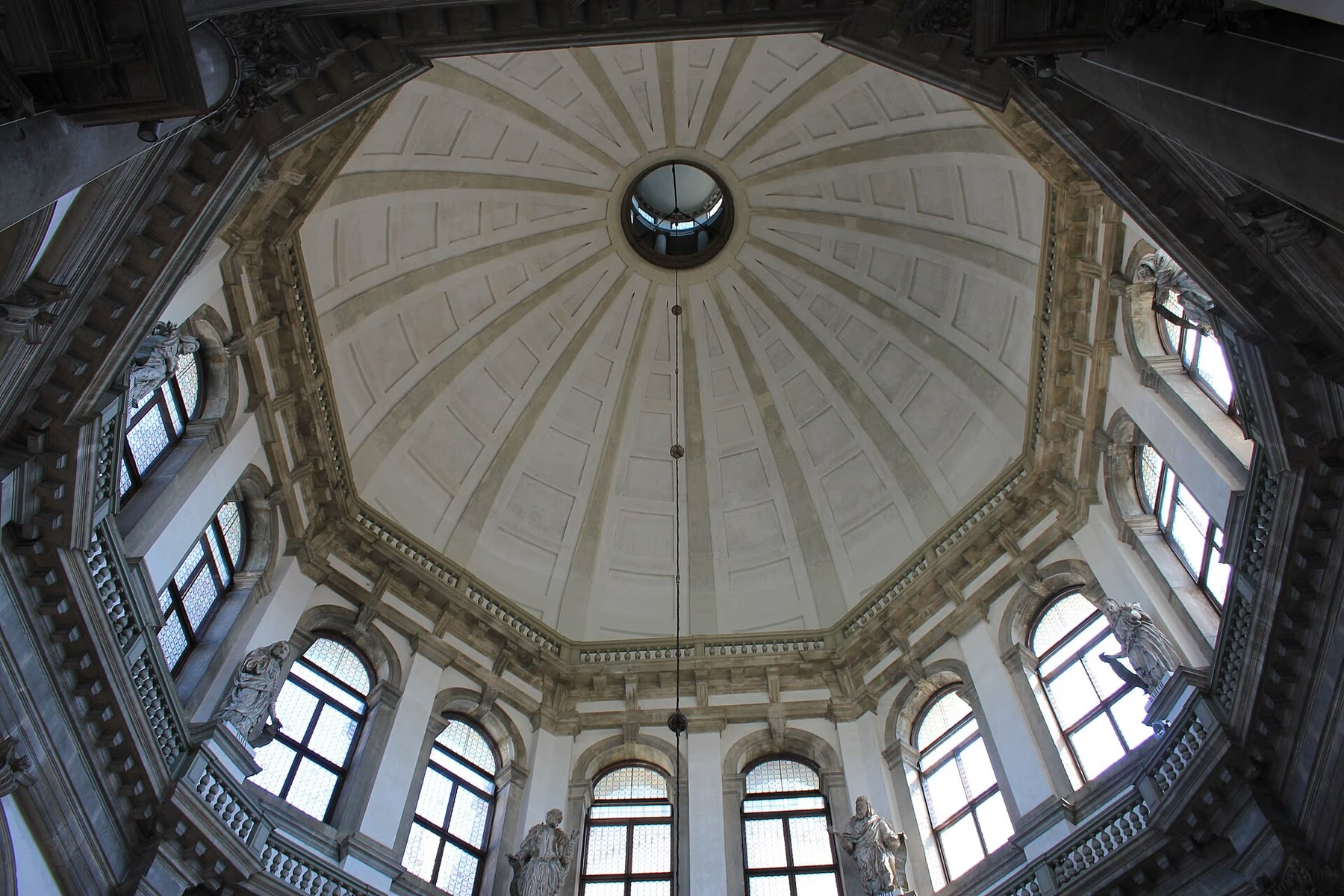
The rotunda. The interior is octagonal and you walk it in a circle: six side chapels open off the central ring, while the chancel sits under a second, smaller dome. The floor, with its concentric marble bands, pulls your eye to the centre. Over the threshold, the inscription Unde Origo Inde Salus records why the church exists at all.
The high altar. The sculptural group is by Giusto Le Court: the Virgin and Child receive a kneeling Venice and drive off the plague, shown as an old woman. Set into the centre is the Byzantine icon known as the Mesopanditissa, brought to Venice from Crete in 1670 after the fall of Candia.
The Great Sacristy. This is where the visit changes gear. On the altar, Titian's St Mark Enthroned with Saints Cosmas, Damian, Roch and Sebastian, an early work painted for the church of Santo Spirito in Isola. On the ceiling, again by Titian, three canvases of Cain and Abel, the Sacrifice of Isaac, and David and Goliath: scenes seen from below, with figures violently foreshortened. On the opposite wall, Jacopo Tintoretto's Marriage at Cana of 1561, with its line of tables running away into the depth of the picture and the light coming in through painted windows.
Look at them in this order: ceiling first, then the altarpiece, then the Tintoretto. The generation between the two painters becomes obvious in five minutes.
The dome and the view
The dome walkway takes you to the level of the drum, looking over the St Mark's basin, the island of San Giorgio Maggiore and the mouth of the Grand Canal. It is not as high as a bell tower and there is no lift, but it is an unusual vantage point: you are above Punta della Dogana with water on three sides.
If your priority is the view rather than the art, consider the bell tower at San Giorgio Maggiore, which has a lift and frames St Mark's Square head on.
Why this church exists
In 1630 an outbreak of plague reached Venice and, in little more than a year, killed roughly a third of its inhabitants. On 22 October 1630 the Senate vowed to build a church dedicated to the Virgin if the city were spared. The competition was won by the young Baldassare Longhena, work began in 1631 and consecration came in 1687, five years after the architect's death.
Two details explain the building better than any adjective. The great spiral scrolls around the drum are not decoration: they carry the weight of the dome down onto the octagonal structure. And the whole basilica stands on a platform of timber piles driven into the mud of the lagoon, more than a million of them according to the traditional accounts.
When to go
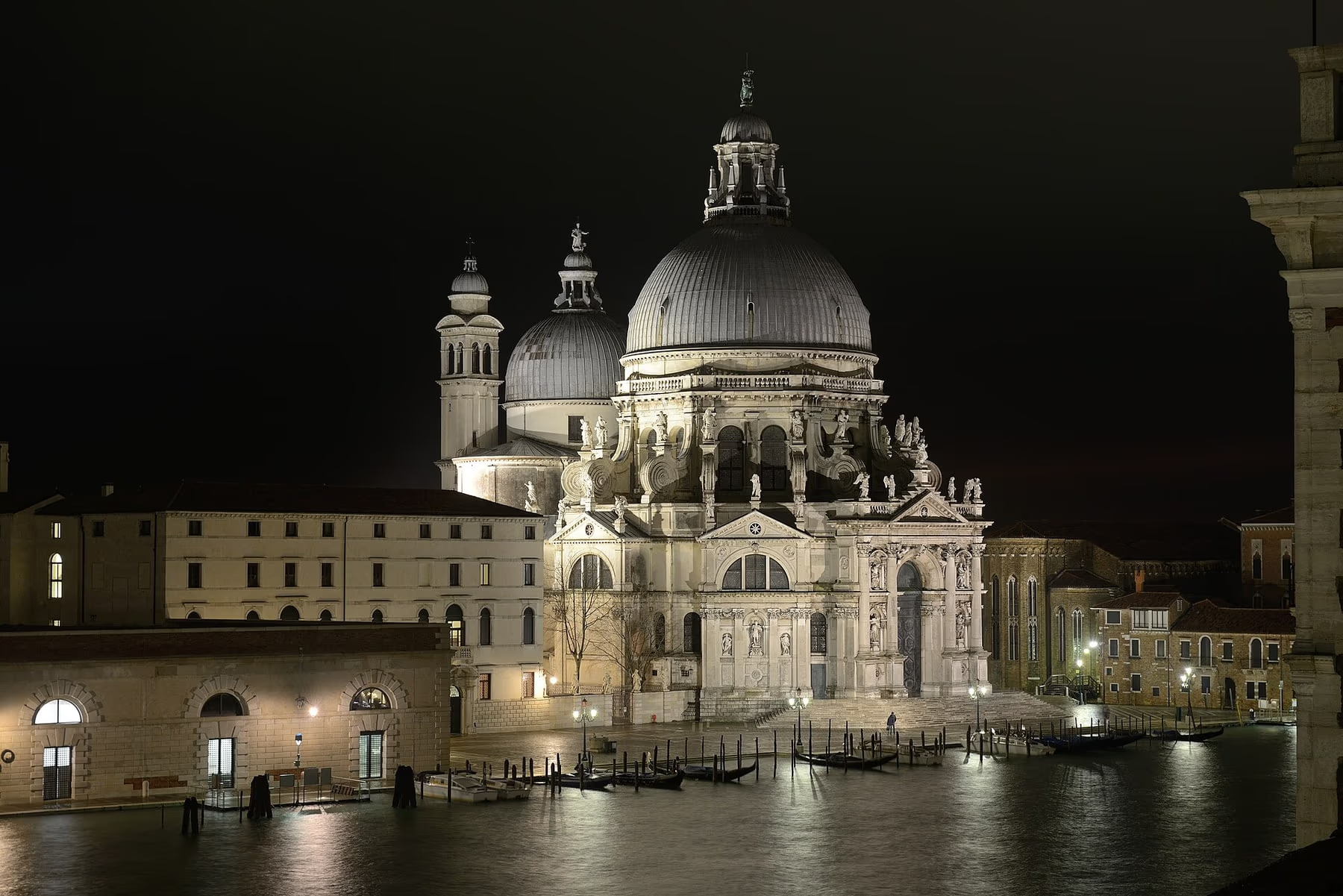
The hour. First thing in the morning, as it opens, is the quietest moment and the one when the light comes in from the east. Late afternoon is best for the exterior: the sun hits the front from the west and the marble warms up.
Mind the midday break. For much of the year the basilica closes in the middle of the day and reopens in the afternoon. Turning up at 13:30 is the most common way to find the door shut.
21 November. This is the Festa della Madonna della Salute, the feast day Venetians hold to most closely: a pontoon bridge is built across the Grand Canal from Santa Maria del Giglio and thousands cross it to light a candle. Outside, people eat roast chestnuts and castradina, a smoked mutton soup. As a piece of city life it is unmissable; as a day for looking at art it is the worst of the year.
Acqua alta. The forecourt is raised and the basilica copes well with ordinary tides — acqua alta is the tidal flooding that hits the city in autumn and winter — but the walk from the vaporetto stop and along the Zattere floods. With a tide forecast above 110 cm you need boots.
Services. This is a working church: tourist visits stop during Mass. The official site says as much, warning that access can be limited for liturgical or maintenance reasons.
Access rules: dress, bags, photographs
This is a church in use, not a museum, and the rules are those of a place of worship. Shoulders and knees covered: vest tops, short shorts and short skirts can get you turned away, especially in summer. Keep a light scarf in your bag and it takes two seconds to fix.
Large rucksacks and suitcases are not allowed and there is no left luggage nearby, so if you are coming from the station with bags, drop them first. Photographs without flash or tripod are generally allowed in the church; in the Sacristy the conditions can be stricter, so ask the staff.
During Mass, weddings and other services, tourist visits stop: the basilica stays open to worshippers, but you cannot walk round the chapels. On 21 November and on major feast days the paid route may close altogether.
How to save
- Do not pay to enter the church. Nobody can sell you access to the rotunda: it is free. If a package presents it as added value, you are paying for the guide, not for the entry.
- The Salute is not in the Chorus Pass — Chorus is the association that runs paid entry to sixteen Venetian churches, and this is not one of them. If you hold a Chorus pass, it buys you nothing here.
- The combined ticket only pays off if you want the dome as well: €13 against €6 for the Sacristy alone. If time is short, take the Sacristy.
- Concessions for children. The official site distinguishes the 0–6 and 7–14 age bands: check the amounts as you buy.
- The mistake that costs money: turning up on a Monday counting on the Sacristy. The church is open, the Sacristy is not.
If you are working out which paid entries genuinely earn their place in your itinerary, the overall comparison is on our Venice tickets page; for St Mark's Basilica, which has very different booking rules, we have a separate guide.
Seeing the Salute from the water
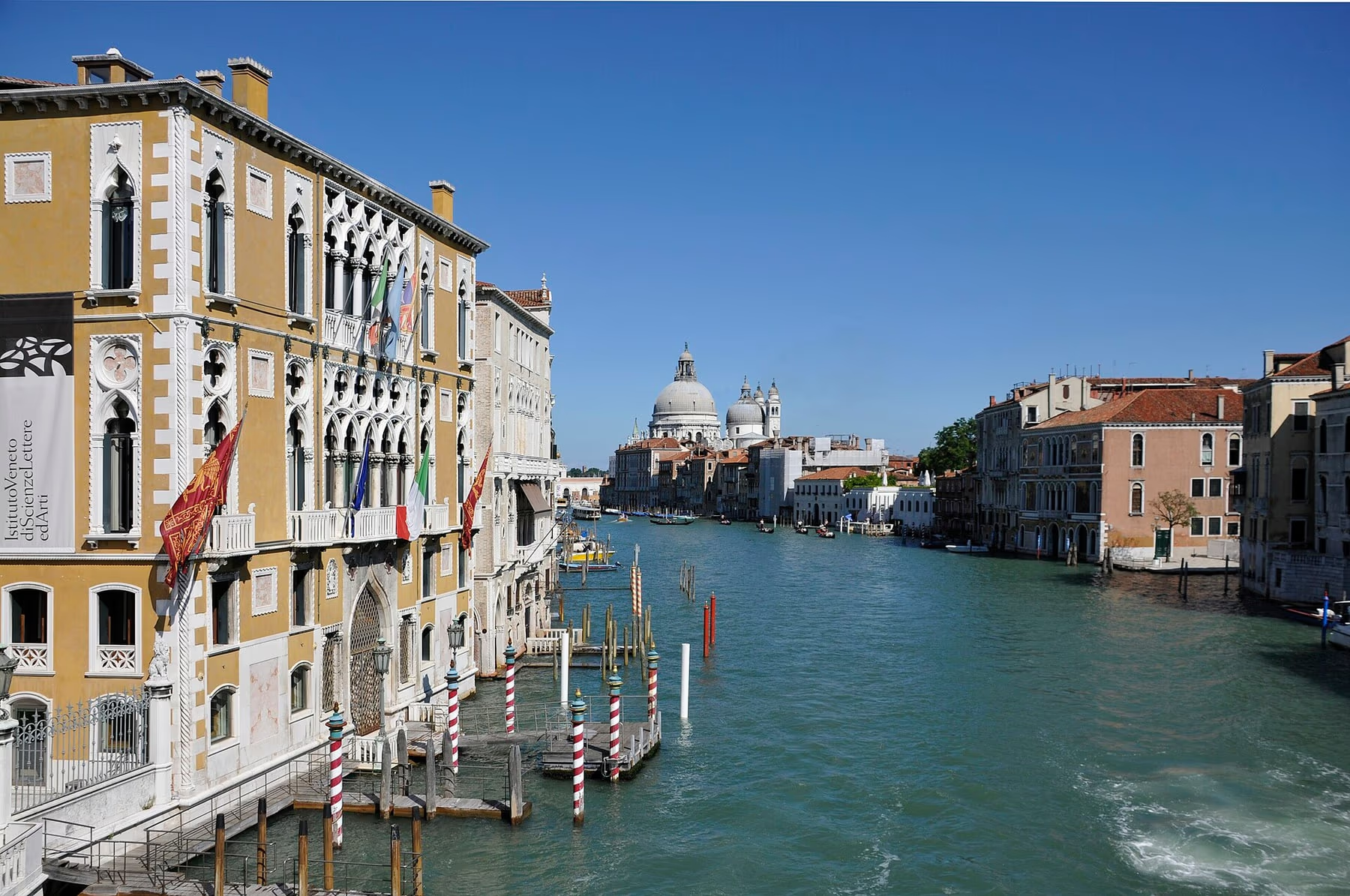
The basilica was designed to be looked at from the water: Longhena conceived it as a piece of stage scenery at the mouth of the Grand Canal, and from the bank you lose half of it.
There are three options. The cheapest is vaporetto line 1, which passes in front of Punta della Dogana and costs the price of an ordinary fare: see our guide to vaporetto tickets. The most classic is a gondola ride, from €39, with about half an hour on the water. The most panoramic is a boat tour: a small-group guided trip along the Grand Canal starts at €45 for an hour, while the Venice Giudecca Canal: Guided Boat Tour, which runs round San Giorgio Maggiore, costs from €25 with an afternoon departure.
Book with instant confirmation


For photographs, the best spot on dry land is still the Accademia bridge, a quarter of an hour before sunset.
Getting there
Address: Dorsoduro 1, 30123 Venice, at the tip of the sestiere between the Grand Canal and the Giudecca canal.
Vaporetto. The Salute stop, line 1: you step off practically onto the steps. Line 1 is the slow one that runs the length of the Grand Canal, and it is worth taking as a sightseeing trip in itself.
On foot. From the Accademia bridge, 10 minutes through the alleys of Dorsoduro. From St Mark's Square, about 25 minutes by way of the Accademia bridge, or 5 minutes by vaporetto straight across the basin.
Traghetto. From Campo del Traghetto, near Santa Maria del Giglio, the traghetto — a standing-room gondola ferry — crosses the Grand Canal in two minutes for a couple of euros. It is the most Venetian way to arrive, but it does not run every day or all day.
What else is nearby
- Punta della Dogana, 3 minutes: the old sea customs house turned contemporary art space, with a terrace on the point.
- Peggy Guggenheim Collection, 6 minutes: Palazzo Venier dei Leoni, with Picasso, Pollock, Magritte and De Chirico, from €20.
- Gallerie dell'Accademia, 10 minutes: Venetian painting from the fourteenth to the eighteenth century.
- Squero di San Trovaso, 12 minutes: one of the last gondola yards, visible from the far bank of the canal.
- Zattere, 5 minutes: the promenade along the Giudecca canal, with the old ice cream shops and the afternoon sun.
To sum up: Santa Maria della Salute is one of the few major Venetian attractions you can visit for nothing, and spending money here only makes sense if you choose the Sacristy. Go early in the morning, avoid Monday if you want the Titians, and look at it from the water at least once.