Which ticket to choose
Visit with audio guide (box office)
€12 full price
Best for:Anyone already in the area who finds the box office without a queue
- Auditorium and boxes
- Audio guide in 10 languages
- Permanent Maria Callas exhibition
La Fenice Opera House: Skip The Line + Audio Guide
from €14
Best for:High season and the middle of the day, when the queue in Campo San Fantin builds up
- Skip-the-line entry
- Audio guide you download to your phone
Teatro La Fenice: Guided Tour
from €25
Best for:Anyone who wants stories, dates and the chance to ask questions: an hour with a live guide
- Access to the theatre
- Expert guide in Italian or English
Venice: Musica a Palazzo Traveling Opera in Palazzo Barbarigo-Minotto
from €95
Best for:Anyone who wants live singing when the season is sold out
- Musica a Palazzo performance
- Glass of prosecco
Teatro La Fenice tickets are not only for the opera: Venice's opera house opens for daytime visits, with the audio guide included in the price, and in an hour you see the auditorium, the boxes and the exhibition devoted to Maria Callas. The full-price ticket is €12 at the box office; on Tiqets, "La Fenice Opera House: Skip The Line + Audio Guide" starts at €14 and is rated 4.6 from 1,239 reviews. The real variable is not the price, it is the calendar: this is a working theatre, and on rehearsal or performance days the visiting hours shrink or vanish.
Teatro La Fenice tickets compared: which one is worth it
There are four options, and they answer different needs.
| Ticket | Price from | What it adds |
|---|---|---|
| Visit with audio guide (box office) | €12 | The lowest price, if there is no queue |
| Skip-the-line + audio guide (Tiqets) | €14 | Priority entry, audio guide on your own phone |
| Guided tour | €25 | An hour with a live guide, in Italian or English |
| Musica a Palazzo | €95 | An opera sung a metre away, in a palace on the Grand Canal |
The €12 box office ticket makes sense in low season and first thing in the morning, when Campo San Fantin is empty. The €14 skip-the-line is worth it from April to October and in the middle of the day: two euros more to stay out of the queue and to have the audio guide already on your phone, with no ID left as a deposit. The €25 guided tour ("Teatro La Fenice: Guided Tour", rated 3.9 from 45 reviews, one hour, free cancellation up to 24 hours before) is for people who want to ask things: the audio guide talks, the guide answers.
If what you actually want is live singing and the season is sold out, the closest thing in spirit is Musica a Palazzo, the travelling opera in Palazzo Barbarigo Minotto from €95, where the audience moves from room to room with the singers. Spend less and you get a Vivaldi concert from €35 at the Scuola Grande di San Teodoro.
Book with instant confirmation


Official prices and concessions
The daytime visit price list is public and short:
- Full price: €12.00
- Over-65s: €9.00
- Students aged 7 to 26: €7.00
- Children up to 6: free
- Family Pass: €25 with one child, €30 with two, €35 with three, €40 with four (children aged 7 to 18)
The audio guide is included and covers ten languages: Italian, English, German, French, Spanish, Portuguese, Russian, Chinese, Japanese and an Italian sign language version. To collect the handset at the theatre you hand over photo ID, which you get back when you return it.
There is also a combined ticket with the Music Museum at San Maurizio, sold through Venezia Unica, the council's own booking portal: if both stops are on your list, add up the total before buying two separate tickets.
When to go
Visits normally run daily from 9:30 to 18:00, where those times mean first and last admission. That is the theory. On days with a dress rehearsal or an evening performance the theatre closes at 13:00 or 14:00, and on some dates the visit does not happen at all. In September 2026 alone the official calendar marks three closed days and two with early closing.
Practical rule: open festfenice.com/orari the day before, not the week before, and take the first available slot. Between 9:30 and 10:30 the auditorium is at its emptiest; from 11:30 the coach groups arrive, having just finished St Mark's Square.
Photography has one classic problem here: low warm light and gilding that bounces it back. Rest your phone on the parapet of a box instead of pushing the ISO, and shoot from a side box on the second tier, which gets the ceiling in as well. The theatre has no windows, so season and weather change nothing: the only real variable is the performance calendar.
What you see inside
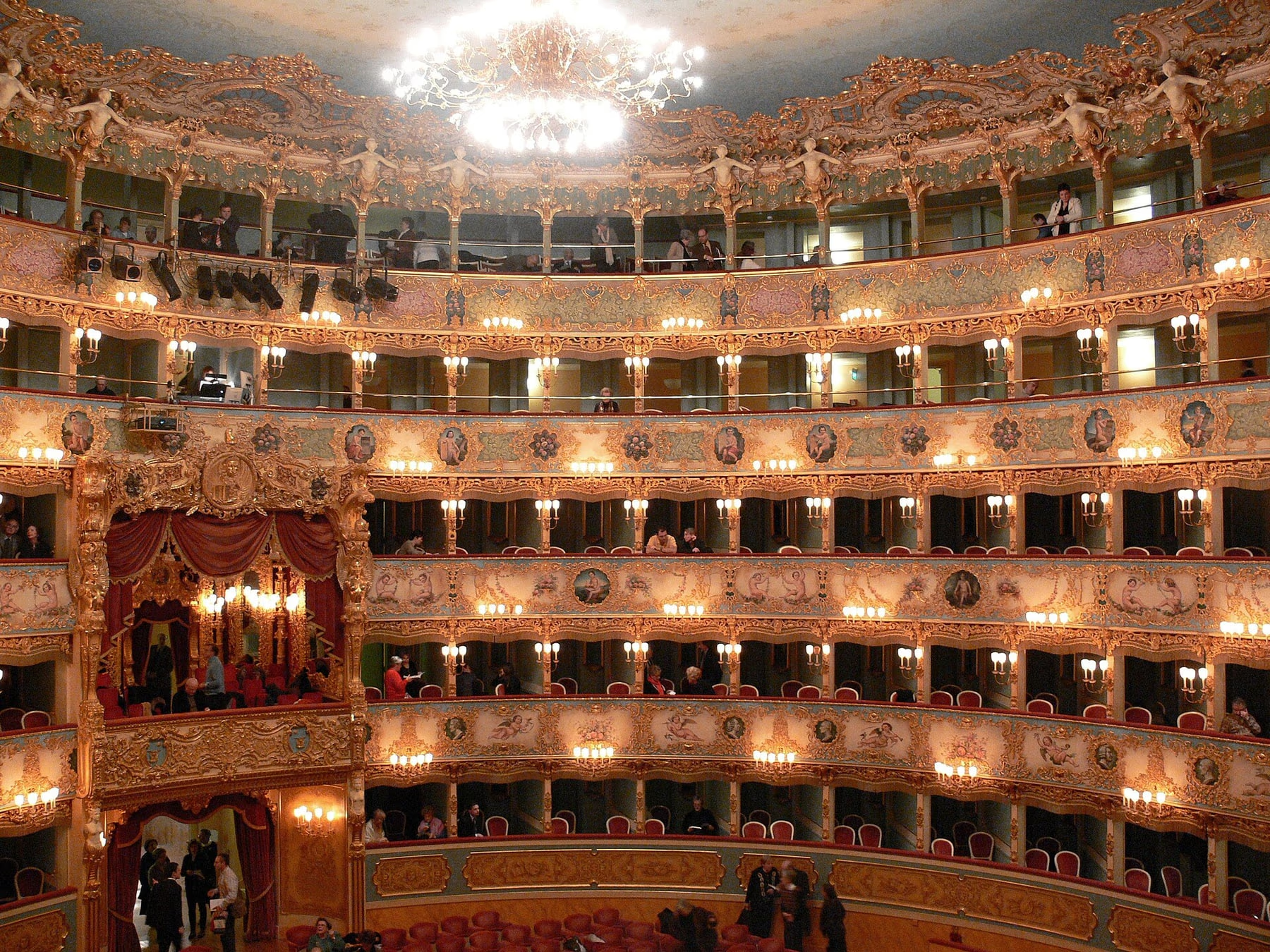
The route starts in the Sale Apollinee, the reception rooms on the first floor that also host chamber concerts today, and ends in the main auditorium: five tiers of boxes, stalls, the royal box in the centre. What you are looking at is a reconstruction. The theatre has burned three times, and the last fire, on 29 January 1996, was arson. The "as it was, where it was" rebuild returned the auditorium to the nineteenth-century scheme of the Meduna brothers, and the theatre reopened in December 2003.
La Fenice opened in 1792 to a design by Giannantonio Selva. This is where Tancredi by Gioachino Rossini (1813) and Ernani (1844), Rigoletto (1851), La traviata (1853) and Simon Boccanegra (1857) by Giuseppe Verdi all had their world premieres: five titles that explain why this is not just another theatre but one of the rooms in which the Italian repertoire was written.
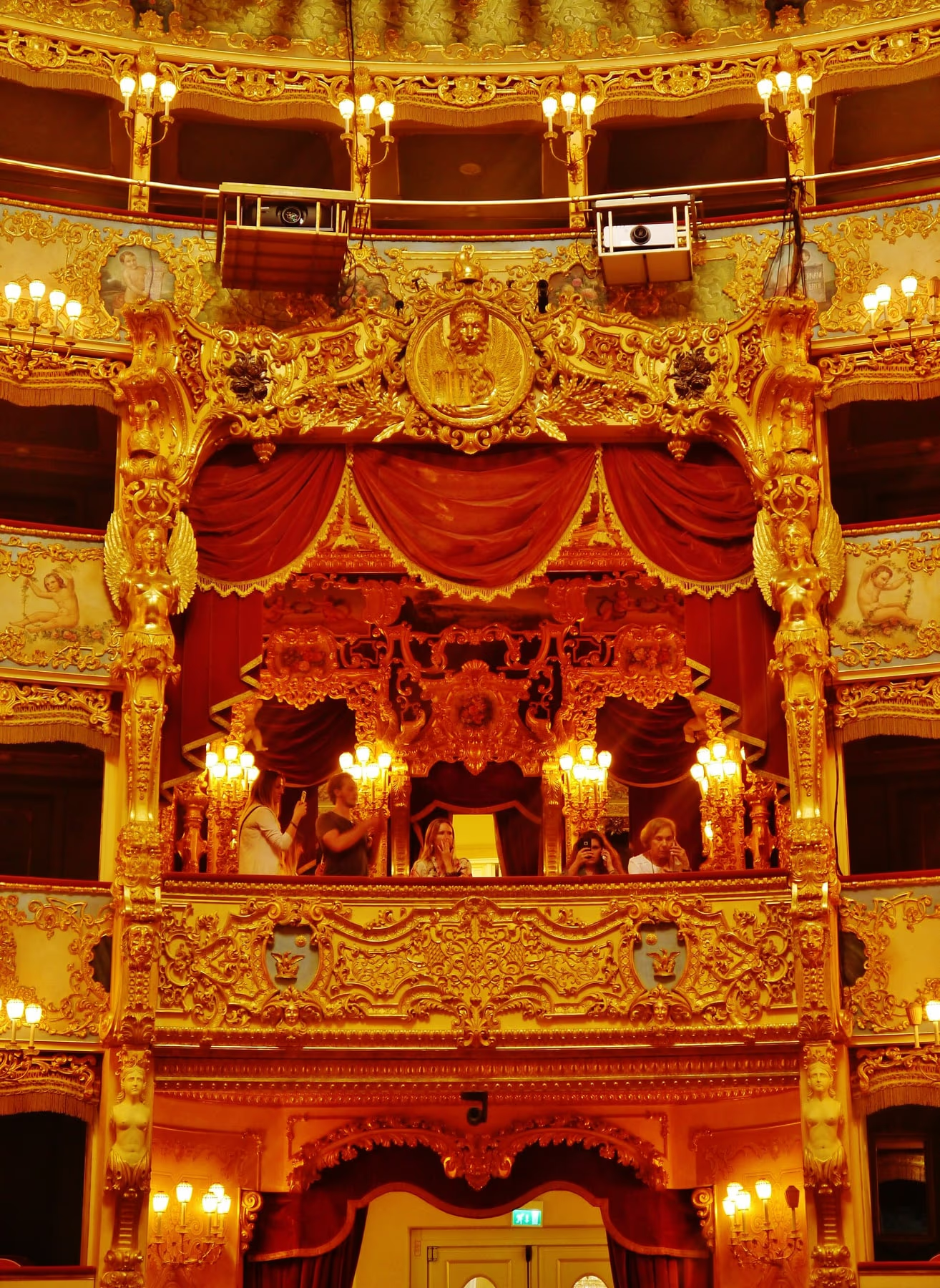
It helps to know what you are looking at while the audio guide talks. The auditorium is a teatro all'italiana on an elliptical plan, the horseshoe layout Italian opera was written for: five stacked tiers of boxes, the royal box at the centre of the second tier, and no two seats alike. The Venetian acoustic comes out of the materials — wood, stucco, fabric — and every reconstruction has had to copy them exactly to keep it. Look at the ceiling and at the parapets of the boxes: the gilding is new, the designs are the nineteenth-century ones, copied from photographs, drawings and period film.
The permanent exhibition on Maria Callas covers the soprano's Venetian years, including the period when she alternated wildly different roles in a single season. It is included in the visitor ticket.
Going to a performance: how opera tickets work
The daytime visit and a ticket for a performance are two separate things, sold through different channels. The opera and symphonic seasons have their own price lists, published on the theatre's site when the subscription campaign opens: the price depends on the sector, and in a horseshoe theatre that difference is enormous. The stalls and the central boxes of the lower tiers cost many times what the side seats in the upper boxes do, where you see only part of the stage.
Three rules that genuinely save money:
- Read the wording about sightlines. Seats marked as limited or partial view cost less because from some of them you see half the stage: for a symphonic concert that is an acceptable trade, for an opera with a complex production much less so.
- Buy only through the theatre's own channels. La Fenice repeatedly issues warnings about third-party resellers who mark the prices up: the theatre box office is open daily from 10:00 to 17:00.
- If your date is already sold out, check the open rehearsals and the concerts in the Sale Apollinee, usually far cheaper than a main-season evening.
If you are going to a performance you do not need a visitor ticket: the daytime route stays a separate thing, with its audio guide and the Callas exhibition.
Access rules
The daytime visit is self-guided and has no dress code; that applies to gala nights. Large rucksacks and luggage are not allowed into the auditorium and the theatre has no proper left-luggage facility: if you are coming straight from the station, leave your bags at a luggage storage point before you turn up at San Fantin. Photography is allowed without flash and without a tripod.
The stalls and the Sale Apollinee are accessible by wheelchair; the upper tiers of boxes are reached by stairs. If you need assistance, tell the box office in advance.
How to save
- Claim the right concession. Under-26s with ID pay €7 instead of €12: almost half, and it applies to international students too.
- Family Pass instead of single tickets. Two adults with two children pay €30 with the pass against €38 buying separately.
- Do not pay for skip-the-line in low season. In January, February and November the queue in Campo San Fantin barely exists: the €12 at the desk is enough.
- Watch out for general resellers. The Tiqets skip-the-line ticket is non-refundable: before you buy, check that the theatre is open that day.
- Evenings, not only opera. If the main season is expensive, baroque concerts around the city start at €35 and run little over an hour.
- Line your costs up. If the theatre is one stop among many, compare prices in the guide to Venice tickets: no pass covers La Fenice, but a pass can shift your budget towards the attractions that cost most.
Getting there
Address: Campo San Fantin 1965, San Marco, 30124 Venice. The handiest vaporetto stops — the city's water buses — are Santa Maria del Giglio (line 1), about 5 minutes on foot, and Rialto (lines 1 and 2), about 10 minutes. From St Mark's Square, walk towards the Museo Correr, take Calle Larga XXII Marzo and then turn right for Campo San Fantin: barely 5 minutes.
From Santa Lucia station it is about 30 minutes on foot, or line 1 to Santa Maria del Giglio. From Piazzale Roma, where the airport buses and the car parks are, the time is much the same. If you are moving around a lot in one day, look at the ACTV vaporetto pass from €12 on Tiqets; ACTV is the city's public transport operator.
You cannot see the theatre from the Grand Canal: the main entrance is on the campo, on the opposite side from the landing stage, and it is the only door used for visits.
What's nearby
- Music Museum at San Maurizio, three minutes on foot: antique instruments, free entry.
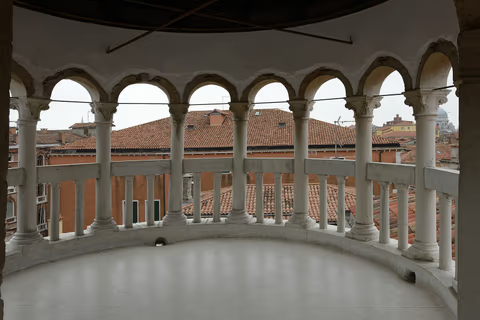
- Scala Contarini del Bovolo, five minutes: the most photographed spiral staircase in the city.
- Campo Santo Stefano and Palazzo Pisani, seven minutes: a rooftop terrace over the conservatoire.
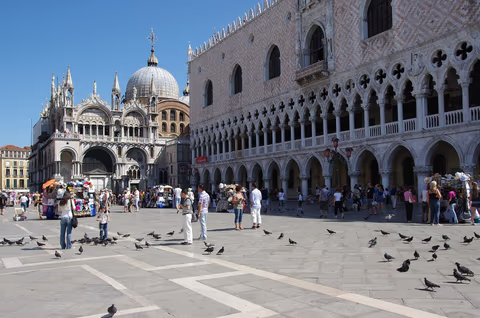
- Doge's Palace (Palazzo Ducale) and St Mark's Square, five minutes in the other direction.
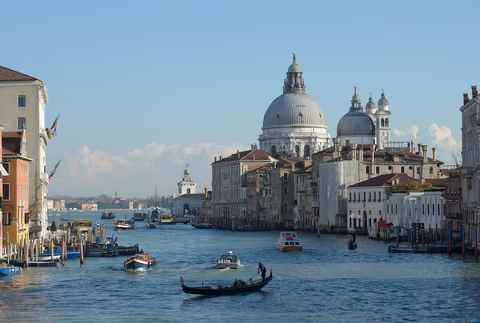
- Accademia bridge, ten minutes: the classic view down the Grand Canal to the Salute.
Booking Teatro La Fenice tickets comes down to two decisions: how much to pay to avoid the queue, and which day the theatre is genuinely open. The second matters more than the first. Take the 9:30 slot, check the calendar the evening before, and in an hour you walk out with the part of Venice that usually stays shut behind a curtain.