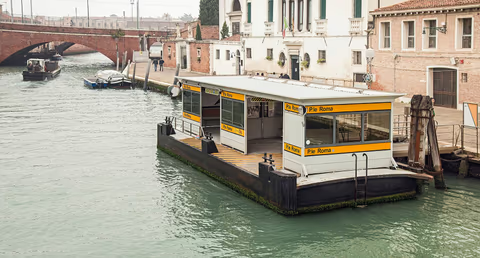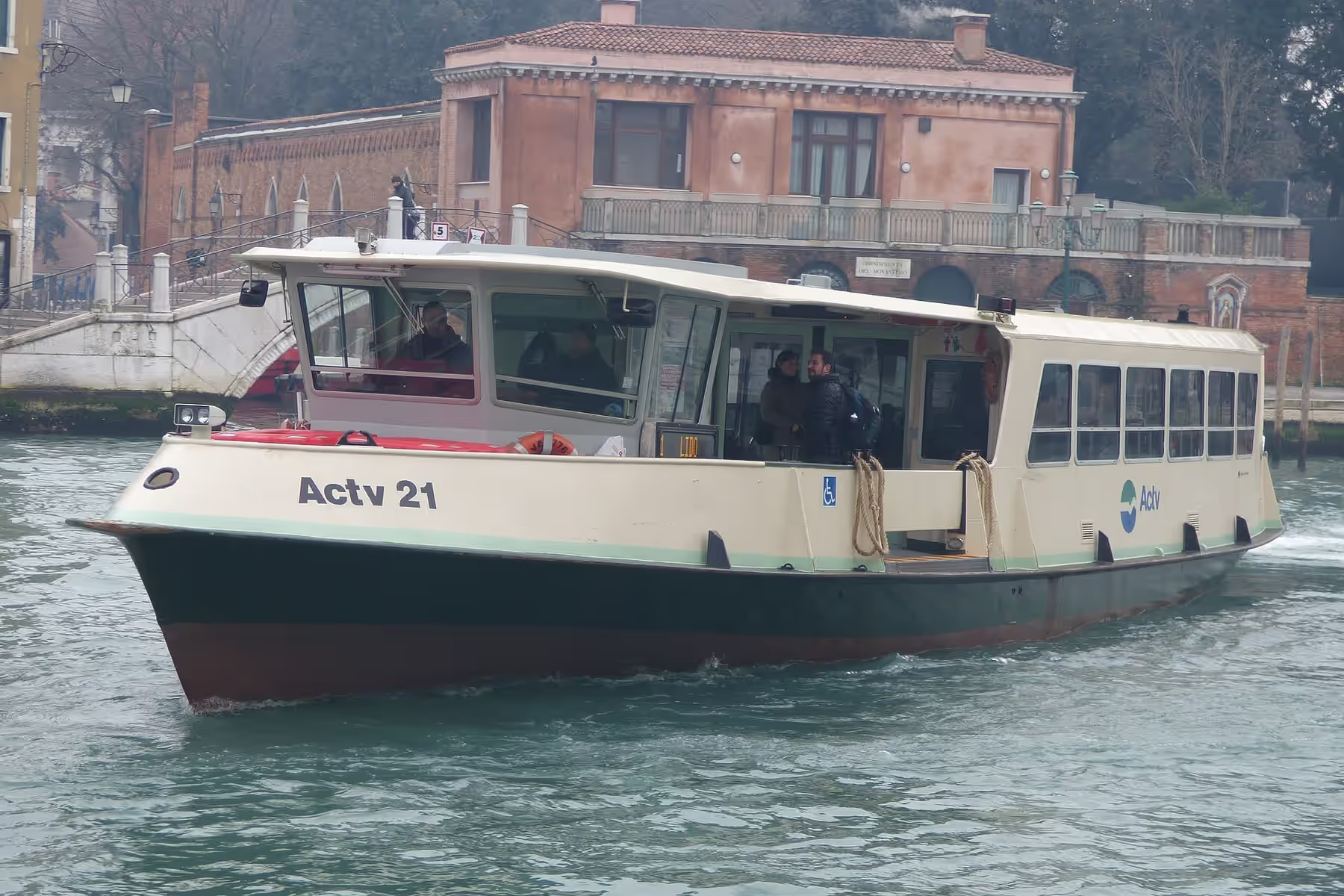
Which ticket to choose
Vaporetto Pass: Venice Public Transport Ticket (ACTV)
from €12
Best for:Choosing between 75 minutes, 1, 2, 3 or 7 days and collecting without queueing
- Vaporetti in the historic centre
- Vaporetti to the Lido, Murano, Burano and Torcello
- ACTV buses in Mestre and Marghera
St. Mark's Basilica & Doge's Palace Combo
€95
Best for:Getting the two headline sights and the transport in one purchase
- St Mark's Basilica
- Doge's Palace
- Public transport
- Digital audio guide
The Venice Pass
from €94
Best for:Building your own bundle of attractions and experiences
- Attractions of your choice
- Experiences of your choice
Marco Polo Airport: Alilaguna Boat To/From Venice City Center
€18
Best for:Arriving by air: a separate service, not covered by ACTV passes
- One-way airport to city centre
- Three lines: Blue, Orange and Red
Vaporetto tickets in Venice are timed fares on the ACTV network — ACTV is the city's public transport operator — and you pay for time, not distance. A single ticket costs €9.50 and lasts 75 minutes; tourist passes run from €25 for 24 hours to €65 for seven days. These are among the highest urban transport fares in Europe, and that changes how you should plan your days.
The practical rule is simple: the vaporetto, the public water bus, is for crossing water and for reaching the islands. Inside the historic centre, for short hops, walking is almost always quicker and it costs nothing.
Vaporetto tickets and ACTV fares for 2026
| Ticket | Price | Valid for | Notes |
|---|---|---|---|
| Single ticket | €9.50 | 75 minutes from validation | Changes allowed in the same direction; not a return |
| 1-day pass | €25 | 24 hours from first validation | Pays for itself from the third trip |
| 2-day pass | €35 | 48 hours | Works out at €17.50 a day |
| 3-day pass | €45 | 72 hours | Works out at €15 a day |
| 7-day pass | €65 | 168 hours | The lowest daily rate: €9.30 |
| Rolling Venice 72 hours | €27 plus €6 for the card | 72 hours | Ages 6–29 only, card issued in your name |
| People Mover, Piazzale Roma–Tronchetto | €1.50 | Single trip | Included in the 75-minute network ticket |
Prices apply in 2026. The current list is published on actv.avmspa.it and on www.veneziaunica.it, the council's own booking portal; the DIME call centre answers on +39 041 041 every day, 8:00–18:00.
Two details that decide whether you save money or waste it:
- Passes start from the first validation, not from the moment you buy. You can buy a 72-hour pass weeks ahead and activate it when you need it.
- Twenty-four hours means twenty-four hours. A pass first tapped at 15:00 on Monday expires at 15:00 on Tuesday, not at midnight.
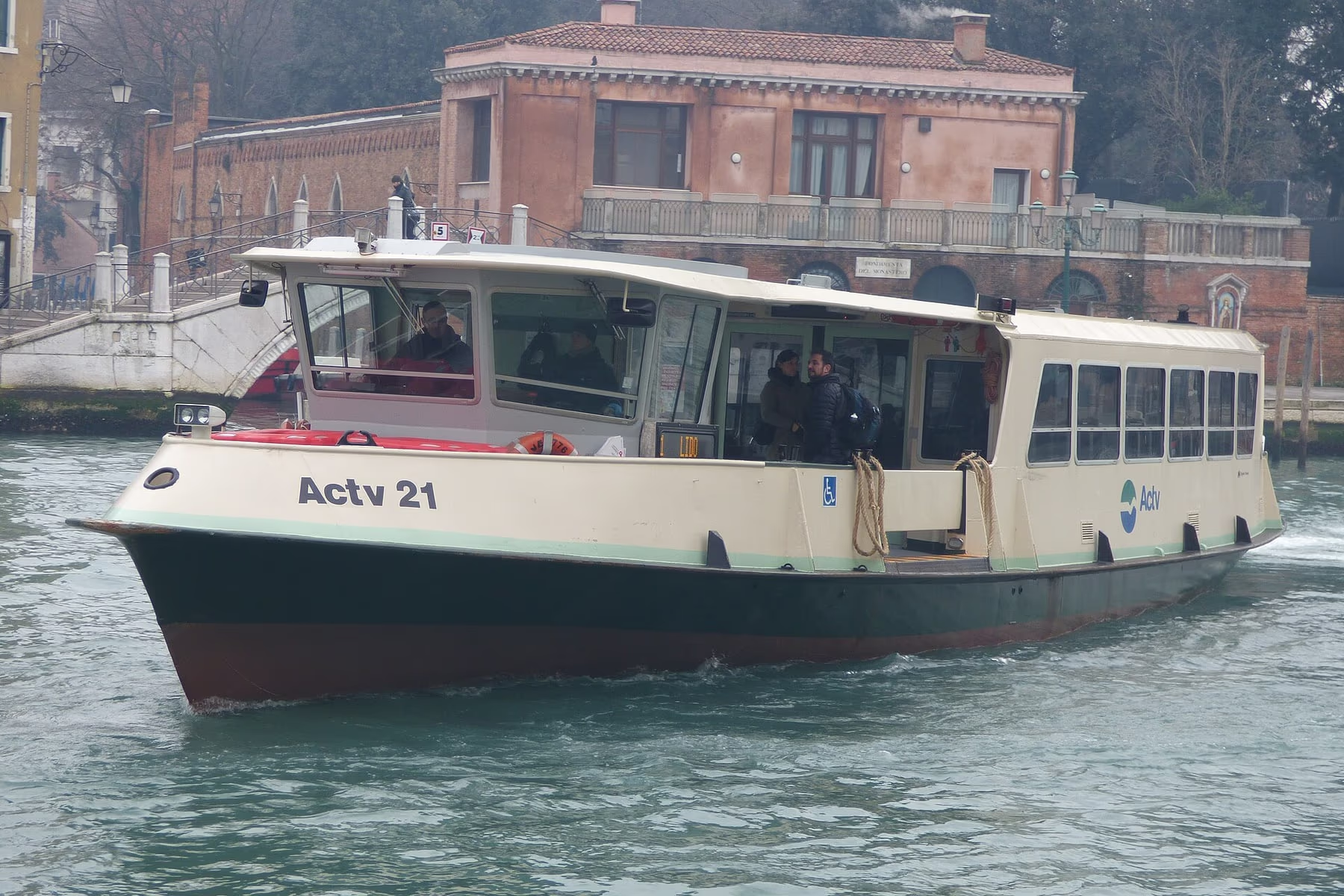
Which ticket works out cheapest
The break-even point between singles and a day pass is three trips: three tickets at €9.50 come to €28.50, while the 24-hour pass costs €25.
That gives you three clear profiles.
One or two trips a day. Buy singles. This is the usual pattern if you are staying in the centre, sightseeing on foot and using the boat only to get home in the evening or to move with suitcases. Two trips a day cost €19, less than the pass.
Three or more trips a day, or a day out to the islands. Take the pass. On the day you go to Murano and Burano you will make four legs on your own, and the 24-hour pass has paid for itself before lunch.
Four nights or more. The 7-day pass at €65 costs less than two 48-hour passes and saves you thinking about it. Under about 40 usable hours in the city, though, it is more pass than you need.
The Vaporetto Pass: Venice Public Transport Ticket (ACTV) sold by Tiqets starts at €12 and lets you pick the option at checkout — 75 minutes, 1, 2, 3 or 7 days — with the voucher on your phone. It is rated 4.5/5 from 3,207 reviews, the highest-rated transport ticket in the catalogue. It also covers ACTV buses in Mestre and Marghera and the boats to the Lido and the islands. One caveat: it is non-refundable, so choose the duration once your arrival date is fixed.
Book with instant confirmation


The vaporetto lines a visitor actually needs
ACTV runs more than twenty lines across the lagoon, but a holiday needs six or seven of them. This is the table to keep on your phone.
| Line | Route | Key stops | What it is for |
|---|---|---|---|
| 1 | Piazzale Roma → Santa Lucia station → the whole Grand Canal → San Marco → Lido | Ferrovia, San Marcuola, Rialto Mercato, Ca' Rezzonico, Accademia, San Marco Vallaresso, San Zaccaria | The slow, scenic one: it stops everywhere and is the cheapest way to see the Grand Canal |
| 2 | Circular: San Zaccaria → Giudecca → Tronchetto → Piazzale Roma → Santa Lucia station → Rialto → San Marco | Tronchetto, Piazzale Roma, Ferrovia, Rialto, San Marco Giardinetti, Zattere, Giudecca Palanca | The fast one between the station or Piazzale Roma and San Marco; it skips most Grand Canal stops |
| 4.1 / 4.2 | Outer circular via Murano | Murano Colonna, Fondamente Nove, Ferrovia, Piazzale Roma, Giudecca, San Zaccaria | Murano from the station or Piazzale Roma. 4.1 runs anticlockwise, 4.2 clockwise |
| 5.1 / 5.2 | Outer circular via the Lido | Lido S.M.E., San Zaccaria, Fondamente Nove, Ferrovia, Piazzale Roma, Zattere | A loop around the city avoiding the Grand Canal. 5.1 anticlockwise, 5.2 clockwise |
| 12 | Fondamente Nove → Murano Faro → Mazzorbo → Burano → Treporti → Punta Sabbioni | Murano Faro, Burano, Punta Sabbioni | The only line to Burano. From Burano the 9 shuttle reaches Torcello in 5 minutes |
| 3 | Direct Piazzale Roma ↔ Murano | Piazzale Roma, Ferrovia, Murano | A quick run to Murano in the busy months |
| 6 | Piazzale Roma → Zattere → Giardini → Lido | Zattere, Giardini, Lido | The direct link to the Lido, used by commuters |
| N | Night line, replacing 1 and 2 | Grand Canal, Giudecca, Lido | Runs once the daytime lines stop, at a reduced frequency |
Three traps that catch people out on these lines:
- The 4.1/4.2 and 5.1/5.2 numbering is the direction of travel, not two different lines. Board the wrong one and you go the long way round Venice: 50 minutes instead of 15.
- The line 5 "Aerobus" is a bus, not a boat, and it links Piazzale Roma with Marco Polo Airport. It has nothing to do with lines 5.1 and 5.2.
- San Marco has three separate landing stages: Vallaresso, Giardinetti and San Zaccaria. They are a few minutes' walk apart and they do not serve the same lines. Check the pontoon letter (A, B, C and so on) printed on the sign.
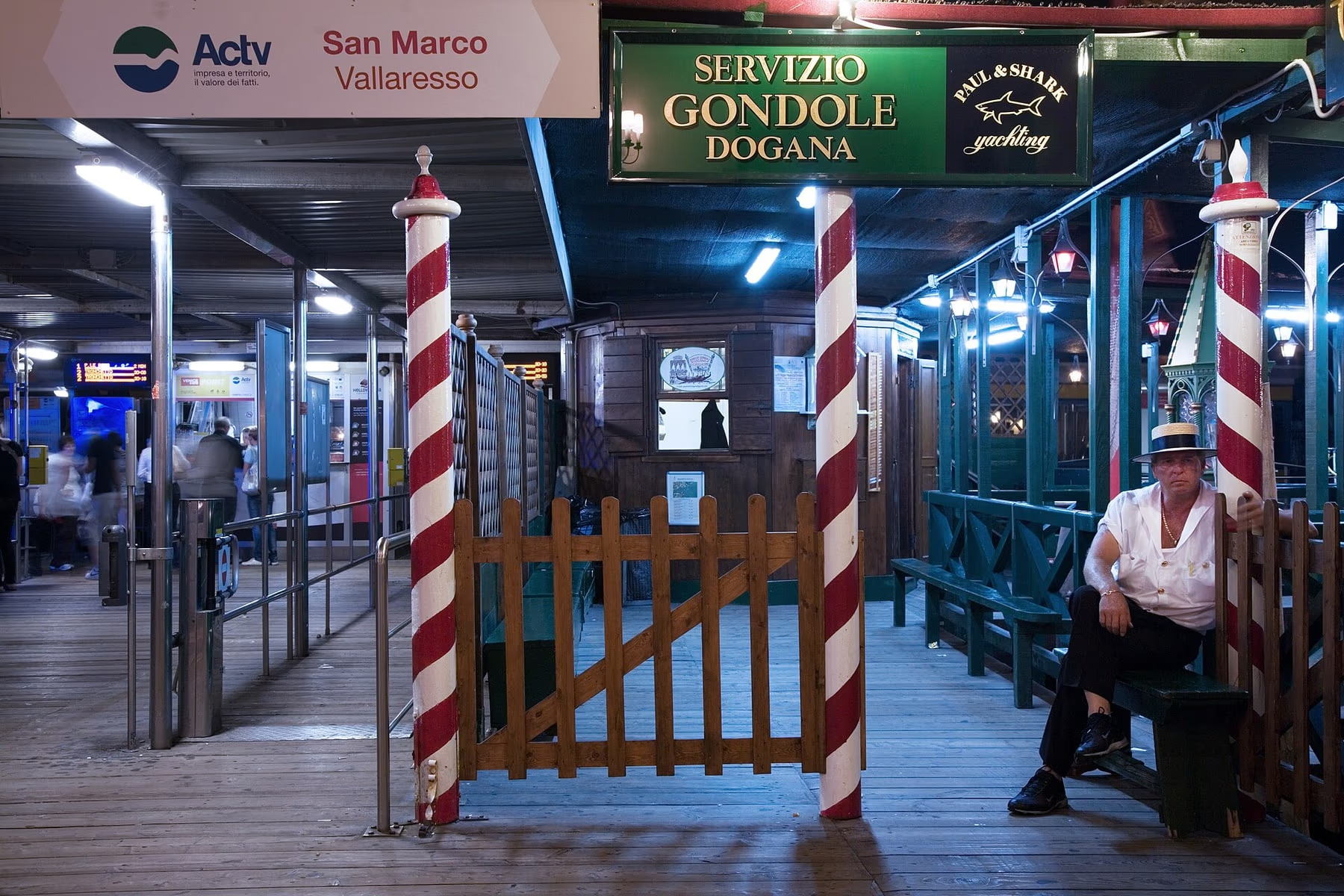
Vaporetto or walk? The real times
Venice is about 4 kilometres long from Piazzale Roma to Sant'Elena. Arrive assuming you need a boat for every move and you will spend a great deal and lose time at the stops: boats come every 10 to 20 minutes, and you queue for them.
| Route | On foot | By vaporetto | Better option |
|---|---|---|---|
| Piazzale Roma → Santa Lucia station | 6 min (over the Ponte della Costituzione) | 5 min plus the wait | Walk, always |
| Santa Lucia station → Rialto | 20–25 min | Line 2: about 15 min · Line 1: about 22 min | Walk if you have no luggage |
| Santa Lucia station → San Marco | 35–40 min | Line 2: about 30 min · Line 1: about 40 min | Vaporetto with suitcases, walk without |
| Rialto → San Marco | 12–15 min | Line 1: about 12 min | Walk, the boat gains you nothing |
| San Marco → Accademia | 12 min | Line 1: about 8 min | A tie: it depends on the wait |
| San Marco → Zattere | 20–25 min | Line 2: about 10 min | Vaporetto |
| San Marco → Giudecca | Not walkable | Line 2: about 10 min | Vaporetto |
| Fondamente Nove → Murano | Not walkable | Lines 4.1/4.2/12: about 10 min | Vaporetto |
| Fondamente Nove → Burano | Not walkable | Line 12: about 45 min | Vaporetto |
| Santa Lucia station → the Ghetto | 12 min | No useful direct link | Walk |
Walking times are at a normal pace with no stops; add 20% for the Rialto crowds in August.
The rule the table boils down to: the vaporetto wins when there is water to cross or a suitcase to drag. Everything else in Venice is a walk, and the walk goes through places the boat never reaches.
Buying, and above all validating
Tickets are sold at the Venezia Unica ticket offices at the main landing stages (Piazzale Roma, Santa Lucia station, Rialto, San Zaccaria, Fondamente Nove), at the yellow machines, on the AVM Venezia app, on www.veneziaunica.it, or online as a voucher to exchange.
Validation is the part almost everyone gets wrong:
- The yellow ACTV pillar is at the entrance to the landing stage, not on board the boat.
- Tap the card for every single trip, even with a 7-day pass. The display confirms with a green signal and the remaining validity.
- Where a landing stage has two pillars, one is for entry and one for exit: use the one on the boarding side.
- Board without tapping and you pay a fine even with the pass in your pocket.
Inspectors board vaporetti less often than mainland buses, but they do board, and in high season they work the Rialto and San Zaccaria stages.
Luggage: the rules that matter
Every passenger with a valid ticket carries three pieces free: two whose three dimensions add up to no more than 120 cm, and one up to 150 cm. Above that you pay an extra full-price ticket for each additional piece, and anything over 150 cm has to be agreed with ACTV in advance.
In plain terms: a hold suitcase plus a cabin bag costs nothing extra. Three large suitcases between two people does.
At peak times, at the Santa Lucia station and Piazzale Roma stages, staff board passengers with bulky luggage last. If you have a train or a flight, allow for missing one departure. Otherwise, left luggage at the station frees up the day and removes the problem entirely.
When to take the boat, and when to avoid it
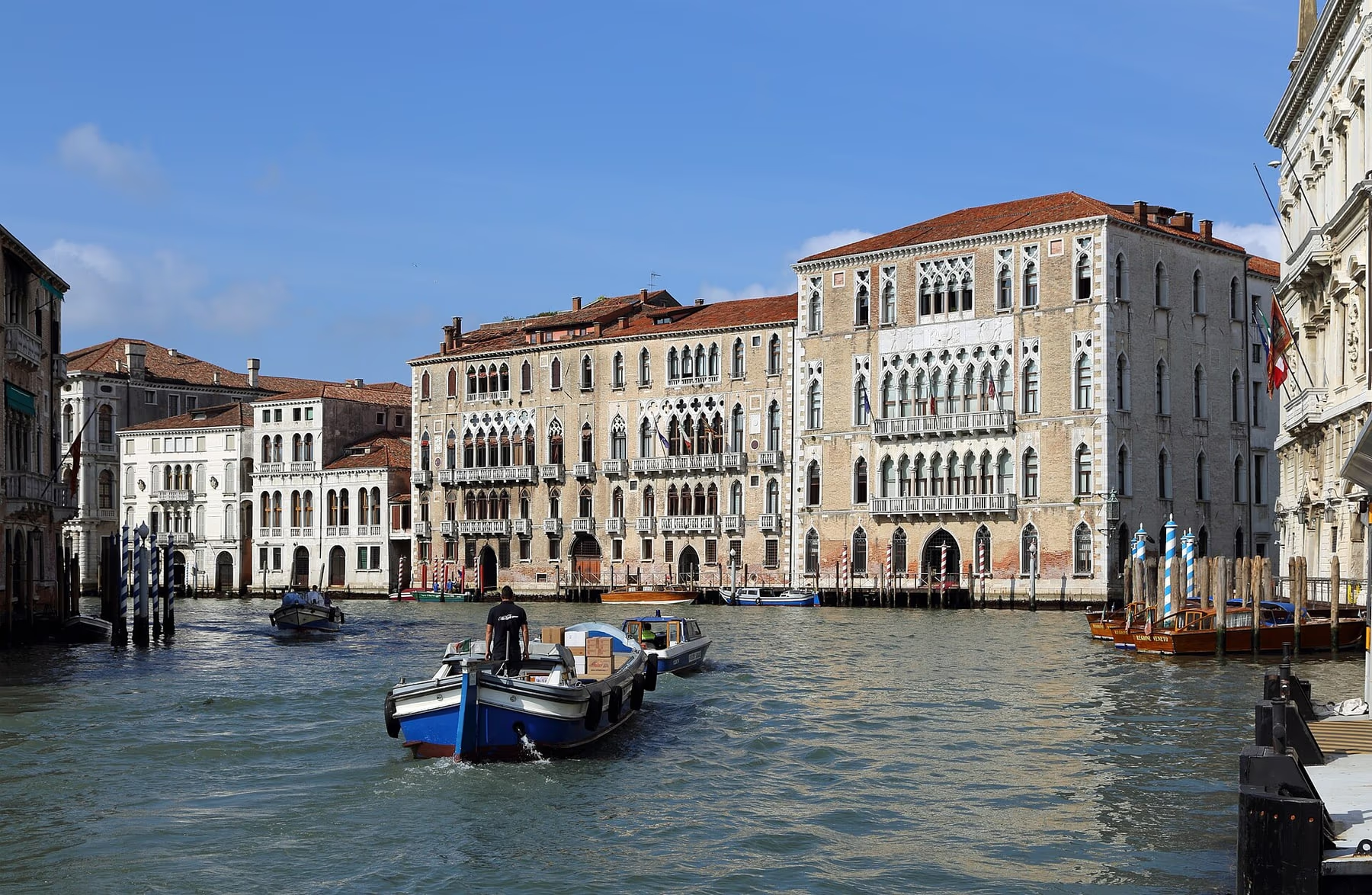
The worst windows are 9:00–11:00 towards San Marco and 16:00–18:00 back towards the station and Piazzale Roma, when the groups head home. On line 1 in August you can find yourself letting two boats go before you get on.
The best windows are before 8:30 and after 20:00. Line 1 at sunset, sitting out at the stern, is the cheapest way to see the Grand Canal: €9.50 against roughly €90 for a 30-minute gondola ride.
During acqua alta, the tidal flooding that hits the city in autumn and winter, the boats almost always keep running, but some stops are suspended because the pontoons will not fit under the bridges or are unsafe. On those days ACTV posts the diversions on the app and on notices at the stages: check before planning a trip to the islands.
In thick winter fog, sailings to Burano and Torcello can be delayed or cancelled. That is the one situation where a pass you have already paid for does not help.
How to spend less on transport in Venice
- Rolling Venice: if you are between 6 and 29, the €6 named card unlocks the 72-hour pass at €27 instead of €45. Buy it with ID at a Venezia Unica desk. Net saving: €12.
- Children travel free until their sixth birthday. From six they pay the adult fare; there is nothing in between.
- Do not buy the pass on arrival day if you land in the evening. Activating it at 21:00 burns half its validity while you sleep.
- The traghetto — a stripped-down gondola ferry — crosses the Grand Canal for a couple of euros a head at points with no bridge (Santa Sofia, San Tomà, Santa Maria del Giglio). It is the shortcut Venetians use daily and it needs no ACTV ticket.
- Always check the last stretch to your hotel. A €45 pass does little for you if the flat is ten minutes' walk from the nearest stage and you spend the day in the centre.
One mistake that costs money: buying an ACTV pass in the belief that it covers the airport. It does not. Alilaguna, the ACTV line 5 Aerobus and the ATVO bus all have separate tickets, explained on the page about Marco Polo Airport. If you have a lot of luggage or are travelling as a group, compare the numbers with a water taxi: above four people the gap narrows.
In short
Vaporetto tickets in Venice earn their price in three situations: crossing water, reaching the islands, and moving with luggage. €9.50 for a single, €25 for the 24-hour pass once you are making three trips, €65 for seven days on a longer stay. The rest of the city is walkable, often faster than the boat. If museums are also on the list, compare the bundles on the passes and combos page first: some already include public transport and change the final sum.