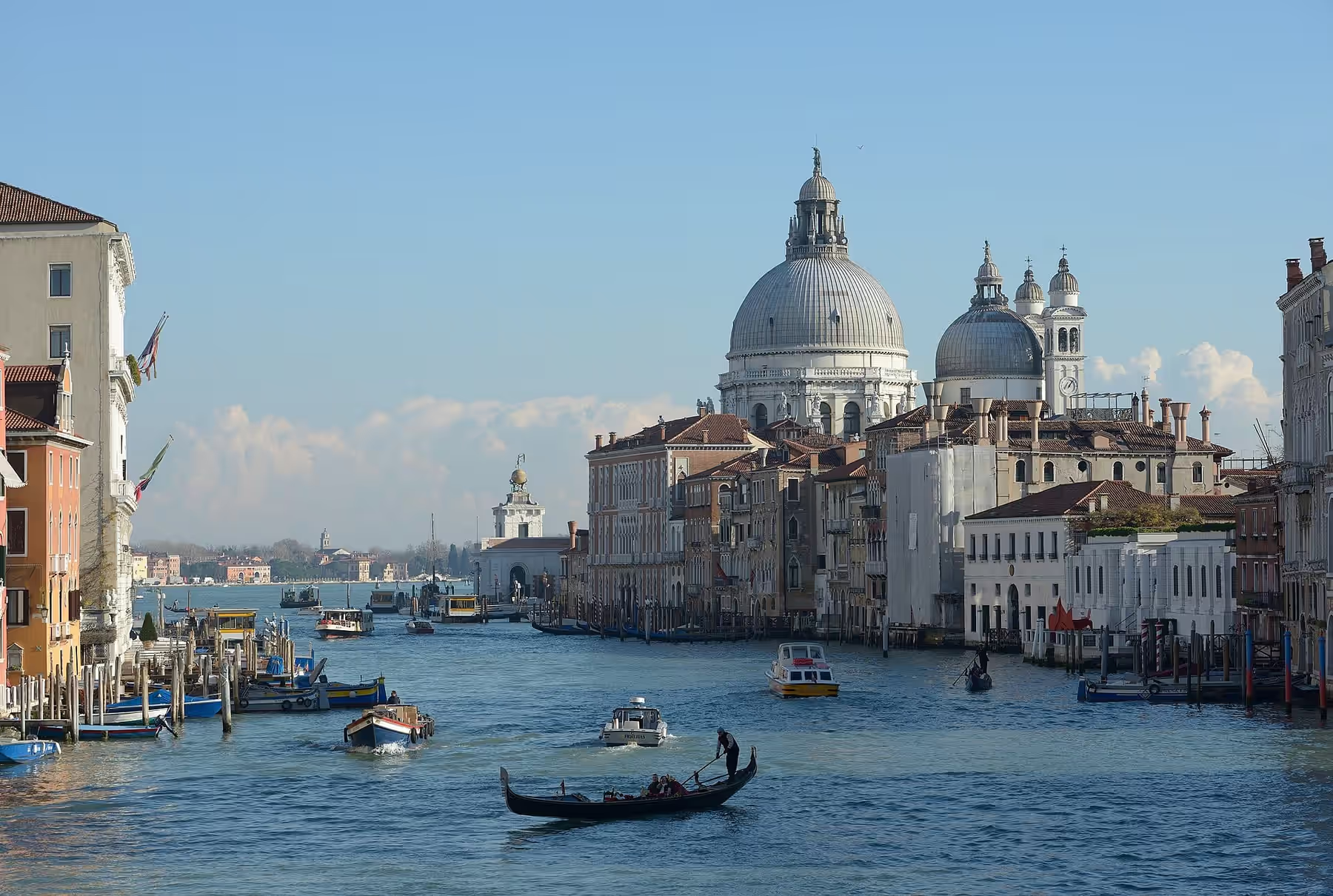
Which ticket to choose
Venice: Classic Gondola Ride
from €39
Best for:Couples and solo travellers who want the lowest price
- 30 minutes in a shared gondola
- 20-minute introduction to the history of the gondola
- Gondola Gallery
- Downloadable audio guide
Venice: Gondola Ride with Live Commentary
from €39
Best for:Anyone who wants to know what they are looking at
- 30 minutes in a shared gondola
- Live guide on board
- Gondola Gallery
Venice: Gondola Ride through the Bridge of Sighs and St. Mark’s Basin
from €35
Best for:Anyone whose main reason for going is the Bridge of Sighs shot
- 30 minutes in a shared gondola
- 15-minute introductory walking tour
- Commentary via app
Venice: Private Gondola Ride on the Grand Canal
from €122
Best for:Couples, families and groups of up to five
- Gondola reserved for 30 minutes
- Up to five passengers
A gondola ride in Venice has a public price, set by Venice city council and binding on every gondolier: €90 per gondola for 30 minutes during the day, and €110 for 35 minutes from 19:00 onwards ``. The crucial difference from almost every other attraction in the city is that the tariff covers the whole boat, not each passenger. Five people pay exactly what two people pay.
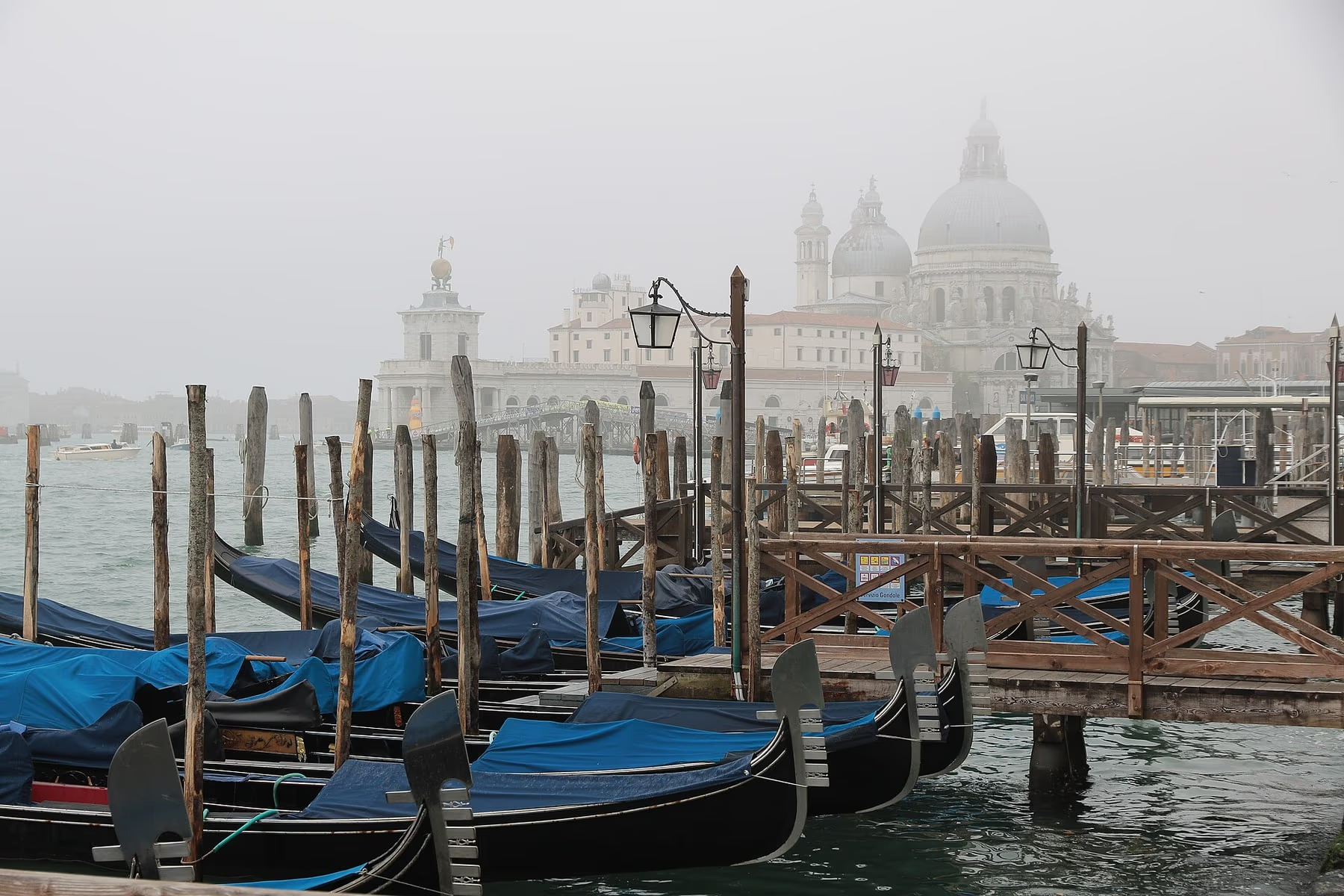
What a gondola ride in Venice really costs
The tariff is fixed by council decree and administered by the Istituzione per la Conservazione della Gondola e la Tutela del Gondoliere, the body that regulates the trade. Every licensed gondolier has to display it and charge it.
| Rate | Hours | Duration | Price per gondola | Split by two | Split by five |
|---|---|---|---|---|---|
| Daytime | 9:00–19:00 | 30 minutes | €90 | €45 each | €18 each |
| Evening | from 19:00 | 35 minutes | €110 | €55 each | €22 each |
Longer rides are charged in proportion to the time: an hour in daylight costs twice what half an hour costs. The limit of five passengers includes children and is not open to negotiation — it depends on how the boat sits in the water, not on the gondolier's goodwill.
Three things are not in the tariff and nobody has to pay for them: singing, a tip, and the "extended route" offered once you are aboard. If the price you are quoted at a stazio differs from the table, ask to see the displayed tariff before you get in.
Shared gondola or private gondola
Almost your whole budget turns on this one decision.
Shared gondola. Rides sold online pool passengers from different bookings until the boat is full. They start at €35 per person on Tiqets and nearly always include a briefing on land, access to the Gondola Gallery, and either recorded or live commentary. The advantage is not only the price: you get an assigned time and you walk past the queue at the stazio. The drawback is that you share six tight seats with strangers, and the photo of just the two of you does not happen.
Private gondola. You book the whole boat. On Tiqets a private ride on the Grand Canal starts at €122 for up to five people. That is more than the €90 council tariff because it buys you a booking, a guaranteed time and assistance in Italian and English.
Straight to a stazio. You pay €90 and the gondola is yours. For two people that is €45 each, which is more than a shared ride. For four or five it is €18–22 each, which is the cheapest way there is to have a gondola to yourselves. The rule of thumb is simple: up to two people, book a shared ride; three or more, walk up to a stazio.
Comparing the tickets
Shared rides resemble one another closely, and the difference lies in what surrounds the 30 minutes on the water rather than in the 30 minutes themselves.
Venice: Classic Gondola Ride (from €39, rated 4.2 from 1,398 reviews) is the default choice: 20 minutes on the history of the gondola before boarding, then half an hour on the water with a downloadable audio guide. Venice: Gondola Ride with Live Commentary costs the same and puts a guide in the boat. Choose it if you want to know who owned the palace you are gliding past, because otherwise the gondolier will not tell you — guiding is not his job, and in many cases he is not licensed to do it.
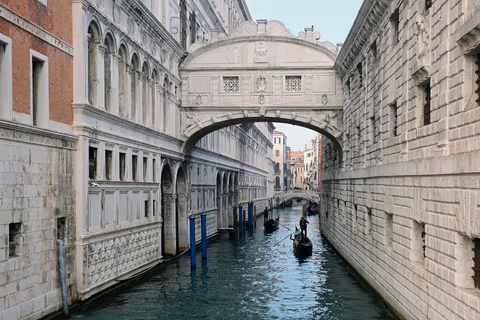
Venice: Gondola Ride through the Bridge of Sighs and St. Mark’s Basin (from €35) is the cheapest, and the only one that guarantees in writing that you pass beneath the Bridge of Sighs. Useful if that photograph is the reason you are getting into a gondola at all. In exchange, the commentary is app-only.
The Venice: Grand Canal Evening Gondola Ride + Gondola Gallery Access (from €42.90) and the three-hour Hidden Venice: The Unusual Walking Tour & Gondola Ride (from €59.50) cost more and have fewer reviews. Consider them only if you genuinely want the package, not for the ride itself.
Watch the cancellation policies, which vary a lot here: the classic ride and the Grand Canal ride are sold as non-refundable, while the live-commentary version, the private ride and the evening ride accept cancellation up to 24 hours beforehand.
Book with instant confirmation


When to go
Time of day. The first hour of the morning, between 9:00 and 10:00, has the least boat traffic: the canals are still, the delivery barges have almost finished their rounds, and there is no queue at the stazio. The best light for photographs is the last hour before sunset, when the palaces on the Grand Canal turn ochre — which is also peak time, so allow at least half an hour or book ahead.
Day of the week. Tuesday and Wednesday are the quietest. Weekends from April to October are the worst, along with the Easter weekend and the late-May to September stretch: waits at the San Marco stazi reach 40 minutes.
Season. From November to February the city empties out and a gondola becomes a completely different experience: silent canals, no queue, often mist over the basin. Bring a proper coat, because damp cold feels twice as sharp on the water. July and August bring the opposite problem: full sun with no shade on board, and a strong smell from the inner canals at low tide.
Weather. The service is suspended in strong wind, thunderstorms and rough water. When acqua alta — the tidal flooding that hits the city in autumn and winter — rises above a certain level, gondolas cannot pass under the bridges and stay tied up; the same happens at an exceptionally low tide in the smaller canals. This is the one case where an online booking is refunded or rescheduled without argument.
The trick almost no visitor uses: the traghetto
There are only four bridges over the Grand Canal. To cross it anywhere else, Venetians use the traghetto da parada: wider, undecorated gondolas rowed by two men that shuttle from bank to bank. You step on, you stand, you cross in two minutes and you pay a couple of euros ``.
It is not a sightseeing ride and it does not take you into the inner canals. But it is a genuine gondola, it costs a fraction of any tour, and it is the best way to feel how the boat actually moves. Which crossings are running varies by season and time of day; the Santa Sofia traghetto, between Cannaregio and the Rialto market, is the most reliable ``.
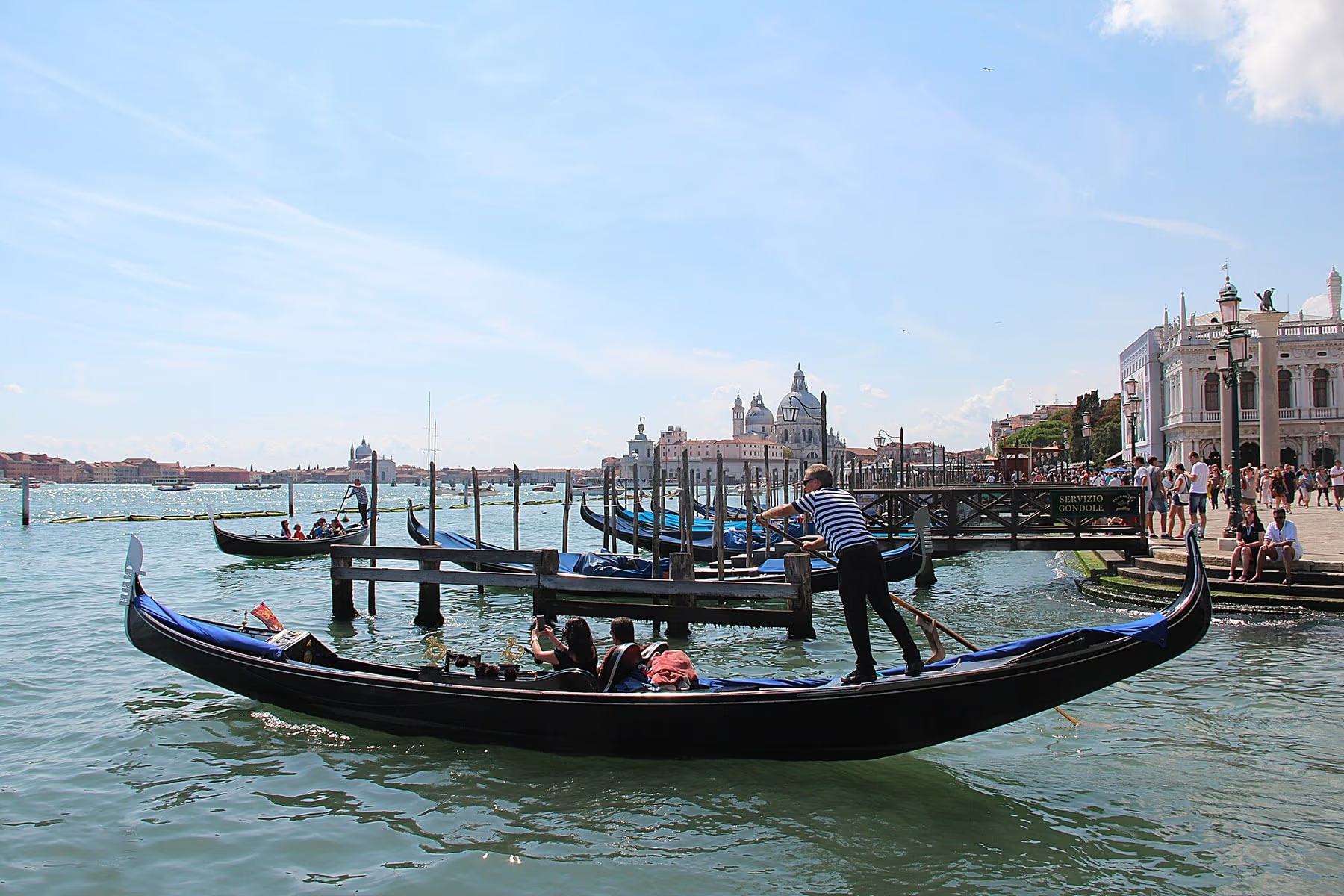
How to pay less
- Fill the boat. Five adults at a stazio pay €18 each for a private gondola. That is the lowest possible price for a full ride.
- Do not book the singing. Serenades sold as "gondola with music" line several boats up behind one carrying a singer and an accordionist, and they cost twice as much. If you want live music in Venice, a concert in one of the scuole grandi costs less and sounds better.
- Be sceptical of anything under €30 per person. In a six-seat shared gondola, the maths does not work against the council tariff below that: it almost always means a ride shorter than 30 minutes.
- A tip is not expected. It is appreciated if the gondolier has gone out of his way, but it is not part of the tariff and nobody should make you feel otherwise.
- Do not pay cash without a receipt. The gondolier is required to issue one.
- Children count as passengers like anyone else and take one of the five places. There is no child rate, because the tariff belongs to the boat.
No city pass covers a gondola ride: neither Venezia Unica nor the Museum Pass includes it. If you are working out an overall budget, the page on passes and combos shows where the real savings are.
Where you board: the main stazi
The stazi are the licensed boarding points, recognisable by the sign showing the tariff. The busiest:
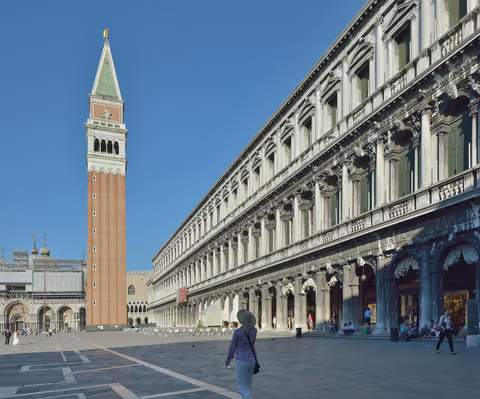
- Bacino Orseolo, behind the Procuratie on St Mark's Square: the largest and the most crowded, with departures towards the San Marco canals.
- Riva del Carbon, at the foot of the Rialto Bridge on the San Marco side: convenient, but you set off straight onto the Grand Canal and its traffic.
- Santa Maria del Giglio, between San Marco and the Accademia: a calmer route towards the inner canals.
- San Tomà, near the Frari: one of the least touristy, and a good compromise between narrow canals and the Grand Canal.
- Ferrovia and Piazzale Roma: handy if you have just come off a train or left a car, but the opening stretch is the least attractive part of the Grand Canal.
The full list and any seasonal closures are published on www.comune.venezia.it ``.
Getting there
Bacino Orseolo: vaporetto (the city's water bus) lines 1 or 2 run by ACTV, the public transport operator; get off at Vallaresso or San Marco-San Zaccaria, then walk five minutes across St Mark's Square and under the arcade of the Procuratie Vecchie.
Riva del Carbon: lines 1 or 2, Rialto stop. The stazio is on the left-hand bank as you face the bridge from the San Marco side.
Santa Maria del Giglio: line 1, Giglio stop, then two minutes on foot.
On foot: from St Mark's Square every stazio in the sestiere is within ten minutes; from Santa Lucia station allow about 35 minutes to San Marco, following the signs for Rialto. If you are using the water buses a lot, the page on the vaporetto and ACTV tickets explains which ticket is worth buying.
What's nearby
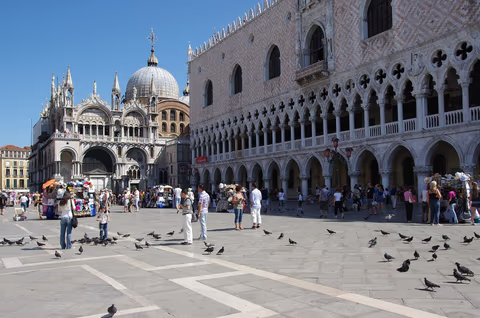
- Doge's Palace — two minutes from the Bacino Orseolo stazio, and the only museum that really explains how the Republic worked.
- Bridge of Sighs — you pass beneath it on many rides, but you can only walk across it from inside the Doge's Palace.
- Squero di San Trovaso, in Dorsoduro — one of the few yards where gondolas are still built and repaired. You watch from the far bank of the canal; there is no visit inside.
- Accademia Bridge — ten minutes on foot from the Giglio stazio, and the best view down the Grand Canal towards the Salute.
- Murano and Burano — if you want the real lagoon after your ride, boats leave from Fondamente Nove.
Book with instant confirmation

Before you step aboard
You board from a narrow gangplank; go one at a time and never stand up during the ride. Bulky luggage does not come aboard, so if you are between trains, leave your cases in a left-luggage office first. There is no toilet on a gondola, which matters if you have small children with you. Photographs are fine, drones are not.
Finally, the contributo di accesso (the Venice access fee) is a separate matter: it applies to entering the city on the days the council designates, it is paid only at cda.ve.it, and no tour operator can sell it alongside a gondola ride in Venice. The details are on the page about the access fee.