Which ticket to choose
Ticket with audio-guide app (box office)
€12 full
Best for:Visitors who want the lowest official price and their own pace
- Scola Levantina
- Scola Spagnola
- Free audio-guide app
Guided synagogue tour
€15 full
Best for:Anyone who wants the historical order of the five scole explained, not just the rooms
- Guided visit in Italian or English
- Entry to the synagogues open that day
Venice: Jewish Quarter + Synagogue Entry Ticket + Smartphone Audio Guide
from €16
Best for:Booking from abroad and keeping everything on your phone
- Access to the Scola Levantina and Scola Spagnola
- Biblical Garden
- Smartphone audio guide
Venice: Jewish Quarter Guided Tour with Synagogue Entry Ticket
from €20
Best for:A short visit: 45 minutes with a guide, entry included
- Guided walk through the quarter
- Scola Levantina
- Scola Spagnola or Scola Italiana
The Jewish Ghetto in Venice (Ghetto Ebraico) is the quarter that gave every other one its name. It was created on 29 March 1516, when the Senate of the Republic of Venice decreed that the city's Jewish residents live in an enclosed area of Cannaregio, shut behind gates at sunset. Walking through it costs nothing. Seeing the synagogues does: you need either the €12 ticket with the audio-guide app or the €15 guided tour, both starting from Campo di Ghetto Nuovo.
Ticket comparison: what gets you in where
The synagogues cannot be visited freely. They are working places of worship and open only with staff from the Jewish community.
| Ticket | Price | Who it suits |
|---|---|---|
| Ticket + audio-guide app | €12 full, €10 concession | Anyone who wants the official price and their own pace |
| Guided tour | €15 full, €13 concession | Anyone who wants the history told in order |
| Tiqets package with audio guide | from €16 | Anyone booking before they travel |
| Tiqets guided tour, 45 minutes | from €20 | Anyone with half a morning who wants it all included |
The official concessions apply to children from 6, students up to 26, journalists, FAI members (FAI is the Italian national trust) and holders of the Coop Alleanza 3.0 card. People born in Venice or resident there pay €7 for the ticket and €10 for the guided tour. Entry is free for children under 6, disabled visitors with a carer, and ICOM members. Advance sale adds €2.
Private tours by appointment start at €100–150 per group, plus €17 per person for entry, and run in six languages. They make sense for large families or for anyone who wants to go deep on one particular theme.
On Tiqets, the self-guided app package costs from €14 (rated 3.8 from 14 reviews), the version with audio guide and Biblical Garden from €16 (3.8 from 22), and the 45-minute guided tour from €20, which is the best rated of the group at 4.6 from 27 reviews. The gap against the box office is a few euros: what you buy is a guaranteed place and a guaranteed language.
Book with instant confirmation


The Museo Ebraico: where the restoration stands
The Museo Ebraico (Jewish Museum), opened in 1953 on Campo di Ghetto Nuovo, is finishing a restoration project and reopens to the public in the autumn. The work, worth around €9 million, covers the structural stability of the buildings and floors, air conditioning, heating and the restoration of woodwork and plaster; two lifts will make the museum accessible.
The project includes the conservation of the three synagogues of the Ghetto Nuovo — Tedesca, Canton and Italiana — and their return to a single continuous route, with five properties belonging to the Jewish community that have never been open before. In practice: visit now and you see a shortened version of the route; come back after the reopening and you will find a longer itinerary, at prices that will need checking again.
For now, visits concentrate on the two synagogues of the Ghetto Vecchio: the Scola Levantina (not available on Friday afternoons) and the Scola Spagnola, open Sunday to Thursday. On Fridays the rotation usually falls to the Scola Italiana. Check which combination is open on your day before you buy: it changes with the religious calendar.
What you see in the quarter
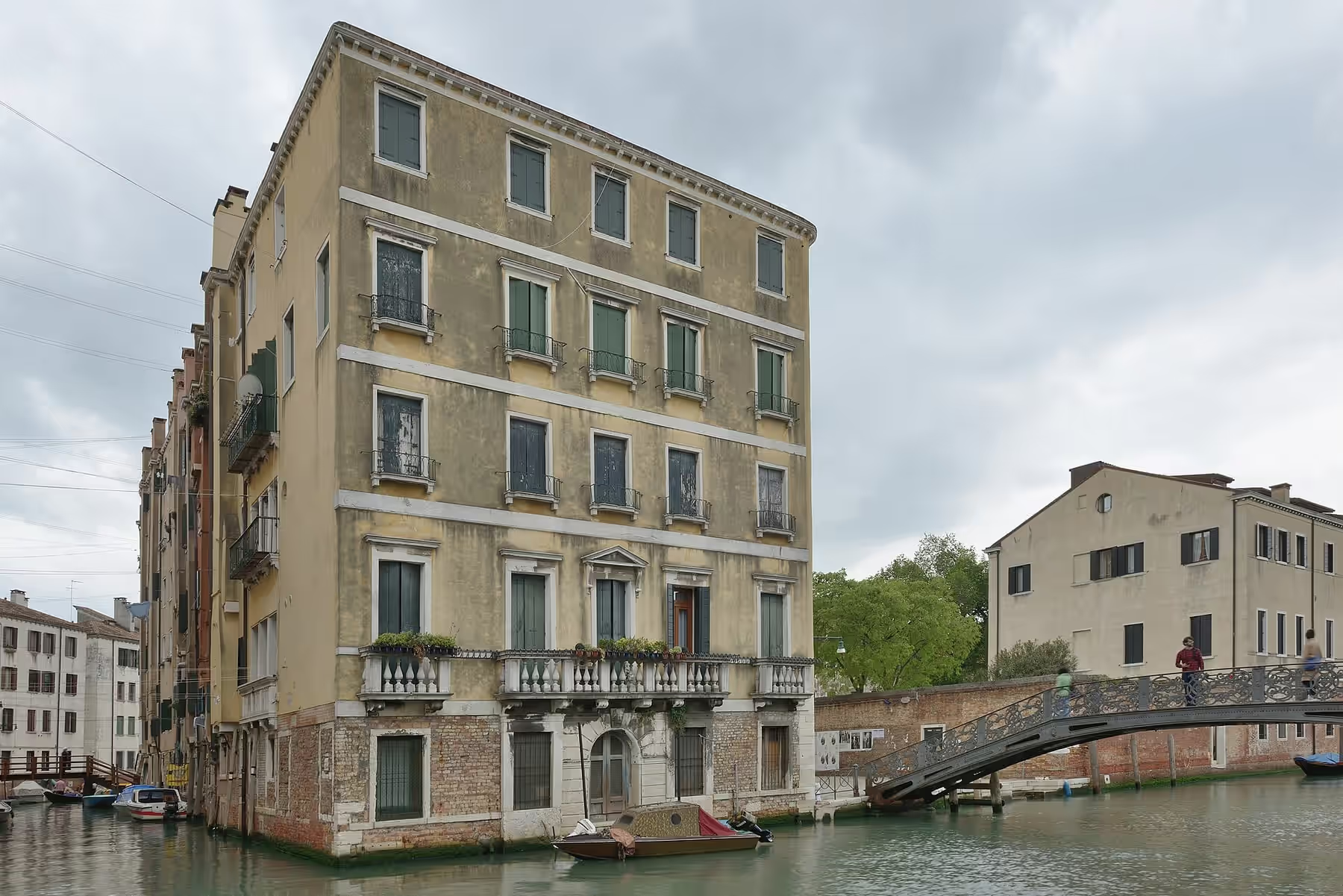
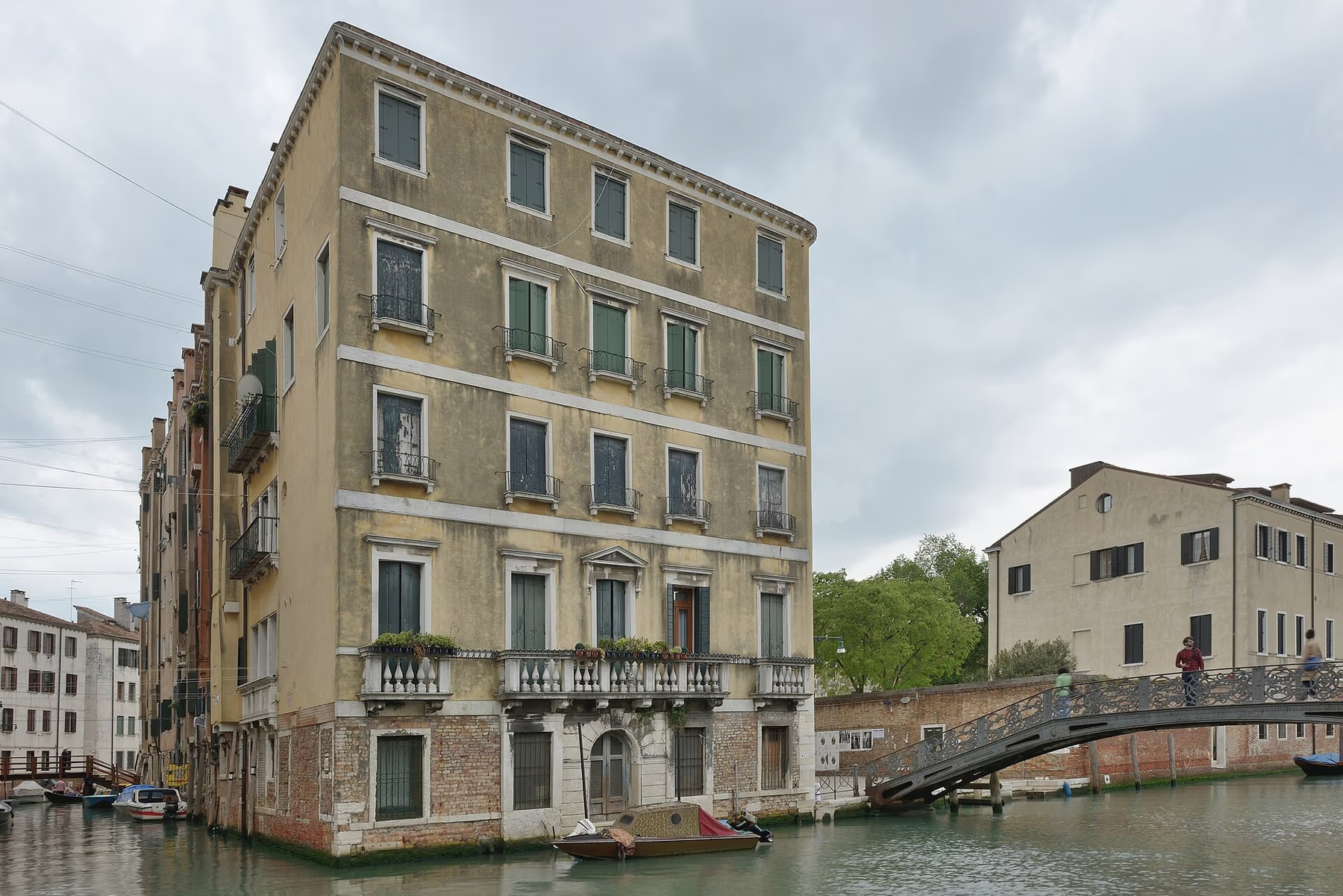
The Ghetto is made up of three areas built at different moments. The Ghetto Nuovo of 1516 is the main square, ringed by buildings that rise to seven storeys: unable to expand sideways, the community built upwards, with low ceilings and narrow staircases you can still read from the outside. The Ghetto Vecchio, opened in 1541 for Levantine merchants, is the part towards the Cannaregio canal. The Ghetto Novissimo of 1633 is the small extension to the east.
In Campo di Ghetto Nuovo you will find the bronze reliefs by Arbit Blatas dedicated to the Holocaust, installed in 1980, and the memorial listing the Venetian Jews who were deported. They stand at two separate points in the same square, and they should be looked at in silence: people still live here, and this is not an open-air museum.
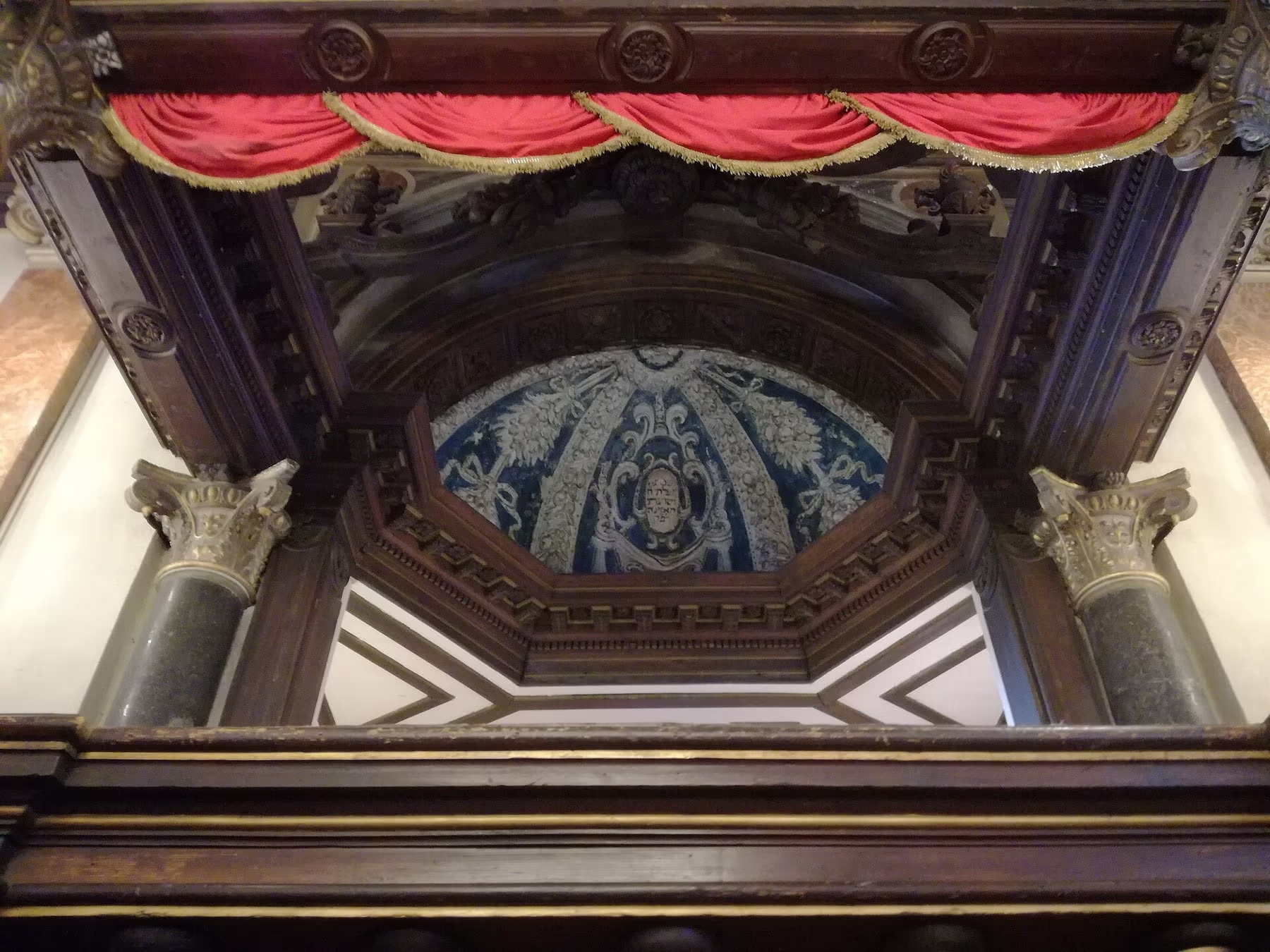
The five scole are unrecognisable from the street. The Republic forbade identifiable facades, so the synagogues sit on the top floor of ordinary buildings, marked at most by five windows in a row. The surprise on the way in — carved and gilded wooden halls, an elliptical women's gallery, a raised bimah — depends entirely on that contrast.
The five scole, one by one
Each community that arrived in Venice built its own synagogue, and the result is five places of worship differing in rite and in period, all within a few hundred metres of each other.
- Scola Grande Tedesca (1528–1529): the oldest, Ashkenazi rite, an irregular hall shaped by the building that contains it.
- Scola Canton (1531–1532): Ashkenazi rite, known for its wooden panels with biblical scenes.
- Scola Italiana (1575): the plainest, built by the Italian community, the least wealthy of the five.
- Scola Levantina (1541): in the Ghetto Vecchio, Sephardic rite, with a monumental carved wooden bimah.
- Scola Spagnola: the largest, reworked in the seventeenth century, still used for services in the summer months.
Tedesca, Canton and Italiana face Campo di Ghetto Nuovo and belong to the museum route currently under restoration; Levantina and Spagnola are in the Ghetto Vecchio and are the ones open at the moment. The two active synagogues alternate between summer and winter, a practical choice that comes down to heating.
The gates of the Ghetto were torn down in 1797 with the arrival of Napoleon's troops, ending 281 years of compulsory residence.
When to go
Opening hours are Sunday to Thursday 10:00–18:00 (last entry 17:15) and Friday 9:00–17:00 (last entry 16:15). The ticket office closes 45 minutes earlier. Saturday is closed, as are Jewish holidays, 1 January and 25 December. This is the most common planning mistake, because Saturday is precisely the day most visitors have free.
Jewish holidays follow the lunar calendar and fall on different dates each year. Rosh Hashanah, Yom Kippur and Sukkot all cluster in September and October, so autumn carries the highest risk of finding the site closed. Check the community's calendar before fixing your date.
The first slot of the morning is the quietest. In the late afternoon light comes in through the high windows of the scole and the halls look their best, but groups overlap. For photographs the square works better in mid-morning: the tall buildings put it in shade early.
Rules of entry
Inside the synagogues you need shoulders and knees covered; men are asked to wear a head covering, and kippot are available at the door. There is a security check on the way in: avoid bulky rucksacks and suitcases, which are not allowed. If you are coming straight from the station, leave your bags at a luggage storage point before heading for the square.
Photography inside the prayer halls is generally forbidden: always ask staff before taking a picture. There are no visits during services.
How to save
- The quarter is free. On a tight budget, walk the Ghetto Nuovo and Ghetto Vecchio without a ticket: you will still read the street plan, the verticality and the memorials, and it costs nothing.
- Concession up to 26. Students and young visitors pay €10 instead of €12 and €13 instead of €15: bring ID.
- FAI and Coop cards. Both qualify for the concession. Few people know it, and nobody at the desk will ask on your behalf.
- Skip the advance sale if you are already in the city. The €2 booking fee is saved by buying at the counter, but only outside peak season.
- One product, not two. The Tiqets packages already include entry to the synagogues: buying a box-office ticket as well is money spent twice.
- No pass covers the Ghetto. The synagogues are run by the Jewish community and sit outside the city museum passes. Compare the options in the guide to Venice tickets before buying a combined pass on the assumption that they are included.
Getting there
Meeting point and ticket office: Campo di Ghetto Nuovo 2902/b, Cannaregio 30121. The handiest vaporetto (water bus) stops are Guglie and San Marcuola (lines 1, 2 and 4.1/4.2), both 3–5 minutes' walk away. From the Ponte delle Guglie take the Sotoportego del Ghetto on the right-hand side of the Cannaregio canal: it is low and narrow, and it is the historical entrance.
From Santa Lucia station it is about 10 minutes on foot along Rio Terà Lista di Spagna, then left before the Ponte delle Guglie. From Piazzale Roma add 5 minutes. From Rialto it is 15–20 minutes along the Strada Nova. If you are moving around all day, the ACTV vaporetto pass from €12 on Tiqets covers the whole city network (ACTV is the city's public transport operator).
The quarter is flat, but the bridges have steps and the synagogue interiors are reached by narrow staircases: anyone with limited mobility should ask in advance which rooms are accessible.
What else is nearby
- Fondamenta della Misericordia, five minutes: the run of bacari (small wine bars) where Venetians drink in the evening.
- Chiesa della Madonna dell'Orto, ten minutes: Tintoretto's parish church, with his tomb and two enormous canvases.
- Strada Nova and Ca' d'Oro, ten minutes: the shopping street that runs towards Rialto.
- Museo di Storia Naturale (Natural History Museum) in the Fondaco dei Turchi, ten minutes across the canal: from €15 on Tiqets, and the right stop if you are travelling with children.
- The kosher bakery in the Ghetto Vecchio: the traditional sweets, from bisse to impade, need no ticket at all.
One last point of method: the Ghetto is not a box to tick in twenty minutes between the other things to do in Venice. The rooms are small, groups go in by turn and time inside the scole is rationed. Allow a full hour and arrive a few minutes before the time printed on your ticket.
Visiting the Jewish Ghetto in Venice means putting together two things that usually stay apart: a quarter that is still lived in and free to walk through, and five hidden synagogues that open only at set times. Pick a day that is not a Saturday, take the first slot of the morning, and keep an eye on the reopening of the Museo Ebraico: from that point on, the route will be longer than the one you can see today.