Which ticket to choose
Leonardo da Vinci Museum (at the desk)
€9 full
Best for:Families with children from 6, and rainy afternoons in Dorsoduro
- Models of Leonardo's machines
- Permanent display in the church of San Barnaba
Ca' Rezzonico Museum: Fast Track Ticket
from €15 on Tiqets
Best for:Anyone staying in Dorsoduro who wants eighteenth-century Venice two minutes away
- Museum entry
- Priority access
Natural History Museum (Museo di Storia Naturale): Entry ticket
from €15 on Tiqets
Best for:Children who want dinosaurs and an aquarium rather than gearing
- Entry to the Fondaco dei Turchi
Naval History Museum & Enrico Dandolo Submarine: Entry Ticket + Audio Guide
from €27 on Tiqets
Best for:Older children: you go aboard the submarine Enrico Dandolo
- Naval History Museum
- Enrico Dandolo submarine
- Audio guide
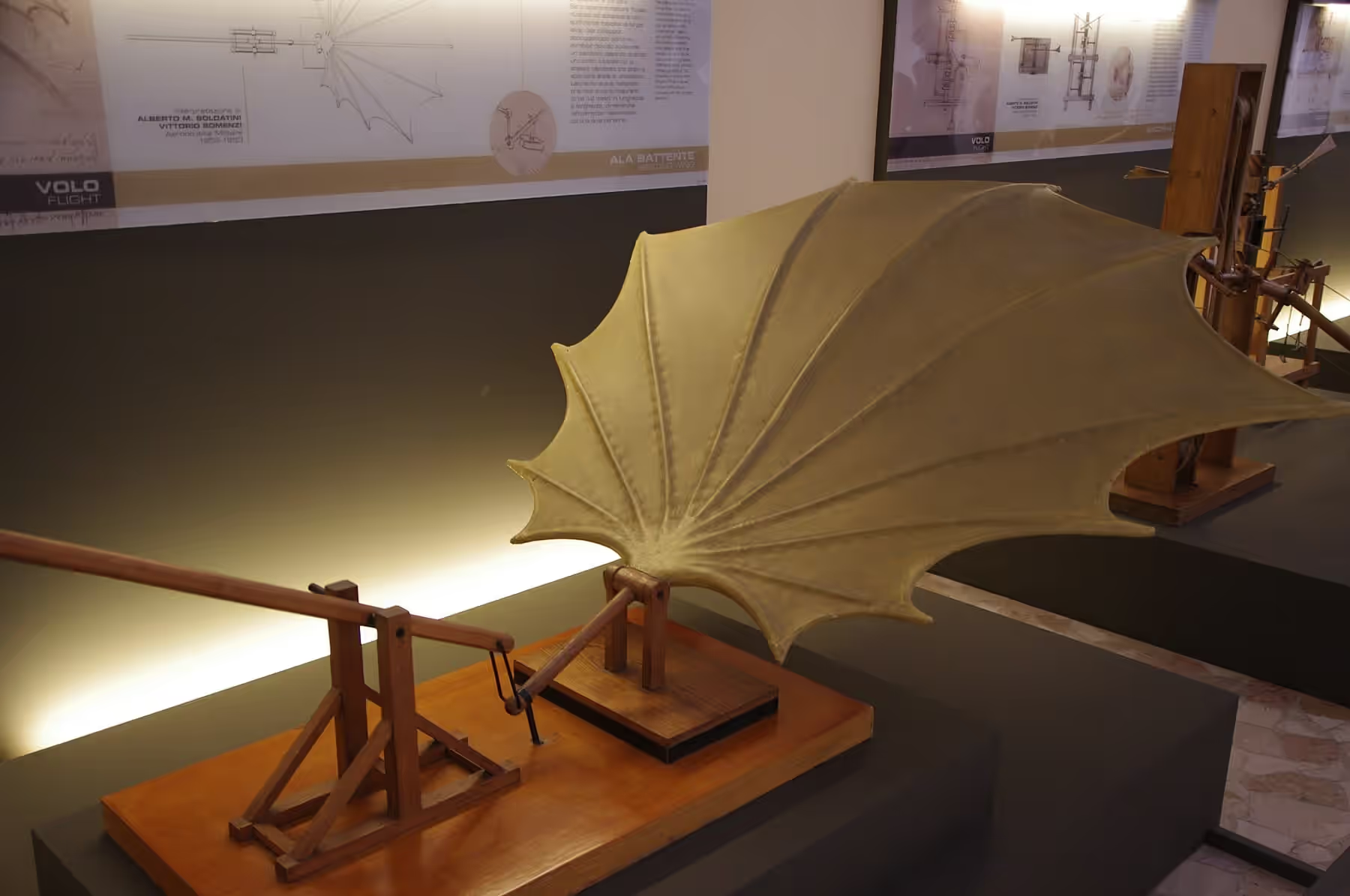
The Leonardo da Vinci Museum in Venice occupies the deconsecrated church of San Barnaba, in Dorsoduro, and shows three-dimensional models of the machines Leonardo designed: gears, screws, winches and wings built from the drawings in his codices. A full ticket is €9, the concession €6, and it is open every day from 10:00 to 19:00. It is a short visit, rarely busy, in a part of the city where everything else costs more.
Prices and concessions
The museum publishes its price list and it is a short one:
| Ticket | Price |
|---|---|
| Full | €9.00 |
| Children | €6.00 |
| Over-65s | €6.00 |
| Students in a group (minimum 15 people) | €5.00 |
| Disability of 90% or above + carer | free |
| Disability below 90% | €6.00, carer €6.00 |
There is no need to book: you buy at the desk on the way in. There is currently no ticket for this museum on Tiqets, so any online offer promising skip-the-line entry deserves suspicion: there simply is no line.
If you are staying in the area, the tickets you can book in advance are for other nearby museums in Venice: Ca' Rezzonico with fast track from €15 on Tiqets (rated 4.5 from 121 reviews), the Museo di Storia Naturale (Natural History Museum) in the Fondaco dei Turchi from €15 (4.7 from 52) and the Naval History Museum with the submarine Enrico Dandolo from €27, audio guide included.
Book with instant confirmation


Which museum to choose if you only have one afternoon
The real question is not what the Leonardo da Vinci Museum costs, but whether it is worth the afternoon compared with what stands around it.
- With children aged 6 to 12: Leonardo wins. You look at the models close up, the mechanisms are visible and the route does not exhaust anyone. It costs half the price of almost every other museum in Venice.
- With teenagers: the Naval History Museum with its submarine is more memorable, but it is on the far side of the city, in Castello.
- If you want Venetian art: Ca' Rezzonico is two minutes away and shows the eighteenth century through its furniture, its Tiepolos and its view over the Grand Canal.
- If it is raining and you have two hours: Leonardo plus Ca' Rezzonico sit on the same street and make a complete afternoon for €24 in two tickets.
What you see inside
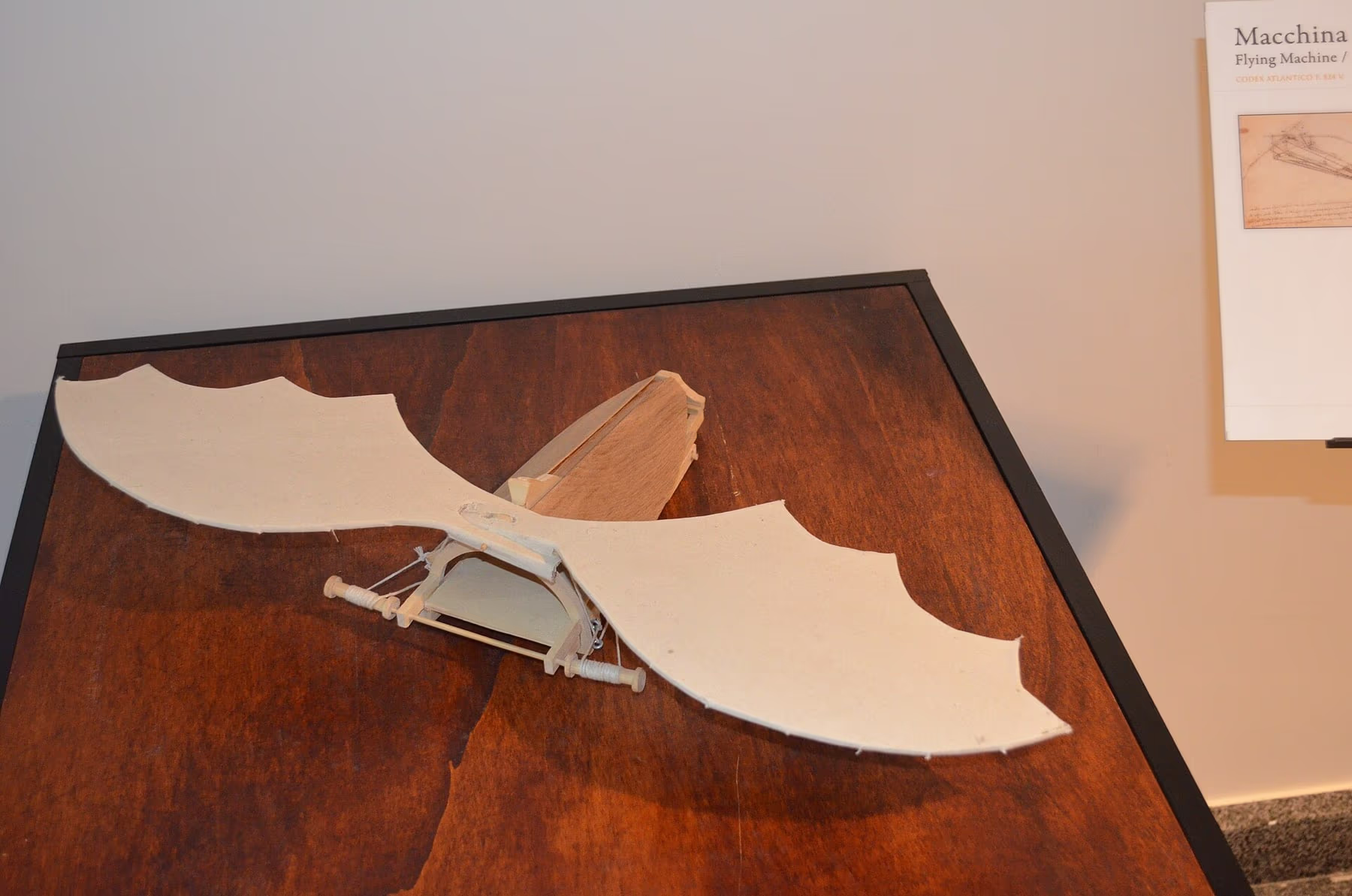
The display is permanent and fits entirely into the single nave of the church. The models are reconstructions in wood, rope and canvas, made by following the drawings in Leonardo's manuscripts, some full size and some to scale. The families of machines are the classic ones from the corpus: transmission mechanisms (worm screws, gears, cams), building-site machines such as winches and cranes, hydraulic machines, military devices and the flight projects, from the ornithopter to the aerial screw.
The value of the place is in the teaching. In front of a drawing in a codex you understand very little; in front of a three-dimensional model you understand the mechanical principle in ten seconds. Some pieces can be operated, and that is what keeps children here longer than you expect.
The route is arranged by theme rather than chronology, and the labels explain the physical principle before the application: why a worm screw multiplies force, why a differential winch lifts more weight with less effort, why the ornithopter could never have worked on muscle power alone. Anyone arriving expecting paintings will be caught out: there are no original works by Leonardo here, and the museum makes no attempt to hide it.
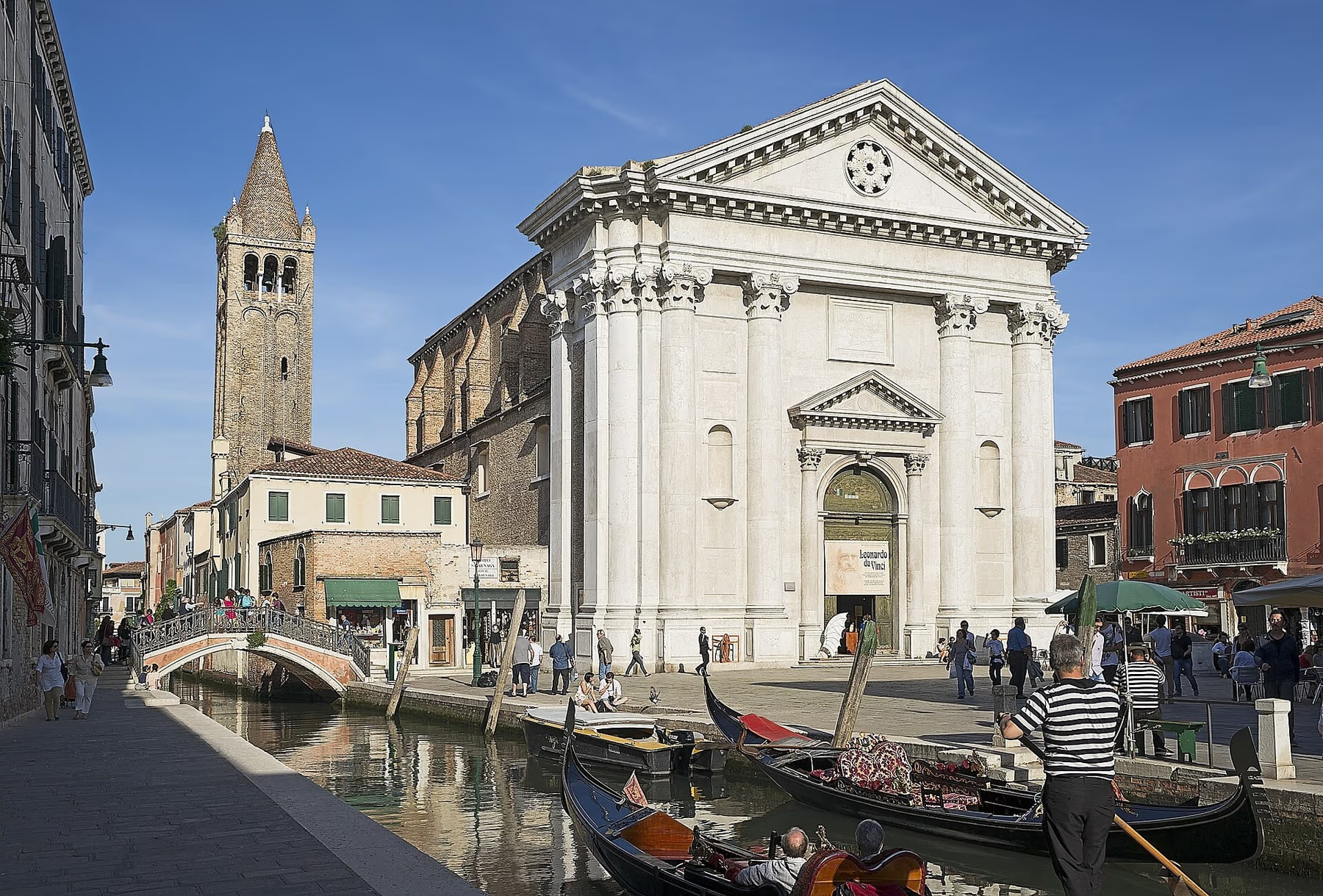
The container is worth a look too. The church of San Barnaba has a neoclassical facade built in the middle of the eighteenth century and a much older bell tower. It stopped being a parish church in 1810, and in the twentieth century it was used as a store and as an exhibition space. The facade appears in Indiana Jones and the Last Crusade (1989) in the Venetian library scene: it is the same building you now walk into to see the machines.
Leonardo and Venice: the real connection
The question always comes up: what does Leonardo have to do with Venice? He never lived here and left no works here, but he did pass through. In March 1500, having left Milan after the fall of Ludovico il Moro, Leonardo da Vinci stopped in Venice and worked for the Republic as a military consultant. The problem of the moment was the Ottoman threat from the east, and his notes deal with defending the line of the Isonzo, including the idea of flooding the valley with movable dams to block an advance. The drawings of apparatus for working underwater — suits and breathing devices intended for sabotaging enemy ships from below — belong to the same phase of study.
It is a brief connection, but not an invented one, and it is why a museum of Leonardo's machines in Venice makes more sense than it first appears. Within the display, the models tied to water and navigation are the part that works best in this city.
With children: how to make it work
This is one of the very few museums in Venice built to be understood by an eight-year-old, and it should be used that way.
- Come here first, then find an open square. Forty minutes inside, then campo Santa Margherita or the Zattere to run about. The other way round does not work.
- Let each child pick three machines. Instead of walking past everything, ask each child to choose three and explain how they work: the museum turns into a game and the visit lasts longer.
- Allow for the step. With a pushchair you need two hands at the entrance; inside it is all level.
- This is not a hands-on science centre. Some mechanisms can be operated, but most are there to be looked at. If you want workshops and interactive stations, the Museo di Storia Naturale (Natural History Museum) offers more variety.
When to go
The museum has no weekly closing day, which makes it a useful reserve: when the civic museums shut on Mondays, or when a thunderstorm wrecks whatever you had planned outdoors, San Barnaba is open anyway.
The hours are convenient, 10:00–19:00 every day, and the museum does not get the peaks that hit the museums around St Mark's. Early afternoon is the best time, once the school groups that come in the morning have left. In summer it is one of the few cool interiors in the area; in winter it stays open with no seasonal change of hours.
If it rains, campo San Barnaba is an efficient shelter: the museum, the greengrocer's barge moored on the canal (one of the last floating stalls left in the city), the bacari (small wine bars) and Ca' Rezzonico all sit within two hundred metres.
For photographs, the interior has low artificial light: the wooden models come out better in close-ups of the mechanisms than in wide shots of the nave. The facade, on the other hand, catches the sun in the afternoon.
How to save
- Do not buy packages that resell it at a mark-up. At €9 at the desk it is already one of the cheapest tickets in the city: any combo selling it on for more than €12 is not worth it.
- Over-65 and child concessions at €6. They apply automatically, but you have to ask: bring ID.
- School groups at €5. From 15 people the price drops again, and booking by email saves waiting at the desk.
- The Venice access fee has nothing to do with it. The contributo di accesso (Venice access fee) — €5 if you book ahead, €10 last minute — applies only to day visitors who are not staying overnight, on the days set by the council, and is paid exclusively at cda.ve.it: no ticket platform sells it. See the guide to the Venice access fee.
- Compare before you fill the day. A €9 ticket leaves budget for a more expensive stop: the guide to Venice tickets lines up prices, queues and visiting times for the main attractions.
- A common mistake. Looking for the museum in Mestre or at the Scuola Grande di San Rocco: Venice has more than one display devoted to Leonardo and they are not the same thing. This one is on campo San Barnaba, Dorsoduro 2771.
Getting there
Address: Chiesa di San Barnaba, Dorsoduro 2771, 30123 Venice. The vaporetto (water bus) stop is Ca' Rezzonico, line 1: from there walk inland along the calle and in two minutes you are on campo San Barnaba, recognisable by its raised church platform and the greengrocer's barge moored on the canal.
On foot: 6 minutes from the Accademia bridge, 4 minutes from Campo Santa Margherita, and about 20–25 minutes from Piazzale Roma or Santa Lucia station by way of the Frari. From St Mark's Square it is 20 minutes on foot across the Accademia, or line 1 towards Piazzale Roma.
The display is on the ground floor and wheelchair accessible, with two steps at the entrance where staff will lend a hand. If you are moving around a lot in one day, the ACTV vaporetto pass from €12 on Tiqets covers line 1 and every other city route (ACTV is the city's public transport operator).
What else is nearby
- Ca' Rezzonico, two minutes: the museum of eighteenth-century Venice, from €15 on Tiqets with fast-track entry.
- Campo Santa Margherita, four minutes: the most lived-in square in Dorsoduro, with fruit stalls and bacari.
- Scuola Grande dei Carmini, five minutes: the Giambattista Tiepolo cycle on the upper floor.
- Gallerie dell'Accademia, six minutes: Venetian painting from the fourteenth to the eighteenth century.
- Santa Maria della Salute and Punta della Dogana, twelve minutes along the Zattere.
The Leonardo da Vinci Museum in Venice is not a great museum and does not pretend to be: it is a good half-hour and more of Renaissance mechanics, well explained, for €9, in a church that is worth the detour on its own. Tack it onto Ca' Rezzonico or save it for your first wet afternoon, and pay at the desk rather than hunting for online tickets that do not exist.