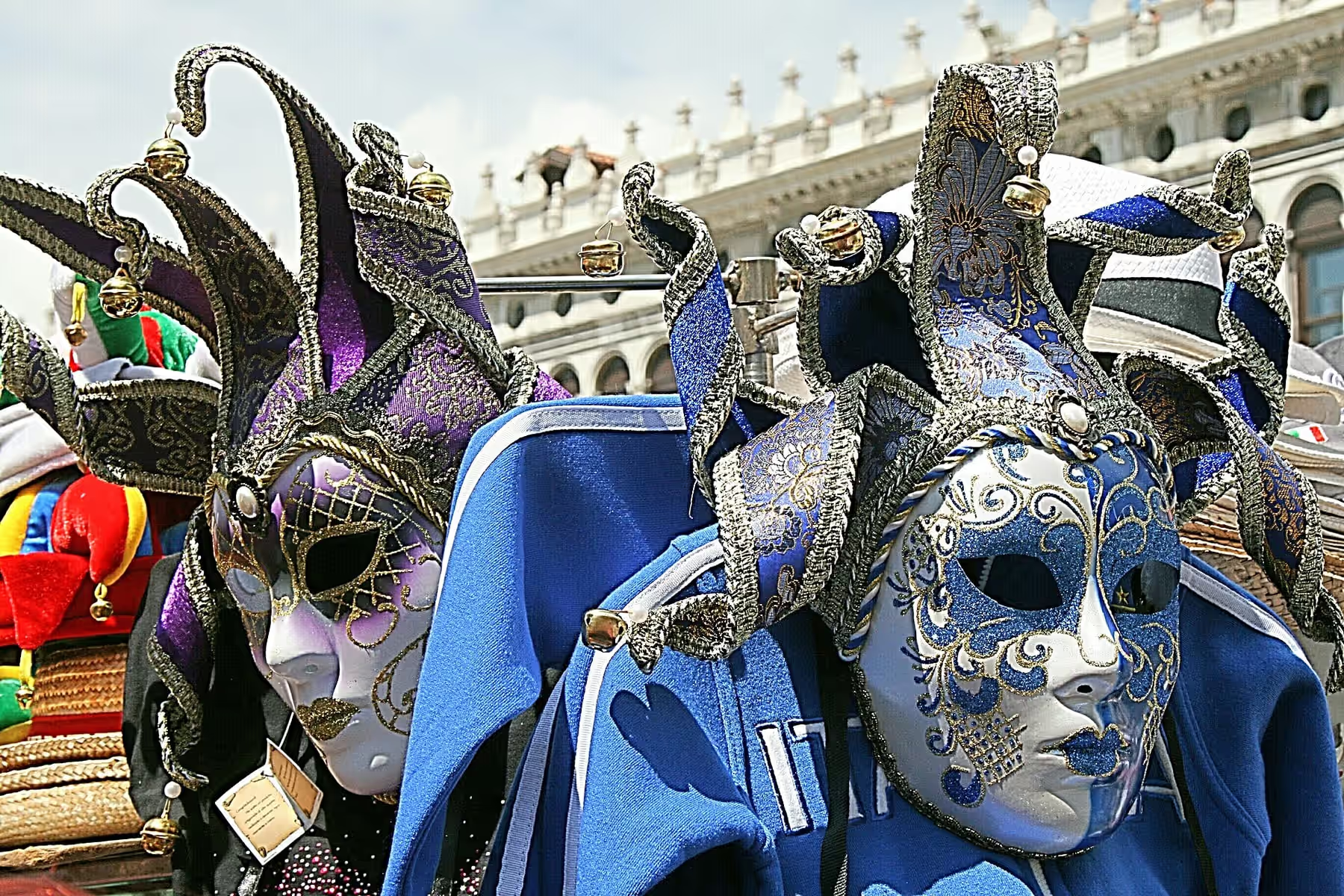
Which ticket to choose
Venice: Carnival Digital Treasure Hunt Game + Mask Workshop
from €24
Best for:Families and a first Venice Carnival
- App with a clue-based trail
- Paper map
- 20-minute workshop
- A mask to take home
Venice: Carnival Mask Workshop
from €57
Best for:An hour of real workshop time away from St Mark's, in San Polo
- Over 50 papier-mâché masks to choose from
- Paints, feathers, ribbons and materials
Venetian Mask Workshop
from €58
Best for:The studio that makes masks for film productions
- History of the Venetian mask
- Baroque technique
- All materials
Venice: Carnival Mask Workshop
from €77
Best for:Modelling the mask rather than only painting it
- Master craftsman
- All materials
- Certificate of participation
The Venice Carnival is a city-wide festival rather than a ticketed event: it happens in the squares, on the bridges and in St Mark's Square, runs for about two weeks and ends on Shrove Tuesday. In 2027 Shrove Tuesday falls on 9 February, a fixed date because it follows the church calendar: Easter 2027 is 28 March and Ash Wednesday is 10 February. The official site, carnevale.venezia.it, gives the opening as 23 January 2027, while some secondary sources say 30 January. Treat 9 February as the only date you can plan around with confidence, and check everything else before you book.
Carnival of Venice 2027 dates
| Moment | 2027 date | Notes |
|---|---|---|
| Opening | 23 January | Water procession and the Festa Veneziana on the water, first weekend |
| First weekend | 23–24 January | Events on the water in the Rio di Cannaregio |
| Second weekend | 30–31 January | Festa delle Marie and the Flight of the Angel, the busiest days |
| Third weekend | 6–7 February | Repeat events, processions and prize-givings on the stage |
| Fat Thursday (Giovedì Grasso) | 4 February | Traditionally a day of neighbourhood parties |
| Shrove Tuesday | 9 February | Closes with the Svolo del Leon in the late afternoon |
The detailed programme and the theme for 2027 have not been published yet. For reference, the 2026 edition ran from 31 January to 17 February on the theme "Olympus – Alle origini del gioco". The final calendar normally appears between November and December. If you book accommodation before that, be aware that hotel prices double over the two central weekends and on the night of Shrove Tuesday, and that anything remotely central sells out first. Booking in October rather than January is the single biggest saving available on a Carnival trip.
What happens and what it costs
This is the point that most confuses first-timers: the Carnival itself has no ticket. You can spend four days in Venice at the height of it without paying for anything beyond transport, accommodation and food.
Free and outdoors:
- The Festa Veneziana on the water and the boat procession in the Rio di Cannaregio, first weekend, usually Saturday evening and Sunday afternoon.
- The Flight of the Angel (Volo dell'Angelo): a figure in costume descends on a cable from the top of St Mark's Campanile to the stage in the square, at around midday on the Sunday of the second weekend.
- The Corteo delle Marie, which starts at San Pietro di Castello and ends in St Mark's Square, followed by the election of the year's Maria.
- The best mask prize-givings, held daily on the stage in the square during the central days.
- The Svolo del Leon, which closes the festival on Shrove Tuesday with the banner of St Mark raised over the stage.
- The unplanned parades by costumed groups, which are the real spectacle: they happen everywhere, at any hour.
What you pay for:
- The palace balls, private events sold by the organisers: from a few hundred euros to over a thousand a head with dinner and costume.
- Hiring a full historic costume, which starts at around €150–200 for a day from the specialist costumiers.
- Mask workshops and guided experiences, from €24.
- Themed dinners in restaurants, on set menus priced well above normal days.
Tickets compared: the experiences you book
Since the festival is free, what you book are the activities. Here is what separates the four main options.
The digital treasure hunt with a workshop ("Venice: Carnival Digital Treasure Hunt Game + Mask Workshop", from €24) is the cheapest and the best suited to families: a clue trail through an app across bridges and palaces, finishing at the Palazzo delle Prigioni Nuove with twenty minutes of decorating and a mask to take away. It is a way to keep children walking for two hours without complaint. Do not expect a deep workshop: the craft part is short.
The San Polo workshop ("Venice: Carnival Mask Workshop", from €57, one hour, 10:30 start) is the best compromise. You pick from more than fifty ready-formed papier-mâché masks and decorate one with acrylics, gold and silver leaf, feathers and ribbons, guided by a craftsman. Quiet sestiere, small groups, rated 5.0 out of 5.
The Venetian Mask Workshop (from €58, an hour and a half) adds the context: this is the studio behind masks for international film productions, and the introduction on the history of the Venetian mask and on "baroque technique" carries as much weight as the practical half. Rated 4.9 out of 5.
The papier-mâché mask making session ("Venice: Carnival Mask Workshop", from €77, an hour and a quarter) is the only one where you work the material and not just the colour, with a certificate at the end. This is for people who want to understand the craft rather than take home a souvenir.
Book with instant confirmation


When to go, day by day
The worst days for crowds are the two central Sundays and Shrove Tuesday, between 11:00 and 17:00, within about three hundred metres of St Mark's Square. In those hours the square is capped and stewarded, the bridges become one-way, and crossing the Rialto can take twenty minutes. Expect to queue at a gate to get into the square at all on those days, and expect to be turned back once it is full. If you go, accept the crush; if that is not what you came for, go elsewhere in the city and come back in the evening.
The best days are the weekdays between the two weekends: Tuesday, Wednesday and Thursday. The costumed groups are still out — they parade to be photographed, and they do it happily when there is no scrum — but the squares are walkable and restaurants take bookings.
The golden hour is 7:30 to 9:30. Costume photographers work at dawn for exactly this reason: low light across the Piazzetta, costumes freshly on, nobody about. By 10:00 the square is a different place.
Evening: after 19:00 the crowd thins abruptly as day visitors head home. Lit alleys, costumes drifting towards the balls and full wine bars are the most enjoyable Carnival of the day.
Weather and acqua alta: late January and early February in Venice mean 3–8 °C, high humidity and a real chance of acqua alta, the tidal flooding that hits the city in autumn and winter. Bring proper waterproof boots, not disposable shoe covers, and check the tide forecast from the council's tide centre at comune.venezia.it.
The smart way in
For the Flight of the Angel: do not try to get into the square at midday. Either you are through the gate by 10:00, or you watch from the Piazzetta dei Leoncini and Riva degli Schiavoni, where big screens repeat the event and the view of the campanile stays clear. The third option is the best: watch from the far side of the water, on the island of San Giorgio Maggiore, reached by vaporetto line 2. You see the descent in profile against the campanile, with nobody around you.
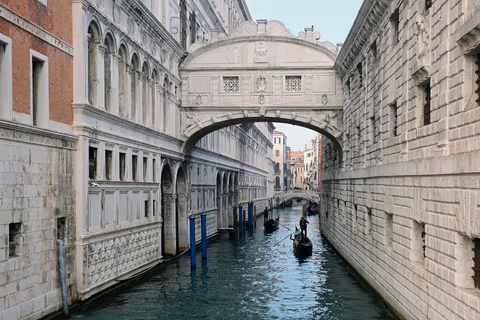
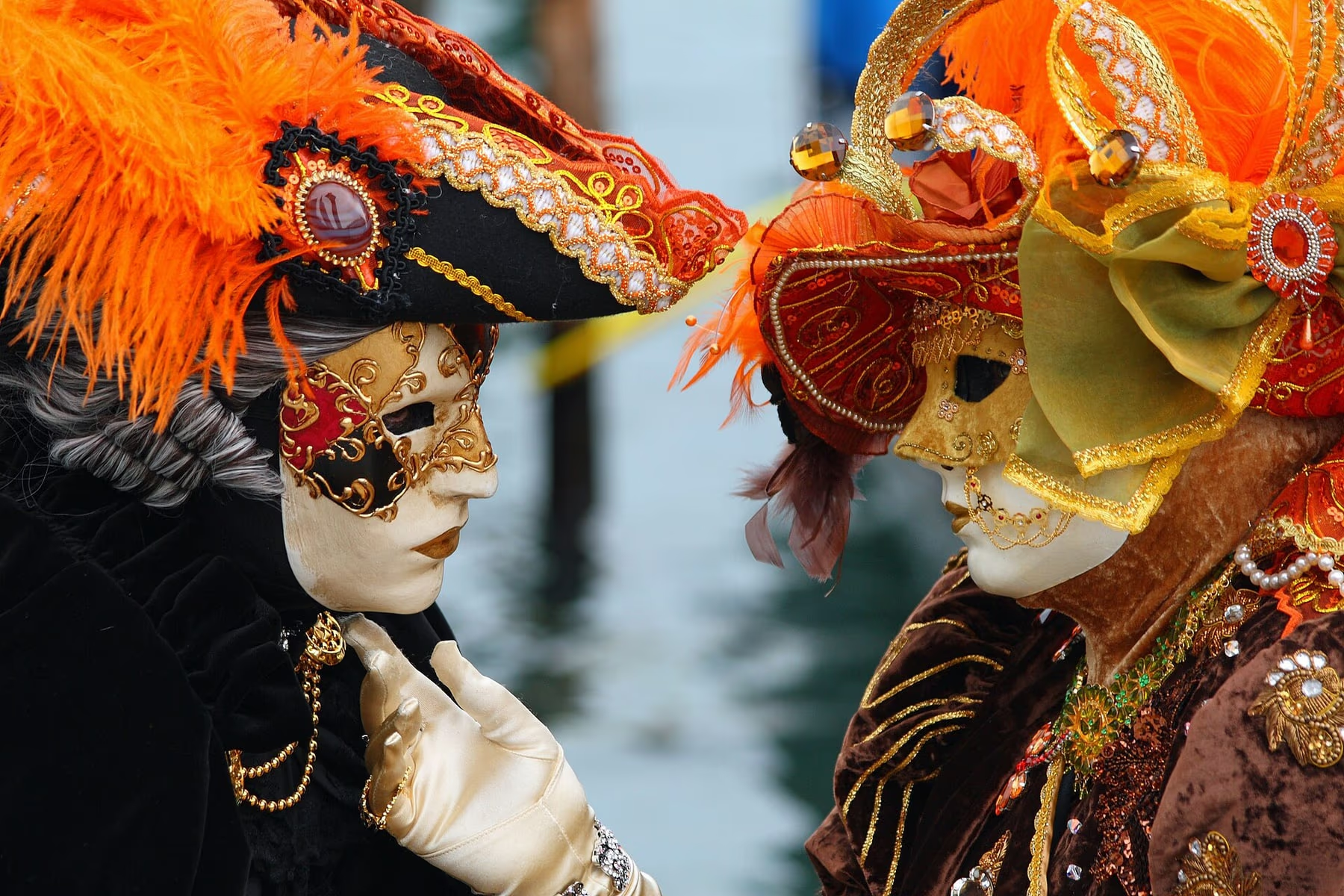
For photographing costumes: the Piazzetta at dawn, or the Ponte della Paglia and Campo San Zaccaria between 8:00 and 9:00. Costumed groups pose on request, and it is good manners to ask first and not to use flash.
For crossing the city on peak days: avoid the Rialto–St Mark's axis and use the alternative route through Campo Santa Maria Formosa and Campo San Zaccaria, or take the vaporetto even for a single stop. On the critical days ACTV, the city's public transport operator, adds services and moves some landing stages. Details are on actv.avmspa.it.
For lunch: book. On the central days, without a booking, you will eat badly and expensively at 13:30.
How to save
- Do not buy a new costume. A black cloak, a tricorn hat and a bauta mask bought from a workshop cost a fraction of historic hire and get you into the right spirit without dressing you as an extra.
- Buy your mask away from St Mark's. The same types cost 30–50% less in the workshops of San Polo and Cannaregio, and there the papier-mâché is genuine. If a mask is feather-light, smooth and moulded, it is plastic.
- Skip the palace ball if the budget is tight. What one ball costs covers four workshops, two concerts and three days of transport.
- Multi-day vaporetto pass. During Carnival you will use the water buses far more than you planned: the 48- or 72-hour ACTV pass pays for itself in five or six journeys.
- Sleep in Mestre or on the mainland only if you accept a late journey back: the night connection exists but runs less often. The saving on accommodation over the peak days is substantial.
- The mistake that costs you: booking late. Over the two weeks of Carnival the hotels in the centre sell out and prices climb vertically. Book in October and you pay half what you pay booking in January.
On the contributo di accesso (Venice access fee): it applies to day visitors who are not staying overnight, only on the days the council names, and is paid exclusively at cda.ve.it (€5 booked in advance, €10 last minute). So far the calendar has mainly covered spring weekends rather than Carnival days, but the decision is taken annually. Tiqets and the other platforms do not sell it and cannot: full details on the Venice access fee page.
Getting there and getting around
By train: Venezia Santa Lucia is inside the city itself. On peak days the station exit is managed in batches.
By car: park at Piazzale Roma or the Tronchetto and continue on foot or by People Mover. On Carnival weekends the garages fill by mid-morning: book a space online in advance.
By plane: from Marco Polo airport the ATVO/ACTV bus reaches Piazzale Roma in about twenty minutes; the Alilaguna boat is slower but lands you directly at St Mark's. With luggage, the bus and a short walk beats the boat on the peak days.
In the city: on foot everywhere, with the vaporetti as the fallback when bridges are blocked. Lines 1 and 2 along the Grand Canal are the most overloaded on the central days: lines 4.1/4.2 and 5.1/5.2 around the outside are often quicker.
What to see during Carnival
Take advantage of the fact that while everyone is in the square, the museums are quieter than usual.
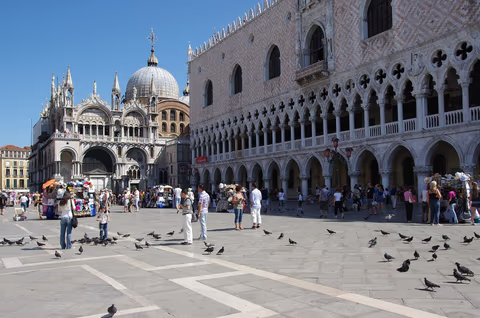
- Doge's Palace (Palazzo Ducale) — a moment from the stage: on peak afternoons it is, oddly, calmer than the square in front of it.
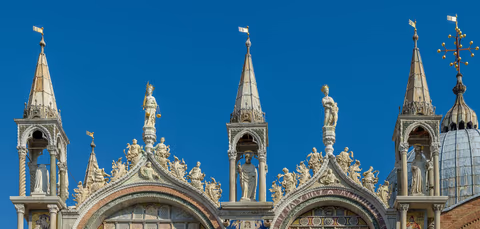
- St Mark's Basilica — book a time slot: during Carnival the numbers are capped more tightly.
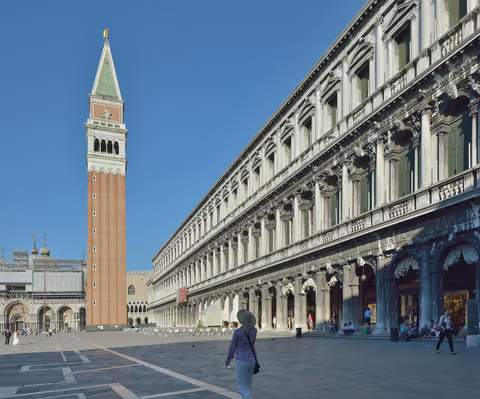
- St Mark's Campanile — the view down onto the costumes in the square is worth the ticket, but the weekend queue is long: go at opening.
- Artisan workshops in San Polo and Santa Croce — the real Carnival itinerary, between papier-mâché masks and open studios.
- Island of San Giorgio Maggiore — five minutes by vaporetto for the best view and the emptiest square in the city.
The Venice Carnival works if you accept its unwritten rule: the official events are the frame, not the content. The content is the people in costume in the side squares at eight in the morning, the workshops working with the door open, and the wine bars full at nine at night. Put 9 February 2027 in the diary for Shrove Tuesday, book accommodation and workshops months ahead, and for the rest of the city see the guide on what to see in Venice.